
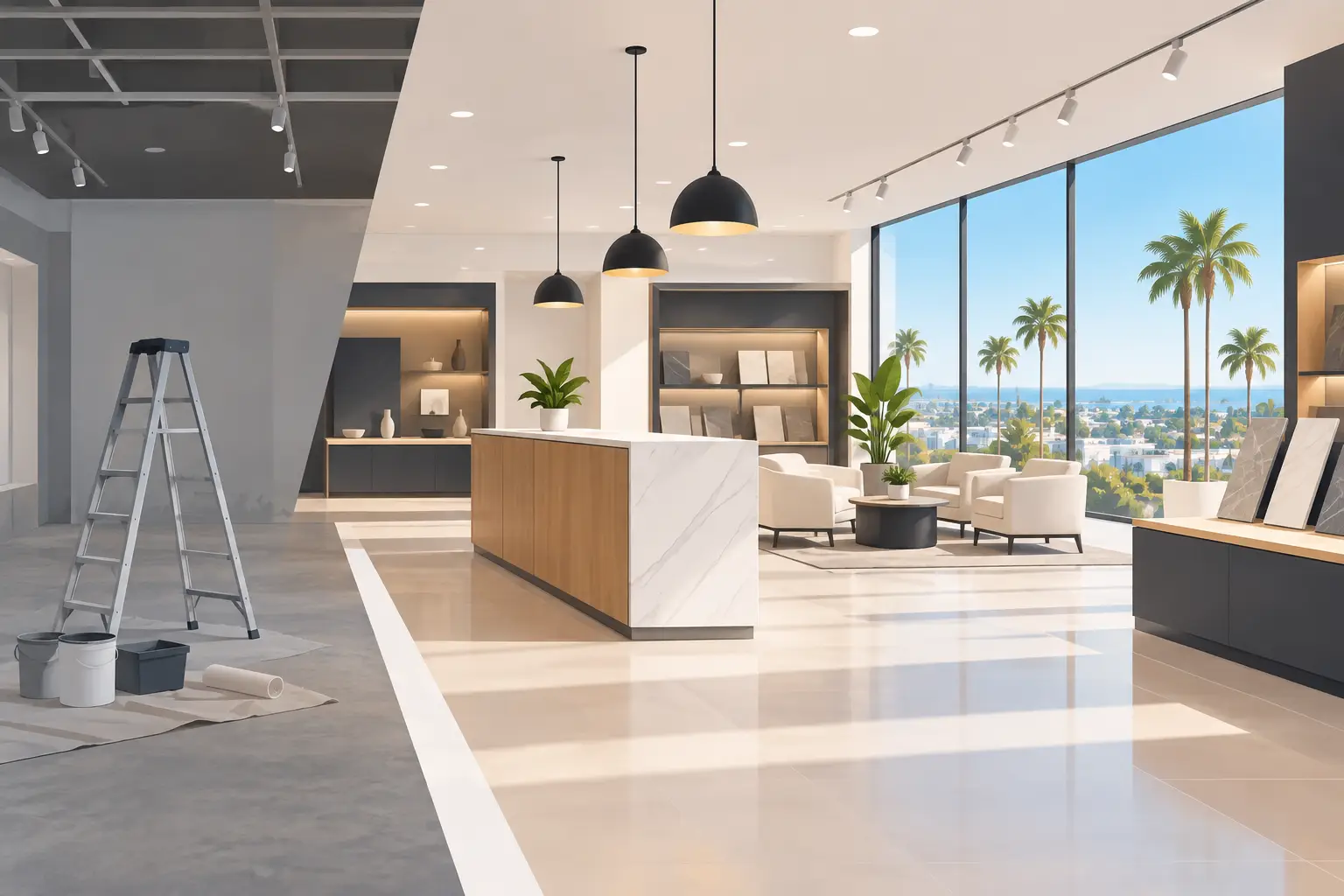
A showroom floor is not background material. It is one of the first surfaces customers see, walk across, photograph, and use to judge the quality of the products on display. An Orange County showroom renovation needs to do more than look current on opening day. It needs to support daily traffic, rolling displays, cleaning routines, bright lighting, and the pace of a working retail or commercial space.
For many property owners, polished concrete is the strongest answer because it improves the slab already underfoot instead of covering it with a finish that can peel, delaminate, or require frequent replacement. Done correctly, diamond-polished concrete delivers a refined appearance, dependable durability, and lower long-term maintenance without sacrificing the modern look buyers expect from premium showrooms.
Start the Orange County Showroom Renovation With Floor Reality
The right flooring decision starts with an honest assessment of the existing concrete. A showroom slab may have adhesive residue from old carpet or tile, paint, oil staining, cracks, moisture issues, uneven areas, or patches from prior tenant improvements. These conditions do not automatically rule out polished concrete, but they determine the scope of preparation and the finish that can be achieved.
A professional concrete flooring contractor should inspect the slab before promising a color, gloss level, or project timeline. Grinding exposes what is inside the concrete. Aggregate, old repairs, and variations in the slab can become part of the finished visual character, particularly with a deeper grind. That can create an exceptional architectural floor, but it should be a deliberate design decision rather than a surprise after demolition begins.
Moisture testing also matters. Orange County commercial spaces can have slabs affected by vapor transmission, especially in older buildings or locations with previous flooring failures. Polished concrete is breathable compared with many film-forming systems, but moisture conditions still affect patching materials, dyes, toppings, and any coating options under consideration. A qualified assessment protects the schedule and prevents avoidable rework.
Choose a Floor System for How the Showroom Operates
Showroom flooring is not one-size-fits-all. A luxury furniture gallery, automotive display floor, tile showroom, appliance center, and design studio all use their surfaces differently. The best system comes from traffic, appearance, maintenance, and budget priorities working together.
Polished concrete for a permanent, high-end finish
Mechanical concrete polishing uses progressively finer diamond grits to refine the slab, densify the surface, and develop the desired level of clarity and sheen. The result is not a topical shine sitting on top of the floor. It is a hardened, polished concrete surface designed to perform under regular foot traffic and routine cleaning.
This system is particularly effective for open sales floors, furniture galleries, modern retail spaces, and offices connected to a showroom. It reflects light well, gives displays a clean visual foundation, and reduces the dusting associated with untreated concrete. A satin finish can feel understated and contemporary, while a higher-gloss finish creates more visual impact under strong display lighting.
The trade-off is that polishing follows the condition of the slab. If a client wants a perfectly uniform solid color that hides every patch and crack, a decorative topping or coating may be a better fit. Transparency is part of professional flooring work. The best result is not always the shiniest option. It is the option that matches the concrete, the brand environment, and the operational demands.
Concrete overlays when the slab needs a new visual canvas
A cementitious overlay can be the right choice when the existing floor has extensive repairs, severe surface damage, mismatched patches, or a look that does not align with the showroom concept. Overlays can provide a more controlled visual field and can be finished in a range of textures and colors.
They require thorough surface preparation and proper moisture management. The lowest bid is rarely the lowest cost when an overlay fails because the slab was not mechanically profiled or the underlying conditions were ignored. In high-visibility spaces, preparation is where performance begins.
Protective coatings for targeted needs
Epoxy, urethane, and other protective coating systems can make sense in areas exposed to oils, chemicals, frequent rolling loads, or specialized cleaning requirements. These systems offer color control and can include slip-resistant texture where needed. They are often effective for service bays, stockrooms, prep areas, and back-of-house operations connected to a showroom.
Coatings do require a realistic maintenance plan. They can scratch, wear, or eventually need recoating, particularly where grit, carts, and repeated point loads are common. For the primary public-facing sales floor, polished concrete often provides a more durable long-term value proposition when the existing slab is suitable.
Design for Lighting, Displays, and Customer Movement
A showroom floor should support the merchandise rather than compete with it. This is why gloss level, aggregate exposure, color, and joint treatment deserve early discussion. High polish can brighten a space and give displays a premium edge, but extremely reflective finishes may show dust, footprints, and direct lighting glare more readily. A medium or satin polish is often the smarter choice for busy sales floors.
Color should also be tested in the actual space. Natural light, LED temperature, window exposure, and display materials can dramatically change how stains and dyes appear. A small mockup gives decision-makers a far more reliable basis for approval than a sample viewed under different lighting conditions.
Expansion and control joints should not be treated as defects to conceal at all costs. Concrete moves. Joints are part of how a slab manages that movement. They can be cleaned and filled where appropriate, but trying to eliminate every line without understanding slab behavior can create future problems. Experienced renovation planning balances a clean appearance with the realities of concrete construction.
Keep the Renovation Moving Without Unnecessary Downtime
For an operating business, the project plan matters as much as the finished floor. A showroom may need to stay partially open, receive inventory, host appointments, or meet a relaunch date. The right contractor builds the work sequence around those constraints rather than treating them as an afterthought.
Dust-controlled grinding equipment is essential for occupied commercial environments. Industrial vacuums connected to grinding machines capture concrete dust at the source, helping protect inventory, adjacent offices, HVAC systems, and customer areas. Containment, access control, and daily cleanup should be clearly defined before equipment arrives.
Phased work can keep a business functional. One section may be cleared, prepared, and completed while another remains in use. This approach can extend the calendar duration compared with a fully vacant space, but it may be the best operational choice. The schedule depends on square footage, demolition needs, slab repairs, cure times, access hours, and the selected flooring system.
Los Angeles Concrete Polishing plans commercial floor work around real operating conditions, including traffic flow, display moves, and the need to protect adjacent finishes. A floor renovation should improve the facility, not create a preventable operational crisis.
Measure Cost Beyond the Installation Proposal
A showroom renovation budget should account for removal of existing flooring, concrete repair, moisture mitigation if required, baseboards or transitions, moving displays, and any after-hours work. Comparing proposals only by price per square foot can obscure these important differences.
Polished concrete may cost more upfront than a basic floor covering in some situations, especially where heavy grinding and repair are necessary. Its value comes from longevity and reduced maintenance. There is no wax cycle to maintain, no carpet to replace after staining, and no tile grout to clean across a large sales floor. Regular dust mopping and occasional wet cleaning with appropriate products are generally enough to keep the floor looking professional.
That does not mean polished concrete is maintenance-free. Abrasive dirt should be removed promptly, entrance mats should be maintained, and cleaning chemicals should be selected for polished surfaces. Proper care protects the finish and preserves the clarity that makes the floor an asset to the showroom.
Build Safety Into the Finish
A polished floor can be slip-conscious when it is specified, installed, and maintained correctly. Safety is not determined by gloss alone. Surface condition, contaminants, cleaning practices, entrance matting, drainage, and the type of footwear used in the space all matter.
For showrooms that move vehicles, equipment, carts, or large fixtures, consider the paths where staff work most often. Those areas may benefit from a different texture, a protective coating system, or additional traction measures. The public sales area and back-of-house zone do not always need the same finish. Matching each surface to its use is a more intelligent approach than forcing one product across the entire property.
A successful showroom floor earns its place every day: it makes merchandise look sharper, gives staff a surface they can maintain efficiently, and holds up when the doors are open and the business is moving. Before selecting a finish, walk the space as a customer and as a facility manager. The best choice is the one that looks exceptional under showroom lights and still performs after years of real work.
Clients We Service
We provide our concrete polishing and related services to a wide variety of clients. Some of the types of clients that we provide service to include:


