
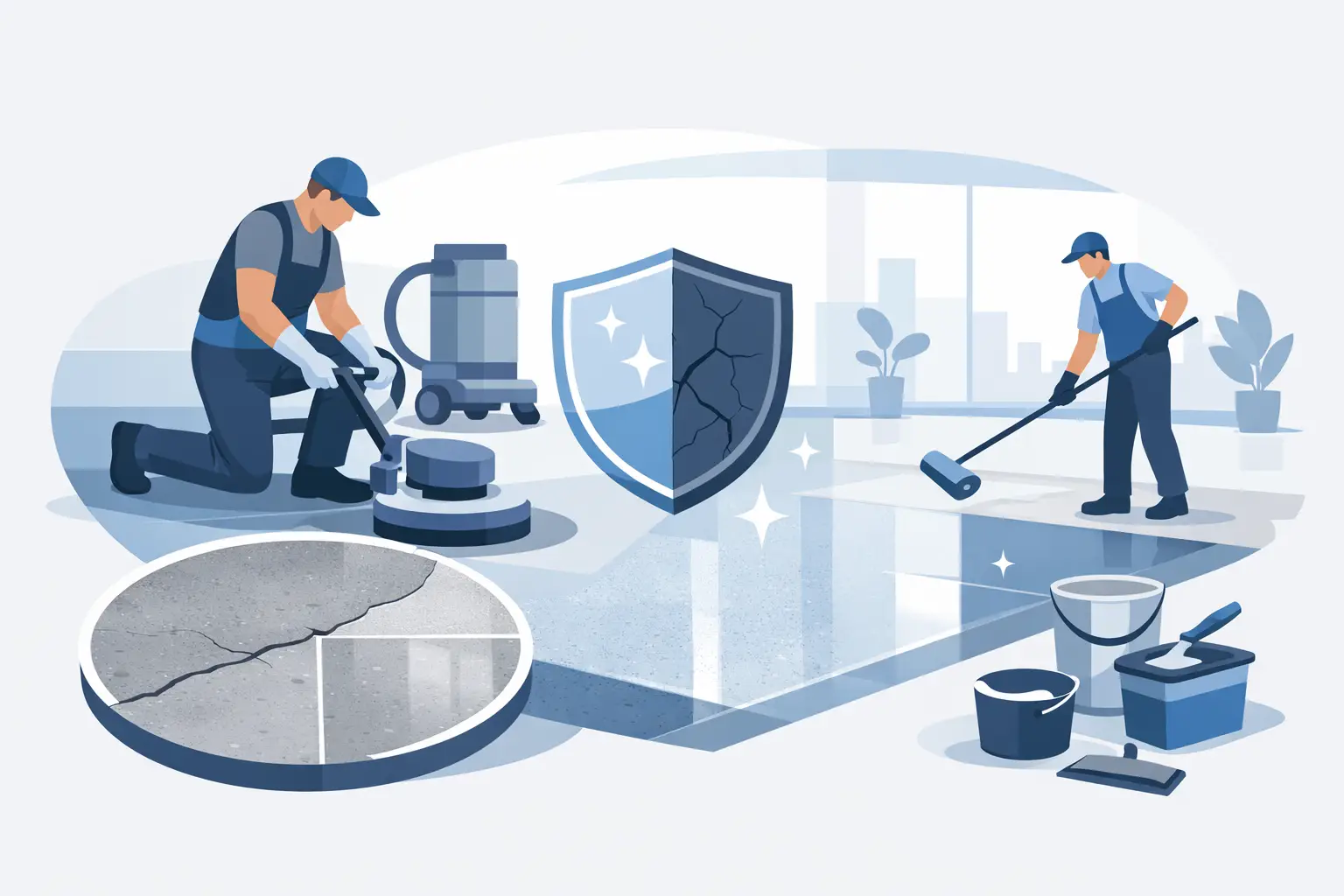
A concrete floor usually tells on a building before anything else does. Tire marks in a warehouse, dull traffic lanes in a retail store, dusting in a back-of-house area, staining in a garage, or etched patches in an office lobby all point to the same issue – the slab is still there, but its performance is slipping. That is exactly where concrete floor restoration services make the biggest difference. Done correctly, restoration brings an existing floor back to life without the cost, mess, and downtime of a full replacement.
For property owners and facility managers, that matters. Replacing a slab is expensive, disruptive, and often unnecessary. In many cases, the concrete has good structural value but needs expert grinding, repair, densification, polishing, or protection to perform like it should. The right contractor knows how to evaluate the surface, correct the real problem, and deliver a floor that looks better, lasts longer, and costs less to maintain.
What concrete floor restoration services actually include
Restoration is not one single process. It is a targeted set of solutions based on the condition of the slab, the type of traffic it handles, and the finish the client needs. A warehouse floor with forklift wear needs a different approach than a stained showroom or a residential loft with surface scratches.
Most concrete floor restoration services start with surface preparation. That can involve grinding away old coatings, removing surface contaminants, flattening uneven areas, and exposing sound concrete. If the floor has cracks, spalls, pitting, joint damage, or moisture-related problems, those issues should be addressed before any finish work begins. Skipping that step is one of the fastest ways to shorten the life of the floor.
Once the slab is stabilized, restoration may continue with densifiers, patching materials, resurfacing systems, protective treatments, or multi-step diamond polishing. The end result depends on the project. Some clients want a satin industrial finish focused on durability and cleanability. Others want a higher-gloss polished surface that improves brightness and presentation in a customer-facing space.
Why restoration often beats replacement
A full tear-out sounds decisive, but it is often the wrong financial move. If the base slab is fundamentally sound, restoration allows owners to keep the existing concrete and upgrade its performance. That reduces demolition costs, shortens schedules, and avoids the complications that come with pouring and curing a new slab.
There is also the operational side. Many commercial spaces cannot afford long shutdowns. Warehouses still need shipping lanes. Retail stores still need foot traffic. Office buildings still need common areas that look professional. Restoration can often be phased, sectioned, or scheduled around operations in a way replacement cannot.
It also gives owners more control over the final result. Instead of simply replacing damaged concrete with more raw concrete, restoration can improve the surface beyond its original condition. That may mean better reflectivity, less dusting, improved stain resistance, easier maintenance, or a finish that aligns with brand standards and occupancy needs.
The most common problems restoration solves
Worn concrete rarely fails in just one way. Most troubled floors show a combination of cosmetic damage and performance issues. The best restoration work deals with both.
Surface wear is one of the most common concerns. In high-traffic buildings, concrete gradually becomes scratched, abraded, and dull. Forklifts, pallet jacks, shopping carts, foot traffic, and routine cleaning all take a toll. Grinding and polishing can remove that top-layer damage and create a tighter, stronger surface.
Cracking and spalling are also frequent issues, especially around joints and impact zones. These problems are not only visual. They can create trip hazards, interfere with wheeled traffic, and allow further deterioration. Proper repair restores continuity and helps protect the slab from ongoing damage.
Staining and chemical exposure matter in industrial, automotive, and commercial environments. Oil, cleaning agents, salts, and other contaminants can penetrate untreated concrete. Depending on the severity, restoration may include deep cleaning, surface removal, densification, and protective systems designed for chemical resistance.
Dusting is another major complaint, especially in warehouses and production spaces. When the concrete surface weakens, it sheds fine particles that affect cleanliness and equipment. A professionally restored and densified floor can sharply reduce that problem.
Concrete floor restoration services for different property types
The right restoration plan depends heavily on how the building is used. This is where experience matters.
In warehouses and industrial facilities, the focus is usually on durability, flatness, abrasion resistance, and reduced maintenance. These floors must handle constant wheel traffic, heavy loads, and frequent cleaning without breaking down. Restoration often centers on repairing joints, grinding high spots, hardening the surface, and polishing or protecting the slab to control dust and improve long-term wear.
In retail environments, appearance and safety carry more weight. The floor needs to look clean and professional while standing up to nonstop customer traffic. Polished concrete is a strong fit here because it reflects light well, supports a modern look, and stays easier to maintain than many traditional flooring materials.
For offices and lobbies, restoration often balances appearance with practicality. A polished or honed finish can refresh the entire space without introducing a high-maintenance floor system. In creative offices and loft-style interiors, restored concrete also delivers a clean architectural look that fits modern design without sacrificing durability.
Residential projects are different again. Homeowners typically care about finish quality, stain resistance, and overall appearance in garages, basements, kitchens, and lofts. Restoration can turn a worn slab into a finished surface with real design value, but expectations need to be set properly. Not every older residential slab will polish uniformly, and previous patching or staining can remain visible to some degree. A strong contractor explains those variables upfront instead of overpromising.
What separates quality restoration from a quick cosmetic fix
A floor can look better for a few weeks after a light pass or surface coating. That does not mean it was restored correctly. Real restoration starts with diagnosis.
Moisture is a prime example. If moisture vapor is moving through the slab, certain coatings and toppings can fail early. Surface defects may also signal deeper issues with previous installation, curing, or exposure conditions. An experienced contractor evaluates those factors before recommending the system. That protects the client from paying twice for the same floor.
The equipment and process matter too. Advanced diamond grinding and polishing methods produce a more consistent cut, better clarity, and stronger long-term results than shortcut methods. Grit progression, repair materials, hardener selection, and guard application should all match the floor’s use case. In a high-traffic commercial setting, the difference between a properly restored floor and a rushed job becomes obvious fast.
This is also where downtime planning counts. The best contractors do not just restore concrete well – they organize the work to fit the building. In active commercial spaces, that can mean off-hours scheduling, phased work zones, dust-controlled operations, and finish recommendations that support faster return to service.
How to know when a floor is a good candidate for restoration
Not every slab needs the same level of intervention, but many floors are restorable long after owners assume replacement is the only answer. If the concrete is structurally stable and the damage is mostly surface-level or localized, restoration is usually worth serious consideration.
A good candidate may have worn finishes, scratches, stains, minor to moderate cracking, joint breakdown, or uneven gloss from years of traffic. It may also have old coatings that are failing and need to be removed so the slab can perform properly again.
The exceptions are important. If the slab has major structural movement, extreme moisture issues, or widespread failure tied to deeper substrate problems, restoration alone may not be enough. That is why a serious site assessment matters. The right recommendation is not always the most aggressive one. It is the one that fits the floor’s actual condition and the client’s operating goals.
Choosing a contractor for concrete floor restoration services
This is not the place to gamble on a generalist. Concrete restoration requires technical skill, the right equipment, and a clear understanding of how floors behave under real traffic and maintenance conditions.
Look for a contractor that can explain the process plainly, identify trade-offs, and recommend a finish based on performance, not just appearance. A warehouse floor does not need the same gloss level as a showroom. A residential loft may prioritize aesthetics more than slip profile. A qualified specialist will walk through those differences and tie the recommendation back to budget, timeline, and daily use.
For Southern California properties, localized experience adds real value. Climate, building use, existing slab conditions, and owner expectations vary across the region. A company like Los Angeles Concrete Polishing brings that on-the-ground understanding to commercial and residential projects alike, with systems built for durability, presentation, and minimal disruption.
Concrete floors do not have to stay dull, damaged, or difficult to maintain just because they are old. With the right restoration strategy, an existing slab can become one of the strongest assets in the building – cleaner, tougher, safer, and ready for years of hard use.
Clients We Service
We provide our concrete polishing and related services to a wide variety of clients. Some of the types of clients that we provide service to include:


