
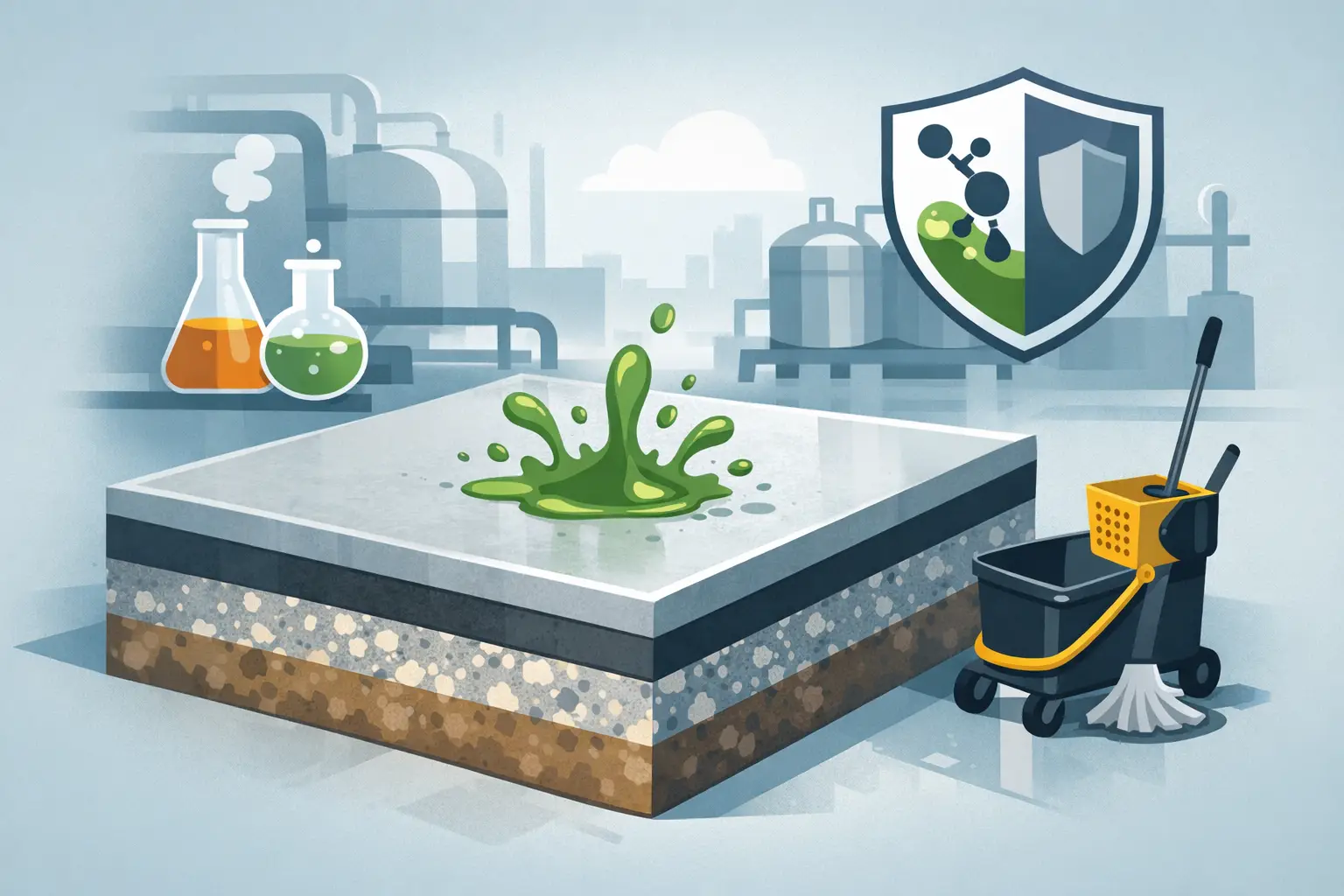
A floor usually fails long before the concrete slab does. The surface stains, softens, dusts, or starts peeling after repeated exposure to oils, cleaners, acids, solvents, and daily traffic. That is why chemical resistant concrete flooring matters so much in warehouses, manufacturing spaces, service areas, retail back rooms, and even modern residential garages. When the floor system is chosen correctly, it protects the slab, holds up under use, and keeps maintenance from turning into a constant expense.
What chemical resistant concrete flooring really means
Chemical resistant concrete flooring is not one single product. It is a performance goal achieved by pairing the right concrete preparation, densification, polishing, topping, or coating system with the chemicals and traffic the floor will actually face. That distinction matters because a floor that performs well against motor oil may not perform well against battery acid, caustic cleaners, or repeated solvent exposure.
Concrete on its own is durable, but it is also porous. Unprotected concrete can absorb liquids, discolor, deteriorate at the surface, and become harder to clean over time. In some environments, the damage happens gradually. In others, one spill is enough to leave etching, staining, or surface breakdown. The right floor system reduces that risk and gives owners a more controlled, maintainable surface.
For many properties, the best answer is not simply adding the thickest coating available. The smarter approach is evaluating how the space is used, what chemicals are present, how often spills occur, whether forklifts or carts are involved, and how much downtime the site can tolerate.
Where chemical resistant concrete flooring makes the biggest difference
Industrial and commercial operators usually understand the stakes immediately. Warehouses may deal with oils, tire traffic, degreasers, and frequent scrubbing. Food and beverage facilities can expose floors to acids, sugars, cleaning agents, and moisture. Auto-related spaces face petroleum products, brake fluid, and heavy rolling loads. Laboratories and manufacturing sites may have much more aggressive chemical profiles.
Retail and office environments also benefit, even if the exposure is less obvious. Back-of-house areas, janitorial rooms, service corridors, loading zones, and trash storage areas often take more abuse than customer-facing spaces. A floor that looks clean in the showroom but fails in the operational areas creates unnecessary maintenance headaches.
In residential settings, garages, workshops, utility rooms, and some loft conversions can benefit from higher chemical resistance. Homeowners may not need the same system as an industrial facility, but they still want protection from automotive fluids, cleaning products, and everyday staining.
Why plain concrete is not enough
Bare concrete has compressive strength, but that does not mean it is chemically protected. Its pore structure allows liquids to penetrate. Once contaminants move into the surface, cleanup gets harder and staining becomes more permanent. Some chemicals do more than stain. They react with cement-based materials and begin to weaken or roughen the surface.
Even polished concrete, while far denser and easier to maintain than untreated concrete, has limits. Densification and polishing improve abrasion resistance, reduce dusting, and create a tighter surface, but they do not make the slab immune to every chemical. That is why experienced flooring contractors do not make blanket promises. The right recommendation depends on exposure level.
The main systems used for chemical resistance
Polished concrete with protective treatments works well in many commercial settings where appearance, low maintenance, and light to moderate chemical exposure matter most. It gives owners a clean, refined surface with strong durability and lower lifecycle costs than many floor coverings. For offices, retail spaces, showrooms, and some warehouses, this can be the best balance of performance and value.
When exposure becomes more demanding, resinous systems often make more sense. Epoxy coatings are widely used because they create a dense, protective layer and can handle many commercial and industrial conditions. They also improve cleanability and can be installed in a range of textures and finishes. Still, epoxy is not automatically the best fit for every chemical environment. Some acids and solvents can challenge standard epoxy systems, and moisture conditions in the slab must be addressed before installation.
Urethane and other specialty resin systems are often selected where thermal shock, aggressive cleaning, or stronger chemical resistance is needed. In harsher industrial environments, the details matter even more – film thickness, primer compatibility, surface profile, cure time, and expected exposure all affect long-term results.
Overlays and toppings can also play a role when the existing slab is damaged, uneven, or not suitable for direct polishing alone. Instead of replacing the entire floor, a properly installed topping can create a new wear layer that is then polished, sealed, or coated based on the site’s needs.
Preparation decides whether the floor performs
The strongest coating in the world will fail on poorly prepared concrete. That is where many flooring problems begin. If the slab has moisture vapor issues, contamination, weak surface paste, old adhesive, cracks, or improper profiling, the installed system is already at risk.
Professional grinding and surface preparation are not optional steps. They create the mechanical bond needed for coatings and toppings to adhere properly. Moisture testing is just as important. In Southern California, slab conditions vary widely from one building to another, and assuming the concrete is ready without testing can lead to peeling, blistering, or early delamination.
This is also where an experienced contractor separates itself from a general installer. The floor should be built around the building’s use, not around a one-size-fits-all product pitch.
Trade-offs property owners should understand
There is no perfect flooring system for every site. A polished concrete finish may offer lower maintenance, strong wear resistance, and a more refined look, but it may not be the best answer for repeated exposure to harsh acids. A heavy-build coating may provide excellent chemical protection, but it can change the floor’s appearance, require more downtime, and eventually need recoat cycles.
Slip resistance is another area where balance matters. A smoother, glossier surface may be easier to clean and visually striking, but wet conditions can change traction. Texture can improve grip, though too much texture may hold dirt and complicate maintenance. The right specification should account for both safety and cleaning efficiency.
Budget should be viewed the same way. The lowest upfront price often leads to the highest lifetime cost if the floor fails early, requires frequent patching, or disrupts operations. The best value usually comes from matching the system to the environment from the start.
How to choose the right floor for your facility
Start with exposure. What actually hits the floor, and how often? Occasional drips of mild cleaners are very different from repeated washdowns, acid spills, or solvent use. Next, consider traffic. Foot traffic, pallet jacks, carts, and forklifts place very different demands on the surface.
Then look at operations. Can the space tolerate downtime for curing, prep, and return to service? Is appearance a priority because the space is customer-facing? Does the floor need line striping, reflectivity, or a decorative finish? These questions shape the recommendation just as much as chemical resistance does.
For many clients, the smartest move is combining performance priorities instead of chasing one feature alone. A warehouse may need abrasion resistance, cleanability, and chemical protection. A retail stockroom may need a floor that looks sharp, resists spills, and stays easy to maintain. A garage may need stain resistance without turning the project into an oversized industrial install.
Maintenance still matters
A chemical-resistant floor is not a maintenance-free floor. It is a floor that gives you more protection and more time. Spills should still be cleaned promptly, especially if they involve aggressive substances. Cleaning crews should use products that are compatible with the installed finish. Heavy impact, dragging steel, and neglected joints can still damage a high-performance surface.
The advantage is that a well-built system is easier to maintain, easier to keep presentable, and less likely to trap contamination in the slab. Over the long term, that supports cleaner operations, better appearance, and more predictable costs.
Why expert installation changes the outcome
Choosing chemical resistant concrete flooring is partly about products, but mostly about judgment. The installer has to read the slab, understand the building’s use, and know when polished concrete is enough and when a coating or topping is the better answer. That is where proven concrete specialists bring real value.
At Los Angeles Concrete Polishing, projects are approached with that level of discipline – proper grinding, moisture awareness, finish selection, and performance-driven installation based on how the space actually operates. For property owners and facility teams, that means fewer surprises and a floor built to hold up under pressure.
If your floor sees chemicals, heavy traffic, or constant cleanup, the goal is simple: install a system that works as hard as the building does. The right floor does not just protect concrete. It protects your budget, your operations, and the standards your property is expected to meet.
Clients We Service
We provide our concrete polishing and related services to a wide variety of clients. Some of the types of clients that we provide service to include:


