
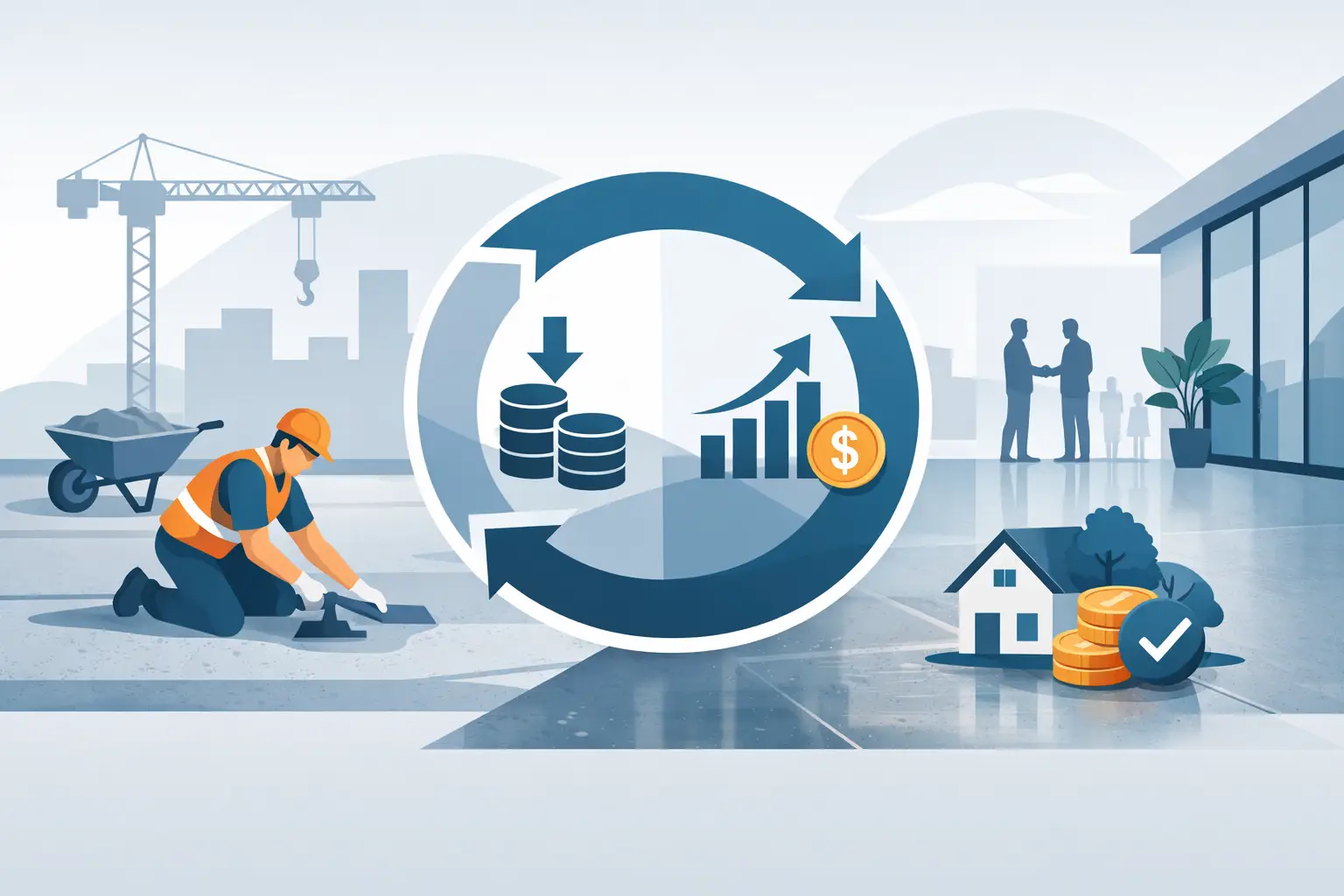
A warehouse floor can look inexpensive on bid day and become the most expensive surface in the building over the next decade. Concrete flooring lifecycle costs are not limited to the first proposal. They include substrate repair, moisture mitigation, daily cleaning, recoating, production interruptions, safety exposure, and the eventual cost of replacing a failed finish.
For Southern California property owners and facility managers, that distinction matters. A floor in a busy Los Angeles distribution center, retail store, office lobby, or loft has to perform under real conditions: rolling loads, foot traffic, cleaning chemicals, dust, sunlight, spills, and tight operating schedules. The right flooring decision is the one that controls total ownership cost while delivering the appearance and traction the space requires.
What makes up concrete flooring lifecycle costs?
Lifecycle cost is the full cost of owning a floor over its useful life, not simply the installation price. A basic square-foot price can be useful for comparing initial budgets, but it does not show how often a surface will need attention or what that attention does to operations.
The first component is existing slab condition. Concrete that has cracks, spalls, soft areas, unevenness, oil contamination, old adhesive, or elevated moisture needs proper evaluation before any finish is selected. Skipping this work may reduce the opening price, but it often leads to coating delamination, visible defects, recurring repairs, and lost time later.
The second component is installation disruption. Some flooring systems require extended cure times, strong odor control, multiple application stages, or restricted access between coats. In a warehouse or active retail environment, closing aisles, moving inventory, and redirecting traffic can cost more than the flooring work itself. A realistic lifecycle calculation assigns a value to downtime rather than treating it as an inconvenience.
Maintenance is the third major factor. A floor that requires frequent stripping, waxing, recoating, aggressive cleaning chemicals, or specialty labor carries a continuing expense. Those costs repeat every month and compound across thousands of square feet. They also consume labor that a facility could use elsewhere.
Finally, include end-of-life work. Many floor coverings must be removed, disposed of, and replaced when they wear out or lose adhesion. When an existing concrete slab can be restored and mechanically polished instead, the owner may avoid a costly removal cycle altogether.
Initial price is not the same as long-term value
Polished concrete is not automatically the lowest first-cost option. The condition of the slab, desired gloss level, aggregate exposure, joint repairs, edge work, stain removal, and moisture conditions all affect the scope. A heavily damaged slab may require substantial preparation before it is ready for a refined finish.
That upfront work is precisely why professional assessment matters. Diamond grinding and polishing are controlled mechanical processes, not cosmetic shortcuts. The contractor progressively refines the surface with specified diamond grits, applies a densifier when appropriate, and finishes the floor to the agreed appearance and performance target. The result is a surface built from the slab itself rather than a thin decorative layer expected to carry the entire burden of daily traffic.
By comparison, coatings and overlays can be excellent choices when they match the use case. A chemical processing area may need a specialized resin system. A retail brand may require a particular color. A damaged slab may benefit from a topping that creates a new finished surface. The costly mistake is selecting a system based on the opening price alone, then expecting it to solve problems it was never designed to handle.
The cost of recurring recoats
A coating can provide a strong, attractive, and chemical-resistant finish, but it has a maintenance cycle. Forklift paths, pallet impacts, abrasion, thermal movement, and slab moisture can eventually create wear or adhesion issues. Depending on traffic and exposure, areas may need touch-ups or full recoating over time.
Each recoat is more than a material expense. It can involve moving equipment, cleaning and profiling the existing surface, managing fumes, restricting access, and scheduling work around tenants or production. If a facility operates around the clock, that work may require phased installation or after-hours labor.
Polished concrete also needs maintenance, but its routine is typically simpler: dry dust mopping, wet mopping with the correct neutral cleaner, and periodic burnishing or maintenance polishing when the traffic pattern calls for it. There is no wax film to strip and replace. That difference can make a meaningful impact on annual janitorial spending.
Downtime belongs in every flooring decision
Facility managers are right to focus on installation speed, but the better question is how the floor will affect operations over its full service life. A lower-cost finish can become a poor investment if it requires repeated shutdowns for repair and renewal.
This is especially relevant in warehouses, manufacturing support areas, logistics facilities, and high-traffic retail spaces. A floor failure in a main aisle can force changes to forklift routes, create trip hazards, or interrupt customer access. Even a small damaged zone can affect a much larger operational area.
Polished concrete is often a strong lifecycle option because it works with the existing slab and can frequently be completed in planned phases. Access requirements, cure expectations, and site conditions still need to be reviewed honestly. Large repairs, extensive moisture mitigation, and detailed decorative finishes take time. But a properly planned polishing project can reduce the future disruptions associated with removing and replacing worn surface coverings.
For active properties in Los Angeles and Orange County, phased scheduling can be a major advantage. The best approach separates work areas, protects adjacent operations, manages dust with appropriate equipment, and establishes clear handoff points with the client before work begins.
Maintenance, safety, and appearance have financial value
A floor’s appearance affects more than aesthetics. In an office, showroom, retail store, or multifamily common area, a clean reflective floor supports the condition and perceived value of the property. In industrial environments, a brighter surface can improve light reflectivity and help teams identify debris, leaks, and traffic markings more easily.
Safety also belongs in lifecycle planning. No floor is slip-proof, and gloss alone does not determine traction. Contaminants, footwear, cleaning practices, slope, traffic direction, and the floor’s intended use all matter. A professional flooring scope should account for those conditions, especially in wet-entry areas, food service spaces, loading zones, and locations exposed to oils or chemicals.
The financial impact is practical. Better visibility, easier cleaning, fewer deteriorated edges, and a surface that does not shed failing coating fragments can support a safer, more organized operation. The goal is not to promise that one finish eliminates risk. It is to select and maintain a floor that fits the actual hazards of the site.
How to compare flooring options fairly
When evaluating proposals, ask every contractor to define the same ownership assumptions. Compare the expected service period, substrate repairs, moisture testing or mitigation, cleaning requirements, anticipated renewal work, and access restrictions. If one proposal includes only a finish coat while another includes grinding, crack repair, and moisture control, the numbers are not comparable.
It also helps to identify the floor’s dominant stressor. Is the problem forklift abrasion, chemical exposure, heavy point loads, customer-facing appearance, moisture vapor, or a need for fast return to service? A polished finish may be the strongest fit for an existing sound slab in a high-traffic environment. A protective coating may be the better investment where chemical resistance or color-coded work zones are the priority. A topping may be justified when the slab needs a new wear surface or a specific design outcome.
Ask for a maintenance plan in writing. It should state what cleaners are appropriate, how often the floor should be serviced, what actions can damage the finish, and how localized repairs will be handled. This is where experienced contractors separate a lasting system from a short-term visual upgrade.
The lowest lifecycle cost starts with the right scope
The best flooring investment is rarely the cheapest bid and rarely the most elaborate finish. It is the system that addresses the slab’s condition, handles the expected traffic, protects operations, and avoids unnecessary repeat work. That requires accurate site assessment, proven surface preparation, and a clear understanding of how the building will be used five or ten years from now.
Los Angeles Concrete Polishing approaches that decision with the same standard used for demanding commercial floors: evaluate the concrete first, define performance requirements, and recommend the finish that earns its cost over time. Before approving any flooring proposal, walk the space with the contractor and ask one direct question: what will this floor cost us after the installation crew has left?
Clients We Service
We provide our concrete polishing and related services to a wide variety of clients. Some of the types of clients that we provide service to include:


