
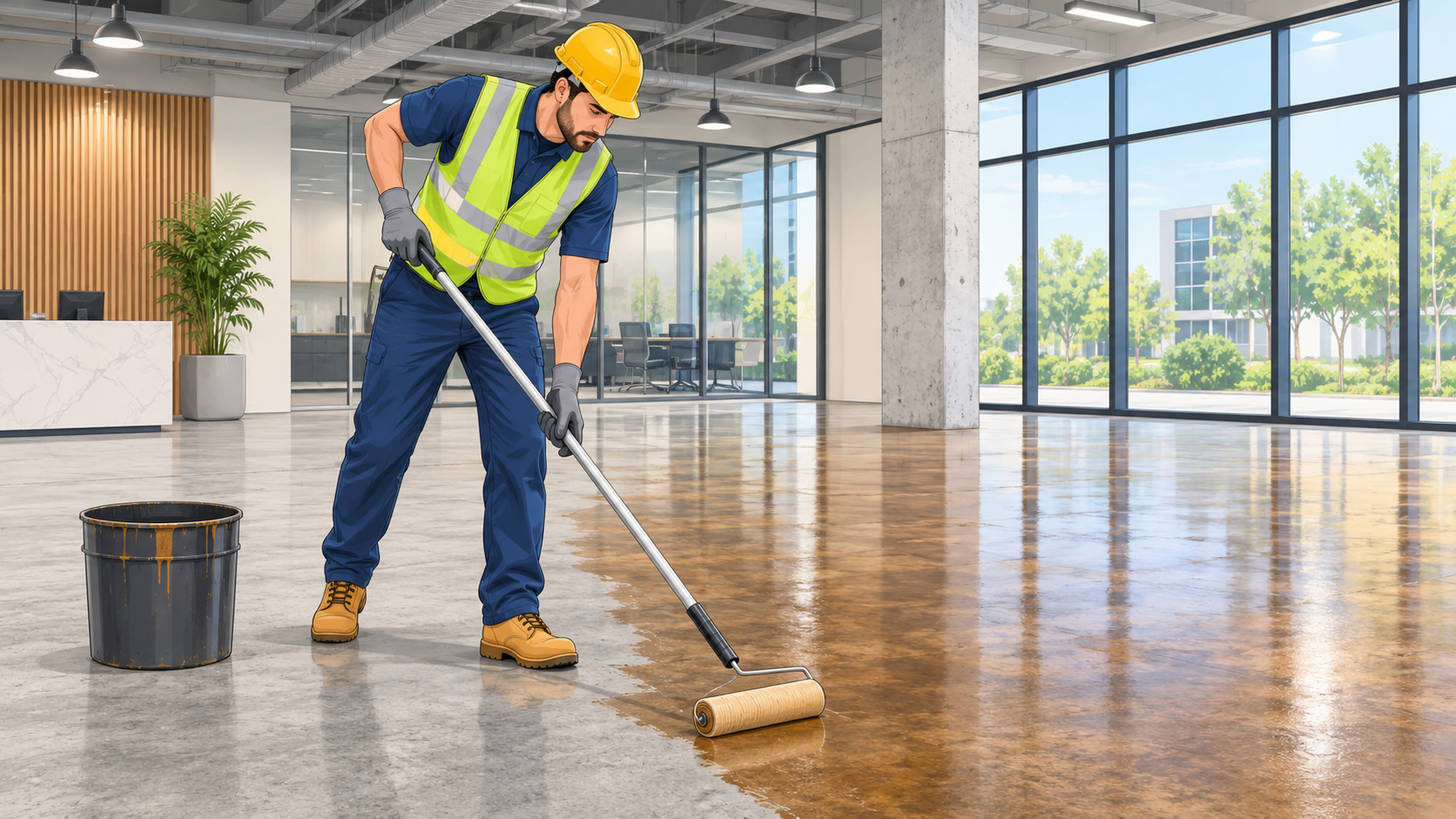
Concrete floors are known for their strength and versatility, but their appearance and durability can be improved with the right surface treatment. Whether you are upgrading an indoor floor, refreshing a patio, or improving a commercial space, choosing the right concrete stain and sealer can make a significant difference.
Concrete stains add color and enhance the natural appearance of concrete, while sealers provide an additional layer of protection against moisture, stains, abrasion, and everyday wear. However, not every stain and sealer combination is suitable for every surface.
The right choice depends on the existing concrete condition, desired color, location, foot traffic, and maintenance requirements.
Los Angeles Concrete Polishing provides concrete polishing, staining, and sealing solutions for residential and commercial properties. In this guide, we explain the different types of concrete stains and sealers, how to choose compatible products, and what property owners should consider before starting a concrete staining and sealing project in Los Angeles.
What Are Concrete Stain and Sealer?
Concrete stain and sealer are two different products that work together to improve the appearance and protection of concrete surfaces.
Concrete stain adds color to concrete. Depending on the product, it can penetrate the surface, react chemically with concrete, or deposit pigments to create a decorative finish.
Concrete sealer is a protective treatment applied to concrete to help reduce moisture absorption, surface staining, abrasion, and other forms of everyday wear.
Using the appropriate combination can create attractive stained concrete floors while helping preserve their appearance.
However, the stain and sealer must be compatible. Applying an unsuitable sealer can affect adhesion, color appearance, or long-term performance.
Different Types of Concrete Stains
Before choosing a concrete sealer, it is important to understand the type of stain being used. Different stain products produce different appearances and have different application requirements.
1. Acid-Based Concrete Stain
Acid-based stains create color through a chemical reaction with certain minerals in the concrete.
They typically produce natural-looking, translucent color variations rather than completely uniform finishes.
Common color options include:
- Brown and tan.
- Terra cotta.
- Reddish-brown.
- Green and blue-green variations.
- Dark earth tones.
Acid staining is suitable for property owners who prefer a distinctive decorative appearance with natural color variations.
2. Water-Based Concrete Stain
Water-based concrete stains use pigments or other colorants to create decorative finishes.
Compared with traditional acid stains, they generally offer a wider range of colors and more flexibility in achieving specific design preferences.
They can be used for:
- Interior concrete floors.
- Decorative patios.
- Retail spaces.
- Residential flooring.
- Commercial environments.
The final appearance depends on the product, surface preparation, and application technique.
3. Concrete Dyes
Concrete dyes are coloring products designed to create vibrant or more consistent color effects.
They are available in different formulations and can be useful for decorative applications, patterns, and customized flooring designs.
However, some dyes have limitations regarding UV exposure and exterior applications. Always check the manufacturer’s product specifications before selecting a dye for outdoor concrete.
Different Types of Concrete Sealers
Choosing the right concrete sealer is just as important as selecting the stain. The sealer influences the finished appearance and the level of protection provided to the concrete surface.
1. Acrylic Concrete Sealer
Acrylic sealers form a protective film over the concrete surface.
They are available in water-based and solvent-based formulations and can provide different levels of gloss.
Best suited for: Decorative concrete, patios, walkways, and selected interior or exterior applications.
Advantages include:
- Available in different finishes.
- Can enhance the appearance of stained concrete.
- Relatively straightforward application.
- Available in different formulations.
Consider the product’s UV resistance, wear characteristics, and maintenance requirements before selecting an acrylic sealer.
2. Penetrating Concrete Sealer
Penetrating sealers enter the concrete’s pores and react within the material or create water-repellent protection, depending on the formulation.
Unlike film-forming sealers, they generally do not create a noticeable glossy surface layer.
Best suited for: Concrete surfaces where maintaining a more natural appearance and reducing water absorption are priorities.
Advantages include:
- Maintains a natural concrete appearance.
- Helps reduce water penetration.
- Does not typically create a glossy film.
- Suitable formulations are available for exterior applications.
One important consideration is that penetrating sealers are not necessarily designed to provide the same surface stain protection or color enhancement as film-forming products.
3. Polyurethane Concrete Sealer
Polyurethane sealers create a protective film and are available in different formulations.
They are often considered for surfaces requiring additional resistance to abrasion, chemicals, and everyday wear.
Best suited for: Selected residential and commercial flooring applications.
Before application, the concrete must be properly prepared, and the polyurethane system must be compatible with the underlying stain or primer.
4. Epoxy Concrete Sealer and Coating Systems
Epoxy products are generally used as protective coating systems rather than ordinary penetrating sealers.
They can create a thicker, seamless surface finish and are commonly considered for garages, commercial floors, and other areas requiring a coated surface.
Best suited for: Selected commercial, industrial, and garage flooring applications.
Epoxy coatings may change the appearance of decorative concrete, so compatibility with existing stains and the desired finish should be evaluated before installation.
How to Choose the Right Concrete Stain and Sealer Combination
Selecting the right combination requires considering the entire flooring system rather than choosing products independently.
Here are the most important factors to evaluate.
1. Consider the Concrete Surface
Start by inspecting the existing concrete.
Check for:
- Cracks and surface damage.
- Previous paint or coating applications.
- Existing sealers.
- Oil and grease contamination.
- Moisture-related problems.
- Surface porosity and texture.
A stain requires suitable surface conditions to achieve its intended appearance. Existing sealers or contaminants may prevent proper penetration.
A simple water absorption test can help identify whether the surface may be sealed or non-absorbent, although it does not replace a professional surface assessment.
2. Decide on the Desired Appearance
Think about the final appearance you want before selecting products.
For example:
- Acid stains are suitable for natural-looking, variegated color effects.
- Water-based stains provide greater flexibility in color selection.
- Concrete dyes can provide more vibrant decorative effects.
- Clear acrylic sealers can enhance the appearance with a film-forming finish.
- Penetrating sealers can help maintain a more natural concrete appearance.
Always test the complete stain and sealer combination on a small area before proceeding with the entire floor.
3. Identify the Location of the Concrete
Interior and exterior concrete surfaces have different requirements.
Indoor concrete floors: Consider appearance, foot traffic, cleaning requirements, and resistance to everyday spills.
Outdoor concrete surfaces: Consider UV exposure, rain, moisture, temperature changes, and slip resistance.
For example, a decorative patio in Los Angeles may require a different sealer system from an indoor retail floor.
4. Evaluate Foot Traffic and Daily Use
The amount of traffic a floor receives can influence sealer selection.
Residential floors, retail environments, warehouses, and commercial facilities do not experience the same conditions.
High-traffic areas may require a protective system with better abrasion resistance and an appropriate maintenance plan.
5. Check Product Compatibility
This is one of the most important considerations.
Not every concrete sealer can be applied over every stain.
For example, some water-based and solvent-based products have different compatibility requirements. Applying the wrong combination may lead to poor bonding, discoloration, or surface defects.
Always check the technical data sheets and application instructions for both products.
Concrete Stain and Sealer Combinations: Which Should You Choose?
The following table provides general guidance for selecting a concrete staining and sealing system.
| Concrete treatment | Possible sealer option | Main consideration |
| Acid-based stain | Compatible acrylic or polyurethane system | Remove residue and verify compatibility |
| Water-based stain | Compatible acrylic or polyurethane system | Follow stain manufacturer’s instructions |
| Concrete dye | Manufacturer-approved clear protective finish | Check UV and chemical compatibility |
| Exterior decorative stain | Suitable exterior-rated sealer | UV exposure and weather resistance |
| Commercial stained concrete | Suitable abrasion-resistant protective system | Traffic and maintenance requirements |
These are general options, not universal product combinations. The manufacturer’s specifications should determine the final system.
Steps Involved in Concrete Staining and Sealing
Professional concrete staining and sealing involve several important preparation and application stages.
Step 1: Inspect and Prepare the Surface
The concrete is evaluated for damage, contamination, previous coatings, and moisture-related issues.
Existing dirt, grease, and incompatible coatings must be addressed before staining.
Step 2: Clean and Prepare the Concrete
The surface is cleaned and prepared using appropriate methods.
Depending on its condition, preparation may involve mechanical grinding, cleaning, or other surface treatment techniques.
Step 3: Apply the Selected Concrete Stain
The stain is applied according to the manufacturer’s instructions.
Application technique and concrete porosity influence the final color and appearance.
Step 4: Remove Residue and Allow Drying
For acid stains, appropriate residue removal and neutralization are necessary where specified by the product manufacturer.
The surface must be properly prepared and sufficiently dry before sealing.
Step 5: Apply the Compatible Concrete Sealer
The selected sealer is applied according to its technical specifications.
The number of coats, coverage, drying time, and application method depend on the particular product.
Step 6: Allow Proper Curing
The finished surface should be protected until the sealer has reached the required curing stage.
Follow the manufacturer’s instructions before allowing foot traffic, furniture placement, or vehicle traffic.
Common Mistakes to Avoid
Choosing the wrong concrete stain and sealer combination can affect both appearance and performance.
Avoid these common mistakes:
- Applying stain over an incompatible existing sealer.
- Skipping proper surface preparation.
- Choosing a product based only on its color.
- Mixing incompatible stain and sealer systems.
- Ignoring moisture-related problems.
- Applying the protective finish before the stain is ready.
- Overlooking slip resistance in wet areas.
- Ignoring future maintenance requirements.
Testing the complete system before installation can help identify potential problems early.
Professional Concrete Staining and Sealing in Los Angeles
Choosing the right concrete stain and sealer is an important step in creating an attractive and properly protected concrete surface.
Property owners should consider the existing concrete condition, desired decorative finish, exposure conditions, and expected floor usage before selecting a treatment.
Los Angeles Concrete Polishing provides concrete staining and sealing, concrete polishing, floor preparation, decorative concrete, and related flooring services.
The company’s staining and sealing process includes preparing existing or new concrete, applying decorative stain, and removing remaining residue as part of the finishing process.
Based in Torrance, California, Los Angeles Concrete Polishing serves residential and commercial customers in Los Angeles and surrounding areas.
If you are considering stained concrete flooring, discuss your project requirements with a professional to determine which stain and protective sealer combination is appropriate for your surface.
Learn more about available services at Los Angeles Concrete Polishing.
Frequently Asked Questions
1. What is the best concrete stain and sealer combination?
The best combination depends on the concrete surface, desired color, location, and intended use. Acid-based stains, water-based stains, and dyes require compatible protective finishes selected according to manufacturer specifications.
2. Should you seal concrete after staining?
Yes, a suitable protective sealer is generally recommended for stained concrete. It can help protect the surface against moisture, abrasion, and everyday contaminants while enhancing the finished appearance.
3. What is the difference between concrete stain and concrete sealer?
Concrete stain adds color to the surface, while concrete sealer provides protection. They serve different purposes and are often used together as part of a decorative concrete flooring system.
4. Can you apply concrete sealer over an existing stain?
Yes, provided the stain is properly prepared and the selected sealer is compatible with it. Follow the product manufacturer’s instructions regarding cleaning, drying, and application.
5. Is water-based or acid-based concrete stain better?
Neither is universally better. Acid stains are suitable for natural-looking color variations, while water-based stains generally provide more color choices and greater design flexibility.
6. How long does concrete stain and sealer last?
The lifespan depends on product quality, surface preparation, application, foot traffic, environmental exposure, and maintenance. Protective sealers may need periodic maintenance or reapplication.
7. Can stained concrete be used outdoors?
Yes. Suitable concrete stains can be used outdoors when the products are rated for exterior applications. Select a compatible UV-resistant protective system and consider water exposure and slip resistance.
8. How much does concrete staining and sealing cost?
The cost depends on the floor area, existing concrete condition, preparation requirements, selected stain and sealer, and project complexity. A professional assessment is the best way to obtain an accurate estimate.
Clients We Service
We provide our concrete polishing and related services to a wide variety of clients. Some of the types of clients that we provide service to include:


