
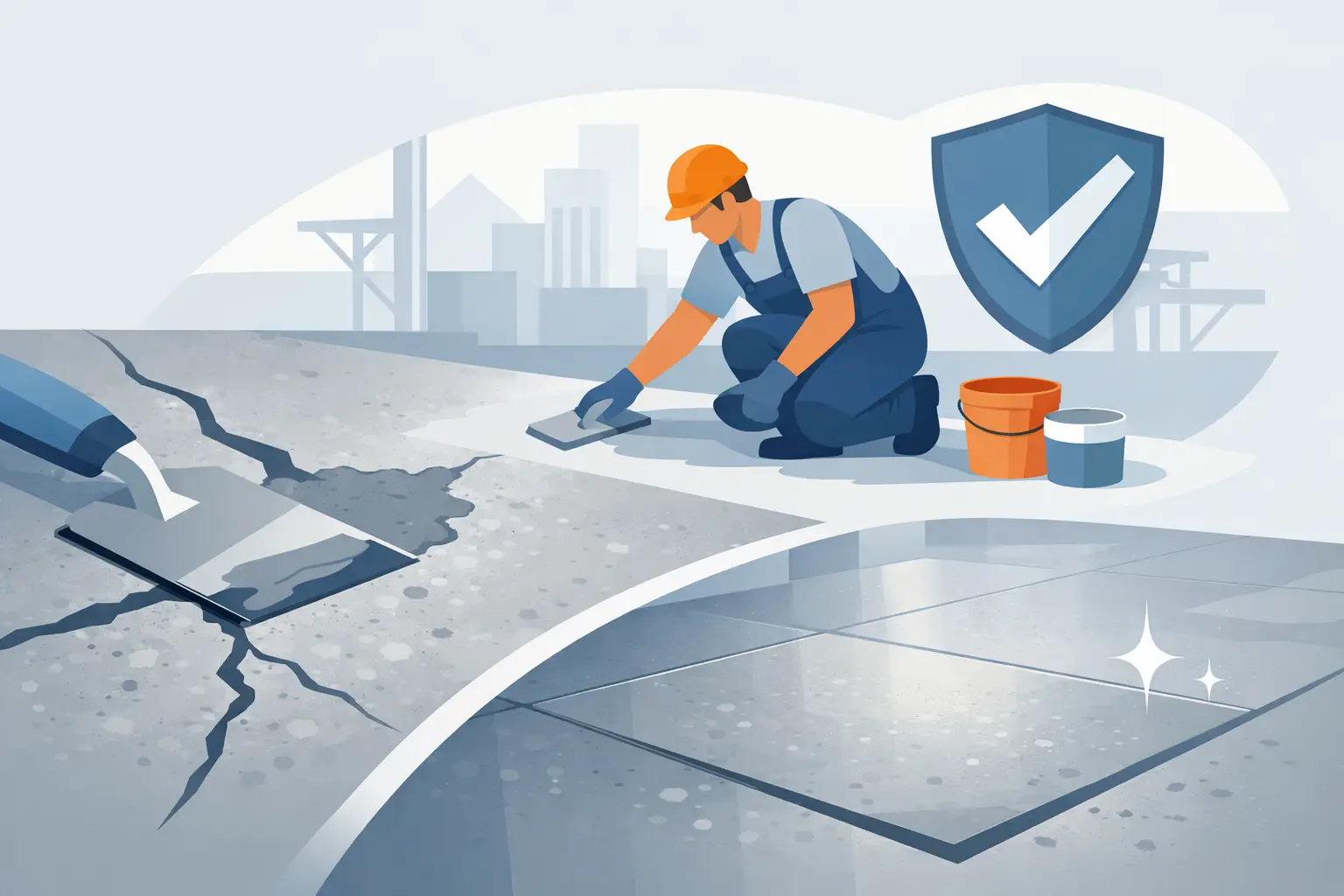
A floor usually tells you it has a problem long before it fails. Hairline cracks start collecting dirt. A chipped joint gets worse every week under cart traffic. A once-hard surface begins dusting, staining, or wearing unevenly. That is where smart concrete floor repair matters – not as a cosmetic patch, but as a way to restore performance before damage spreads into a bigger operational and budget problem.
For commercial buildings, warehouses, retail spaces, offices, and modern residential interiors, the right repair approach has to do more than make the floor look better. It needs to match the way the slab is used, the condition of the concrete beneath the surface, and the finish you expect when the work is done. A quick filler in the wrong place can fail fast. A properly prepared and repaired floor can hold up for years under heavy traffic, equipment, spills, and daily wear.
What concrete floor repair is really fixing
Most people see the symptom first, not the cause. A crack may be minor surface shrinkage, or it may point to slab movement, moisture issues, impact damage, or load stress. Spalling near joints often starts because edges are taking repeated hits from wheels or forklifts. Surface scaling can come from poor finishing, moisture vapor, freeze-thaw exposure in some environments, or a coating system that trapped problems below.
That is why serious repair work starts with diagnosis. If the floor is moving, weak, contaminated, or saturated, surface patching alone will not solve it. The best repair plans are built around traffic levels, slab condition, joint performance, moisture behavior, and the final floor system – whether that means polished concrete, a coating, a topping, or a practical industrial finish.
In high-use environments, the floor is part of the operation. If it creates dust, trip hazards, uneven wear, or constant maintenance, it is costing money every day. Repair is not just about appearance. It is about safety, downtime control, cleanability, and extending the life of the slab you already own.
Common problems that call for concrete floor repair
Cracks are the issue most owners notice first, but not all cracks deserve the same response. Some are stable and mostly cosmetic. Others shift, widen, or telegraph a bigger structural or moisture-related concern. Filling every crack the same way is one of the fastest ways to waste money.
Spalling is another frequent issue, especially at control joints and slab edges. In warehouses and industrial spaces, repeated wheel impact can break down unsupported edges quickly. Once that starts, material loss accelerates. The floor becomes rougher, harder to clean, and more dangerous for both foot traffic and rolling loads.
Then there is surface wear. Dusting, pitting, shallow erosion, and old patch failures are common in older facilities and in spaces that were never designed for current traffic levels. Some floors also suffer from failed coatings, moisture blisters, discoloration, or uneven sections that make a polished finish impossible until the substrate is corrected.
Why some repairs fail early
Most failed repairs come down to one of three problems – poor prep, the wrong material, or a repair plan that ignores how the floor actually performs.
Preparation is where quality separates itself. Concrete has to be clean, mechanically opened, and profiled correctly so repair materials can bond. If contamination, weak cream, old adhesive, or loose material stays in place, the patch may look fine on day one and start breaking down soon after.
Material selection matters just as much. A rigid filler in a moving crack can pop out. A soft product in a high-load joint can crush under traffic. A patch that cures too slowly can create unnecessary downtime. One that cures too fast without proper finishing can leave a poor surface for polishing or coating. There is no universal repair product that works for every slab, every environment, and every finish.
The third issue is mismatch. If the floor serves forklifts, pallet jacks, heavy foot traffic, chemical exposure, or a customer-facing retail environment, the repair system has to fit those demands. A repair that works in a light-duty back room may not survive in a distribution aisle. That is why experienced contractors evaluate use conditions first and product labels second.
The repair process that delivers better results
Reliable concrete floor repair follows a disciplined sequence. First comes evaluation. The slab is checked for crack type, joint damage, hollow or weak areas, contamination, moisture concerns, and finish requirements. This step determines whether the floor needs localized repair, broader resurfacing, or a more complete restoration plan.
Next comes mechanical preparation. Grinding, cutting, cleaning, and edge prep create the profile needed for proper bonding. In polished concrete projects, this stage is especially important because repairs have to blend into the floor visually and perform under the same grinding and polishing process as the surrounding slab.
Then the damaged areas are filled, rebuilt, or resurfaced with materials suited to the condition and traffic demands. Joint rebuilding may be needed where edges have deteriorated. Crack repair may involve routing and filling, stitching, or stabilization depending on movement and severity. Surface defects may call for patching compounds or cementitious toppings when damage is broader and appearance matters.
After the repair cures properly, the floor is refined. That can mean additional grinding, densifying, polishing, sealing, or applying a protective system that improves stain resistance, wear resistance, and maintenance performance. The best result is not just a repaired spot. It is a floor that performs consistently across the full surface.
Repair or replace? It depends on the slab
Replacement is sometimes necessary, but it is often recommended too quickly. Full demolition creates more cost, more downtime, and more disruption than many owners need. If the slab is fundamentally sound, targeted repair and restoration can deliver a major upgrade without starting over.
That said, not every floor is a good candidate for repair alone. If there is major settlement, deep structural failure, chronic moisture problems that were never addressed, or widespread breakdown through the slab thickness, replacement or partial replacement may be the smarter long-term move. The right answer depends on the condition of the concrete, the operational demands, and the finish standard required.
For many Southern California properties, especially older commercial spaces and industrial buildings, repair plus grinding and polishing offers a strong middle ground. It restores usability, improves appearance, reduces dust, and avoids the expense of tearing everything out. That is often the most efficient path when the goal is long-term value rather than a short-term patch.
Concrete floor repair for polished and high-traffic floors
Polished concrete raises the standard for repair work. Every filled crack, rebuilt joint, and patched area has to survive mechanical grinding and still blend with the surrounding surface. That requires precision, not guesswork.
In retail, office, hospitality, and residential settings, appearance matters. In warehouses and industrial plants, flatness, durability, and cleanability matter just as much. The challenge is achieving both. A floor cannot be considered repaired if it still catches wheels, traps dirt, or creates a visual patchwork under light reflection.
This is where contractor experience changes the outcome. Teams that understand grinding, densifiers, gloss levels, and moisture behavior are better equipped to repair a slab in a way that supports the final finish. Los Angeles Concrete Polishing works in exactly these conditions – where owners need floors that look sharp, stay serviceable, and hold up under real traffic instead of just looking acceptable for a few months.
How to know when it is time to act
Waiting is usually what makes repair more expensive. Small defects rarely stay small in active spaces. Joint spalls expand. Cracks collect moisture and debris. Surface wear exposes weaker material underneath. And every delay gives traffic more time to turn a manageable issue into a larger restoration project.
A good rule is simple. If the floor is becoming harder to clean, less safe to walk on, rougher for rolling equipment, or visibly deteriorated in customer-facing areas, it is time for a professional assessment. You do not need to wait for severe damage to justify action. Early repair is often the difference between a controlled project and a disruptive one.
The strongest floors are not the ones that never show wear. They are the ones repaired with the right methods, at the right time, for the way the space is actually used. If your concrete is showing signs of failure, treat it like an asset worth restoring, not a surface to patch and hope for the best.
Clients We Service
We provide our concrete polishing and related services to a wide variety of clients. Some of the types of clients that we provide service to include:


