
A warehouse floor does not fail all at once. It starts with tire wear in the travel lanes, dusting at the surface, shallow pitting, old patch marks, and a finish that never looks clean no matter how often it is scrubbed. That is usually the point where concrete floor topping systems move from a nice upgrade to a practical necessity.
For property owners and facility managers, the appeal is straightforward. A topping system can restore function, improve appearance, and extend the service life of an existing slab without the cost and disruption of full replacement. But not every floor is a good candidate, and not every topping is built for the same traffic, moisture conditions, or finish expectations. The right decision comes from understanding what the system is actually doing, not just what it looks like on day one.
What concrete floor topping systems actually do
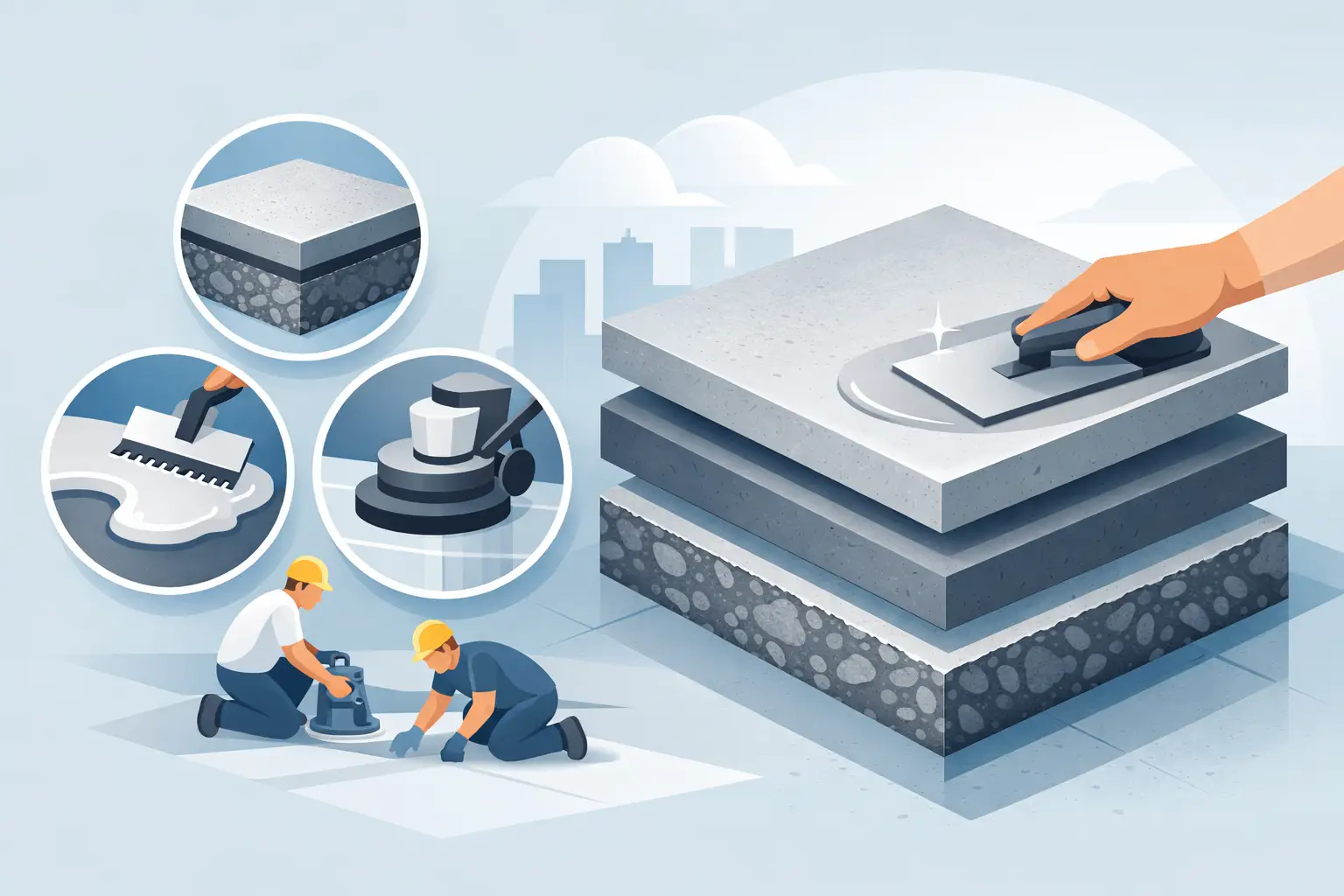
Concrete floor topping systems are engineered layers installed over an existing concrete slab to correct surface damage, improve flatness, refine appearance, or create a new wear surface. Depending on the product and application, the topping may be thin and decorative, or thicker and built to handle industrial abuse.
The biggest misconception is that toppings are only cosmetic. A quality system does far more than cover imperfections. It can address uneven texture, surface deterioration, old adhesive contamination, minor spalling, and inconsistent porosity. In many projects, it also creates a better foundation for polishing, staining, sealing, or protective treatments.
That said, a topping is not a cure for structural slab failure. If the base concrete is moving, cracking from settlement, or carrying active moisture problems that have not been addressed, putting a new layer on top will not solve the root issue. It may only delay a larger repair.
Where topping systems make the most sense
The best candidates are floors with sound underlying concrete but a compromised surface. This is common in retail spaces being remodeled, offices converting to polished concrete, warehouses with wear patterns, and lofts with old slabs that have visual inconsistencies.
In high-traffic commercial environments, toppings are often chosen because they reduce downtime compared with demolition and replacement. In residential settings, the draw is usually cleaner aesthetics and a more refined finish. In both cases, the value comes from improving performance while preserving the existing slab.
If a floor has widespread deep cracks, severe curling, or ongoing vapor transmission, the conversation changes. A professional assessment matters here because surface preparation, moisture control, and material compatibility will determine whether the system performs or starts failing early.
Common types of concrete floor topping systems
Not all toppings belong in the same category. The material selected should match the use of the space, the condition of the slab, and the desired finish.
Cement-based toppings
Cement-based toppings are a popular choice when the goal is to create a fresh, uniform concrete-like surface. They can range from skim applications to thicker resurfacing layers. These systems work well when owners want the appearance of new concrete and may later choose polished or matte finishes.
Their strength is versatility. They can correct visual inconsistency and provide a durable new wear layer, but they still depend heavily on proper slab prep and curing conditions. In busy commercial settings, that prep work is where quality shows.
Self-leveling underlayments and toppings
Self-leveling materials are designed to flow and create a flatter, smoother surface. They are especially useful where floor flatness matters, such as offices, retail interiors, and spaces preparing for finished polished surfaces or other floor coverings.
The trade-off is that not every self-leveling product is intended to remain exposed as the final wear surface. Some are excellent as a substrate but need additional protection or finishing. That distinction matters if you want a polished concrete look instead of a hidden underlayment.
Polymer-modified toppings
Polymer-modified systems improve adhesion, flexibility, and wear resistance compared with basic cement mixes. They are often used where the floor needs better durability under traffic and more resistance to everyday stress.
These systems can be a smart middle ground for commercial properties that need performance without a full industrial build-up. They are not automatically the best choice for every environment, but they are often more forgiving in demanding settings.
Heavy-duty industrial toppings
For manufacturing, warehouses, and service areas, heavy-duty toppings are built to handle impact, rolling loads, abrasion, and chemical exposure at a higher level. This is where the specification becomes more technical because compressive strength alone does not tell the whole story. Bond strength, thickness, cure schedule, and the expected traffic profile all matter.
A forklift lane, for example, creates a different wear pattern than foot traffic in a showroom. The right topping system accounts for that reality instead of treating every commercial floor the same.
Why preparation decides the outcome
A topping system is only as strong as the bond to the slab below it. That is why surface preparation is not a side detail. It is the project.
Proper mechanical grinding removes weak surface material, contaminants, coatings, and residue that can prevent adhesion. Cracks and joints need to be evaluated, not ignored. Moisture testing should happen before material is specified, especially in Southern California properties where slab histories vary widely and old buildings often hide previous flooring failures.
This is also where experienced contractors separate themselves from general resurfacing crews. A floor may look ready after cleaning, but if it still carries oils, mastic, curing compounds, or latent moisture issues, the topping can debond, blister, or telegraph defects back to the surface.
Toppings and polished concrete
One of the strongest reasons to use concrete floor topping systems is to create a surface that can be refined through grinding and polishing. When the original slab is too inconsistent, too damaged, or too patchy to produce a clean polished result, a topping can provide a fresh starting point.
This is not a one-size-fits-all process. Some toppings polish beautifully and produce a modern, uniform finish. Others are better left matte or sealed. Aggregate exposure, gloss level, and final color variation depend on the material itself and on how aggressively it is ground.
For clients who want a high-end, low-maintenance floor, this matters. The finished look is not just about shine. It is about consistency, reflectivity, stain resistance, and how the floor performs under daily traffic.
Performance trade-offs to think through
The best flooring decisions are rarely based on appearance alone. A topping that looks excellent in a showroom may not be the right answer for a back-of-house commercial environment with pallet jacks, chemical spills, and nonstop traffic.
Thinner systems generally install faster and cost less, but they may offer less impact resistance and less tolerance for substrate defects. Thicker systems can provide greater durability and correction, but they usually require more preparation, more material, and tighter installation control.
Finish expectations also change the equation. A decorative topping for a retail space may prioritize visual uniformity and polishability. An industrial floor may prioritize abrasion resistance and easier maintenance over a premium architectural finish. Neither goal is wrong. They just call for different systems.
How to choose the right system for your floor
Start with the actual demands of the space. Traffic type, cleaning routine, moisture conditions, exposure to chemicals, and aesthetic expectations should drive the recommendation. If the specification starts and ends with product brand or compressive strength, it is incomplete.
Next, look hard at the slab condition. Surface wear can be repaired. Structural movement is another story. A reliable contractor will tell you when a topping is the right solution and when the existing concrete needs deeper correction first.
Then consider downtime. Some facilities can shut down sections in phases. Others need a faster return to service. That affects product selection, prep sequencing, cure windows, and final finishing strategy. At Los Angeles Concrete Polishing, this planning stage is where long-term floor performance is won or lost.
The real value of doing it right
A properly installed topping system should not feel like a cover-up. It should feel like the floor finally matches the way the property needs to operate. Cleaner lines, easier maintenance, better light reflectivity, improved wear resistance, and fewer recurring surface repairs all add up over time.
When the slab is a good candidate and the installer understands grinding, moisture control, and finishing at a professional level, concrete floor topping systems can deliver serious value. They help owners avoid premature replacement, improve the look of the space, and get more useful life out of the concrete they already have.
The smartest next step is not choosing the fanciest finish. It is getting an honest read on the slab you have, the traffic it sees, and the result you need five years from now, not just after installation week.
Clients We Service
We provide our concrete polishing and related services to a wide variety of clients. Some of the types of clients that we provide service to include:


