
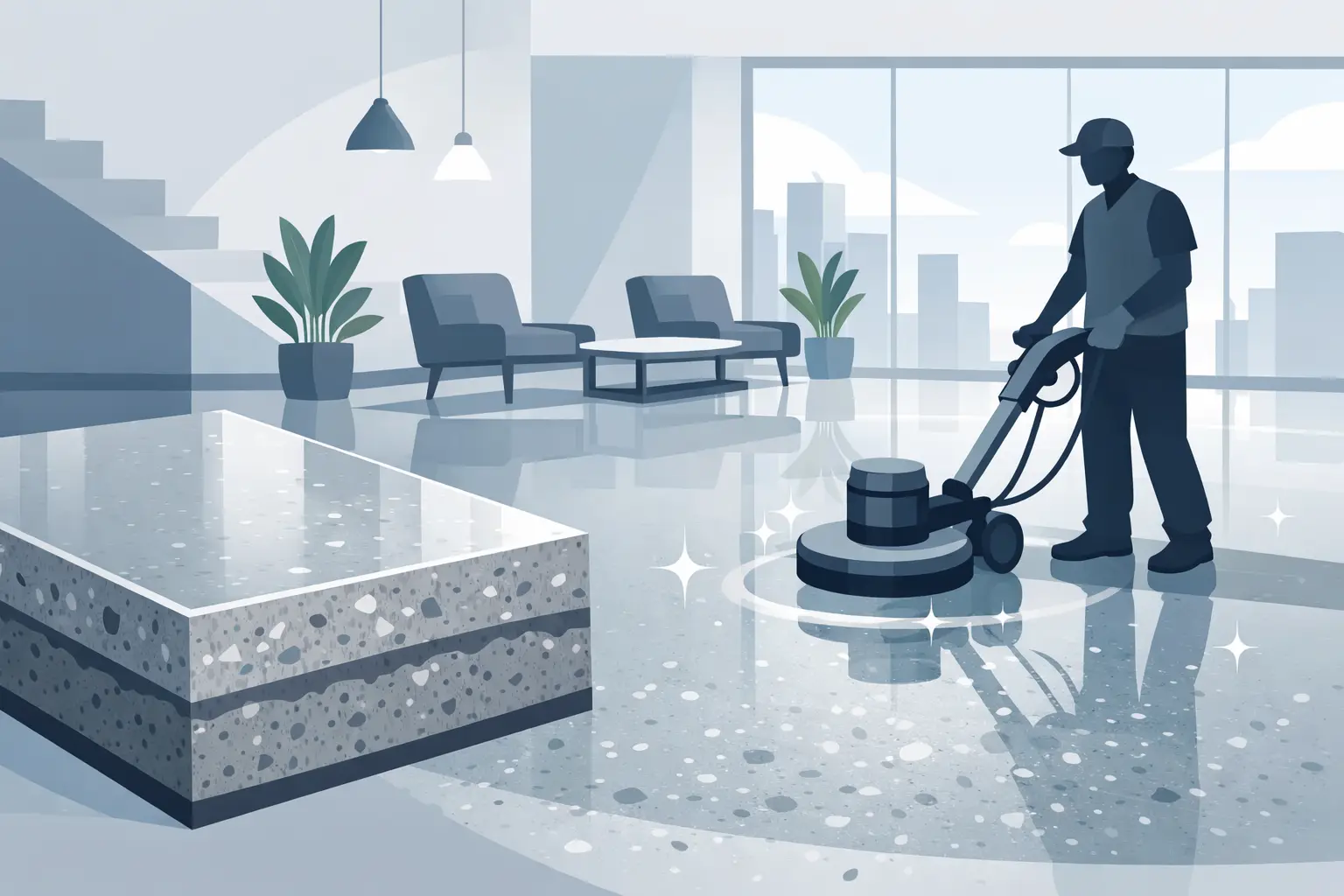
A floor starts showing its true cost long after installation. That matters if you manage a warehouse, retail space, office, or busy home and need something that can handle traffic without becoming a constant maintenance issue. So what is polished concrete? It is an existing concrete slab that has been mechanically refined through grinding, densifying, and polishing until it becomes smoother, stronger, easier to maintain, and visually cleaner than untreated concrete.
That definition sounds simple, but the performance difference is significant. Properly polished concrete is not just concrete with a shine. It is a processed flooring system built to improve durability, light reflectivity, dust control, and day-to-day cleanability while keeping the strength of the slab underneath.
What Is Polished Concrete, Really?
Polished concrete is created by using industrial diamond abrasives to grind down a concrete surface in stages. As the surface is refined, a chemical densifier is applied to harden the concrete matrix. The floor is then polished through progressively finer grits until it reaches the desired finish, whether that is a low-sheen satin look or a high-gloss reflective surface.
The key point is that polished concrete is mechanical, not topical. It is not the same thing as paint, wax, or a coating sitting on top of the floor. Because the finish is developed within the slab itself, there is no separate layer to peel, flake, or wear away in the same way a film-forming product can.
That distinction matters in high-traffic environments. In warehouses, commercial spaces, and industrial facilities, a topical finish may look good at first but require repeated reapplication. A properly polished slab often delivers better long-term value because maintenance is simpler and the wear surface is the concrete itself.
How the Polishing Process Works
The process starts with evaluating the slab. No two floors are exactly alike. Some are new and relatively flat. Others are older, stained, cracked, patched, or softened by years of use. A skilled contractor looks at hardness, moisture conditions, existing coatings, joint condition, and the level of aggregate exposure the client wants.
The first grinding passes remove contaminants, old adhesives, coatings, or weak surface material. If the project calls for aggregate exposure, grinding continues deeper into the slab to reveal sand, small stone, or larger decorative aggregate. That is where polished concrete can shift from a clean industrial look to something far more architectural.
Once the slab is properly opened up, a densifier is applied. This treatment reacts with the concrete to increase surface hardness and reduce dusting. After that, the floor is refined through finer resin-bond diamond steps. In many cases, a guard or stain-resistant treatment is added to help with maintenance and resistance to spills.
This is why polished concrete quality depends heavily on process control. Grit sequence, machine weight, speed, densifier timing, and moisture conditions all affect the final result. A rushed polish job may still shine for a moment, but it will not perform like a floor built by an experienced specialist.
Why So Many Owners Choose Polished Concrete
For commercial and industrial properties, polished concrete solves a practical problem. It gives owners a floor that looks finished and professional without creating a major maintenance burden. Dust mopping and auto-scrubbing are usually enough to keep it presentable, which is a major advantage over floors that require waxing, stripping, or frequent recoating.
Durability is a major reason polished concrete continues to gain ground. In offices, retail stores, showrooms, schools, restaurants, and warehouses, the surface can stand up to heavy foot traffic and, when properly specified, substantial rolling loads. It also improves light reflectivity, which can brighten interior spaces and support a cleaner, more modern appearance.
For homeowners and loft owners, the appeal is different but just as real. Polished concrete offers a sleek, contemporary finish that works well with open floor plans, radiant heat, and minimalist design. It is also a smart option for people who want fewer grout lines, less trapped dust, and no constant worry about scratched wood or stained carpet.
Where Polished Concrete Works Best
Polished concrete performs especially well in high-traffic environments where appearance and maintenance both matter. Warehouses, distribution centers, retail stores, manufacturing spaces, office lobbies, schools, and auto facilities are all strong candidates.
That said, it is not only for industrial buildings. In Southern California, many residential clients choose polished concrete for lofts, kitchens, living areas, and garages because the finish fits modern interiors and handles daily wear well. It also pairs well with large-format architecture and indoor-outdoor design.
Still, the right fit depends on the slab and the use case. If a floor will see repeated exposure to harsh acids or certain aggressive chemicals, another system may be more appropriate, or the polished concrete may need extra protection. If moisture vapor issues are severe, they should be addressed before polishing begins. Good flooring decisions come from matching the system to the environment, not forcing one answer onto every project.
Common Misunderstandings About Polished Concrete
One of the biggest misconceptions is that polished concrete is slippery because it is shiny. In reality, a properly finished polished concrete floor can be slip-conscious and perform well when clean and maintained correctly. Shine does not automatically mean unsafe. Surface profile, contaminants, water, and maintenance practices all matter more than appearance alone.
Another misconception is that any concrete slab can be polished to a perfect decorative finish. The truth is more nuanced. Existing slabs often contain cracks, old patches, discoloration, and variations in aggregate. Those features can become part of the final look. For some clients, that character is a benefit. For others who want a highly uniform appearance, a topping system may be the better path.
People also confuse polished concrete with sealed concrete. A sealed floor may have a glossy appearance, but it is not the same system. Sealed concrete typically relies on a topical product for protection and shine. Polished concrete gets its finish from the grinding and polishing process itself.
Finish Levels and Appearance Options
Polished concrete is not one look. Finish levels can range from matte to high gloss, and aggregate exposure can be minimal or dramatic. Some clients want a salt-and-pepper finish with a subtle, clean texture. Others want full aggregate exposure for a more decorative statement.
Color can be introduced through stains or dyes, although neutral gray remains the most common choice for commercial environments because it stays timeless and professional. In retail and office settings, higher gloss can create a more upscale feel. In industrial spaces, a lower-sheen finish may be preferred to balance performance, appearance, and maintenance priorities.
This is where a good contractor earns trust. The best result is not always the shiniest floor. It is the finish level that matches traffic demands, budget, slab condition, and the client’s expectations for long-term use.
Cost, Maintenance, and Long-Term Value
Polished concrete is often cost-efficient over the life of the floor, especially when an existing slab can be upgraded instead of covered. Initial cost depends on slab condition, repair needs, gloss level, exposure level, and whether coatings or adhesives need to be removed first. Heavily damaged floors take more work, and that affects pricing.
What makes polished concrete attractive is the reduced maintenance cycle. There is no wax to strip, no broadloom carpet to replace, and no coating film to constantly touch up. Cleaning is straightforward, and the floor holds up well in busy settings when maintained with the right equipment and products.
That does not mean it is maintenance-free. No floor is. Dirt and grit still need to be removed, spills should not sit indefinitely, and the wrong cleaners can dull the surface over time. But compared with many traditional flooring systems, the upkeep is far more manageable.
Is Polished Concrete Right for Your Property?
If you need a floor that looks sharp, performs under pressure, and does not create ongoing maintenance headaches, polished concrete deserves serious consideration. It is especially strong for high-traffic commercial properties, warehouse environments, and modern residential spaces where durability and appearance need to work together.
The deciding factors are the condition of the slab, the traffic it will carry, the look you want, and any site-specific issues like moisture or chemical exposure. That is why professional evaluation matters. A skilled polishing contractor can tell you whether your existing concrete is a strong candidate, whether repairs or moisture mitigation are needed, and what finish level will actually serve your space.
The best floors do more than look good on handoff day. They keep performing when the traffic starts, the cleaning crews move in, and the building goes back to full speed. That is where polished concrete proves its value.
Clients We Service
We provide our concrete polishing and related services to a wide variety of clients. Some of the types of clients that we provide service to include:


