
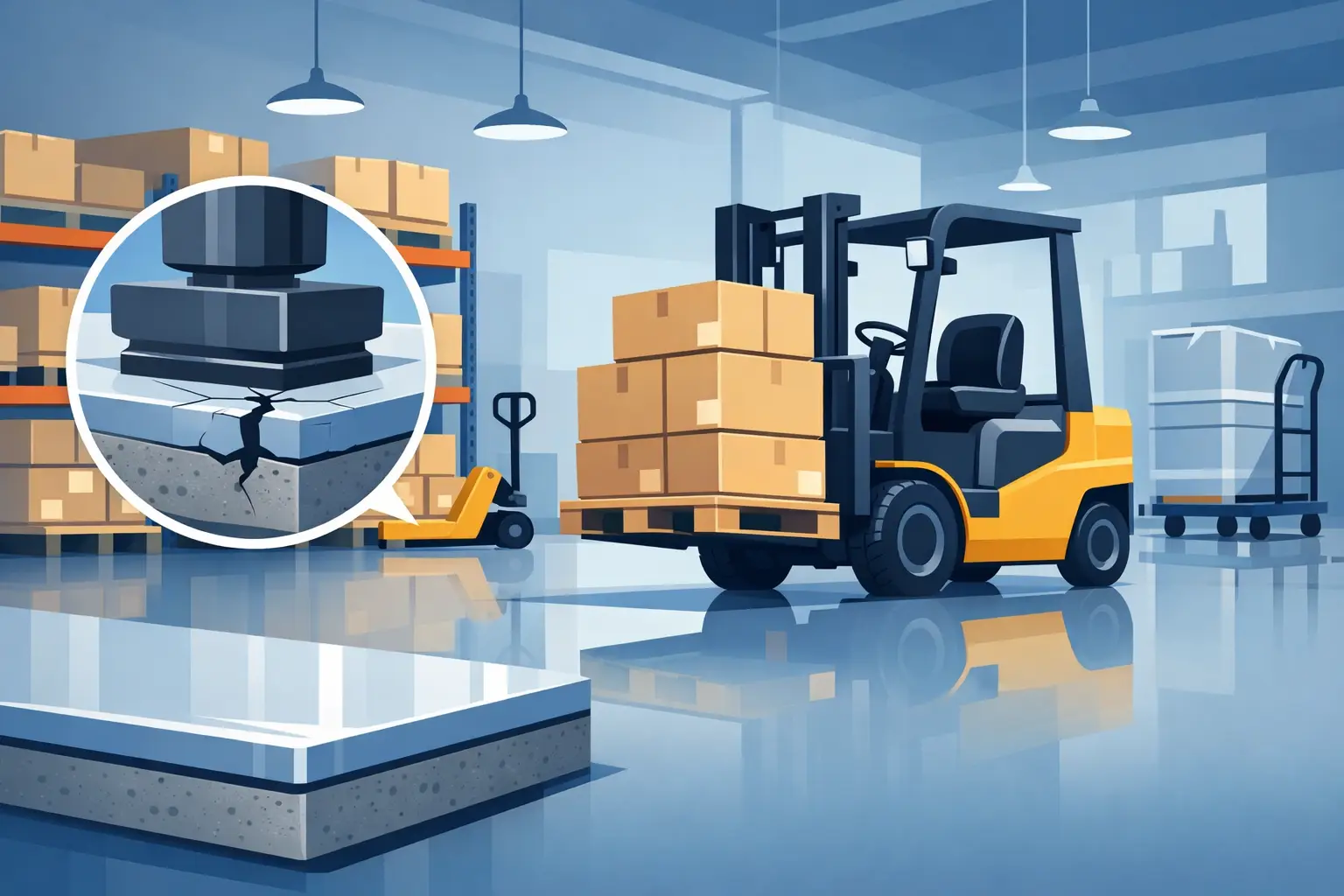
A warehouse floor is not a cosmetic afterthought. It is a working surface that absorbs forklift traffic, pallet impact, tire heat, chemical drips, loading activity, and constant foot traffic. The right warehouse floor coating protects the concrete beneath it while making the entire facility safer, cleaner, and easier to operate.
For Los Angeles and Orange County warehouse operators, the best solution is rarely the cheapest coating available. The correct system depends on the slab condition, moisture level, traffic pattern, chemical exposure, required downtime, and the performance standard the floor must meet years from now.
What a Warehouse Floor Coating Must Handle
Warehouse concrete may look solid, but it is porous. Without protection, it can collect oil, dust, contaminants, and moisture. Forklift wheels can wear down weak surfaces, while dropped tools, dragged pallets, and loading-zone traffic can chip exposed concrete. Once damage begins, cleaning becomes harder and repairs become more disruptive.
A professional coating system creates a protective wear layer over prepared concrete. Depending on the product and build, it can improve resistance to abrasion, chemicals, staining, moisture vapor, and impact. It can also add color zoning, safety striping, light reflectivity, and a more professional finish for employees, customers, inspectors, and tenants.
That does not mean every facility needs a thick industrial coating. A low-traffic storage area has different needs than a distribution center with forklifts moving through every aisle for two shifts a day. Good flooring decisions begin with the demands of the operation, not a one-size-fits-all product pitch.
Choose the Coating System for the Work
Epoxy for Build and Chemical Resistance
Epoxy is a proven choice for many warehouse environments because it can be installed in substantial thicknesses and provides strong adhesion when the concrete is properly prepared. It is well suited for facilities that need a clean, durable surface with resistance to oils, lubricants, cleaning products, and many common industrial chemicals.
Epoxy also offers design flexibility. Solid colors, colored quartz, flakes, traffic lanes, and marked work zones can be built into the system. For warehouses with light manufacturing, packaging, storage, or maintenance functions, epoxy can provide a highly functional and polished appearance.
The trade-off is curing time. Traditional epoxy systems can require longer downtime than faster-curing materials. They may also discolor under strong UV exposure, which matters near open loading bays, exterior-facing areas, or facilities with significant sunlight.
Urethane and Polyaspartic Topcoats for Wear
Urethane and polyaspartic coatings are often used where abrasion resistance, flexibility, and fast return to service matter. They can perform exceptionally well as protective topcoats over epoxy systems, especially in areas subject to tire traffic, temperature swings, and frequent cleaning.
Polyaspartic systems are particularly valuable when shutdown windows are tight. Some installations can move from preparation to service much faster than conventional coating schedules allow. That advantage is meaningful for active Southern California warehouses where closing an aisle or loading area for several days can affect deliveries and labor planning.
Fast curing is not automatically the best answer. The slab still needs proper mechanical preparation, crack treatment, and moisture evaluation. Rushing the installation process on a poorly prepared floor can lead to peeling, bubbling, or premature wear regardless of how advanced the coating material may be.
Cementitious Urethane for Severe Conditions
For commercial kitchens, food processing areas, washdown rooms, cold storage spaces, and facilities exposed to thermal shock, cementitious urethane may be the stronger choice. It is thicker and more tolerant of demanding conditions than many decorative coating systems.
This type of floor is built for performance rather than shine alone. It can withstand repeated temperature changes, heavy cleaning routines, moisture, and aggressive service conditions. It is a serious industrial solution, and it should be specified based on the actual environment rather than installed where a simpler system would do the job at lower cost.
Concrete Preparation Determines Coating Life
The coating is only as reliable as the concrete beneath it. A glossy finish applied over dust, laitance, old adhesive, weak concrete, or contamination will not perform like a professionally installed floor. This is where experienced contractors separate durable projects from short-lived cosmetic upgrades.
Mechanical diamond grinding or shot blasting opens the concrete profile so the coating can bond correctly. The process removes weak surface material and prepares the slab for the specific coating thickness being installed. Existing coatings, mastics, paint, tire marks, and surface contaminants may need to be removed before the new system can begin.
Cracks and joints require attention as well. Some cracks can be repaired and filled for a smoother result, but moving joints should not simply be buried under rigid material. A knowledgeable contractor will determine which areas need flexible joint treatment and which defects indicate deeper slab issues.
Moisture testing is equally critical. Concrete can release moisture vapor long after it appears dry on the surface. If vapor pressure is excessive, a standard coating may lose adhesion. In those cases, a moisture-mitigation primer or a different flooring system may be needed. Skipping this step is one of the most expensive mistakes a warehouse owner can make.
Safety Should Be Designed Into the Floor
A warehouse floor needs to be cleanable, but it cannot become dangerously slick when exposed to water, oil, or routine cleaning. The right level of slip resistance depends on how the space operates. A dry storage warehouse may need a different texture than a shipping area where rain, wet tires, or washdown activity are common.
Broadcast aggregates can improve traction without creating an overly rough surface that traps dirt or makes carts difficult to roll. The goal is controlled grip, not an abrasive floor that becomes difficult to maintain. Texture, coating thickness, cleaning methods, and footwear all affect real-world slip performance.
Color can improve safety too. Clearly defined forklift lanes, pedestrian walkways, staging zones, hazard borders, and equipment pads help facilities organize movement. These details are not decorative extras. They can make traffic flow easier to understand and support a more disciplined operating environment.
Plan for Downtime Before Work Begins
The best warehouse floor coating project is planned around the operation. That may mean completing work in phases, isolating inventory, moving equipment by section, or scheduling installation during a planned shutdown. A contractor should establish the preparation schedule, cure window, access restrictions, and return-to-service expectations before the crew arrives.
Do not assume that a floor is ready for full forklift traffic simply because it feels dry. Coatings need sufficient cure time to reach the intended performance level. The exact timeline varies by product, temperature, slab conditions, and system thickness. Light foot traffic, pallet jacks, and loaded forklifts may each require different wait periods.
Facility managers should also consider ventilation, odor sensitivity, food-related requirements, drainage, and the possibility of future layout changes. A coating system that works perfectly in open storage may need a different approach in battery-charging areas, maintenance bays, or chemical-handling zones.
Coating vs. Polished Concrete
Not every warehouse needs a coating. Mechanically polished concrete can be an excellent option for dry warehouses, retail-adjacent storage areas, showrooms, offices, and facilities that want a refined surface with low ongoing maintenance. Diamond polishing densifies and refines the existing slab rather than covering it with a film-forming layer.
Polished concrete offers strong wear performance and light reflectivity, but it is not a substitute for a chemical-resistant coating in every environment. If the floor faces oils, corrosive chemicals, standing water, or intense point loading, a coating or topping may provide better protection. The decision should be based on use, not appearance alone.
Get the Long-Term Cost Right
A lower upfront bid can become expensive if it ignores surface preparation, moisture control, crack repair, or the required coating thickness. Early peeling does more than create an unattractive floor. It creates repair costs, operational interruptions, safety concerns, and potential damage to a facility’s professional image.
The strongest value comes from specifying the system correctly, preparing the slab thoroughly, and maintaining it with compatible cleaning practices. Los Angeles Concrete Polishing evaluates these details before recommending a solution, because warehouse flooring must perform in the real conditions of the building, not just look good on installation day.
Before approving any project, walk the floor with your contractor and identify where the warehouse actually takes abuse: dock doors, turning lanes, racking aisles, charging stations, maintenance areas, and high-traffic entrances. Those details will point you toward a floor that stays in service, protects your investment, and supports the pace of your operation.
Clients We Service
We provide our concrete polishing and related services to a wide variety of clients. Some of the types of clients that we provide service to include:


