
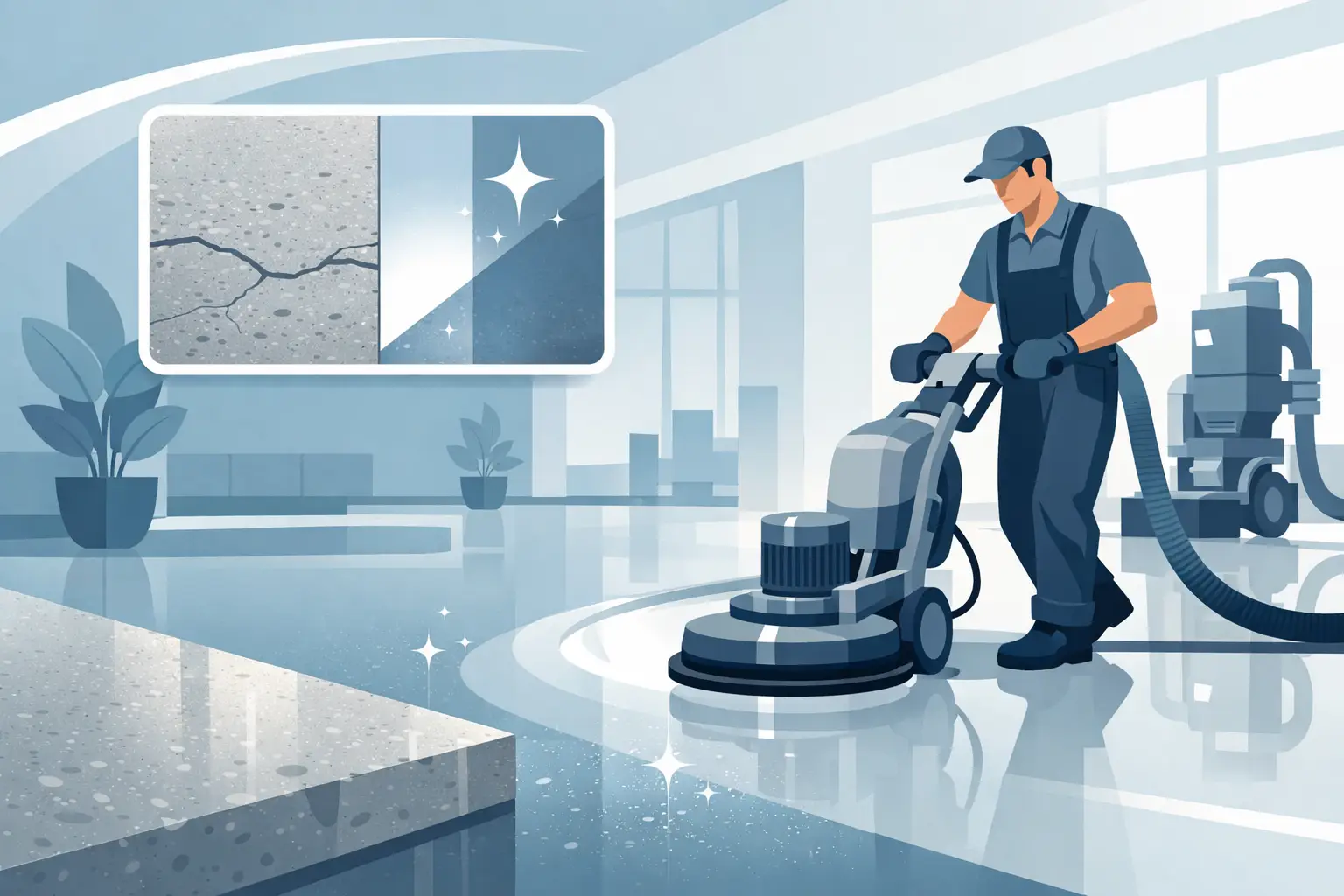
A polished concrete floor can look clean, high-end, and easy to maintain – but only if the process is done correctly. If you are asking how to polish concrete floors, the real answer is not just about making concrete shiny. It is about reading the slab, choosing the right grit sequence, controlling dust and moisture, and building a surface that holds up under real traffic.
That matters whether you are managing a warehouse, upgrading a retail space, finishing an office, or modernizing a residential loft. Concrete polishing is one of the most durable flooring solutions available, but it rewards precision and punishes shortcuts.
How to Polish Concrete Floors: Start With the Slab
Every successful polishing job starts with the existing concrete. A newer slab may seem like an easier candidate, but new concrete can still have curing issues, surface laitance, or flatness problems. Older concrete often brings staining, cracks, coatings, adhesive residue, and wear patterns that have to be addressed before any real polishing begins.
This is where many projects go off track. People assume polishing starts with a high-grit pass to add shine. In reality, the first stage is usually aggressive grinding to remove contaminants, flatten the surface, and expose sound concrete. If the slab has soft spots, moisture issues, or deep damage, those conditions need to be handled first. No polishing system can hide a failing substrate for long.
The slab also determines the final appearance. Some floors are polished for a cream finish with minimal aggregate exposure. Others are cut deeper to reveal salt-and-pepper texture or larger aggregate. Neither is automatically better. The right choice depends on the concrete itself, the look you want, and how much grinding the slab can tolerate without creating unwanted variation.
The Actual Process Behind Polished Concrete
When people talk about polished concrete, they sometimes mix it up with a coating. It is not the same thing. True polished concrete is a mechanical process that refines the concrete surface using industrial grinders and progressively finer diamond abrasives.
The process usually begins with coarse metal-bond diamonds. These initial passes remove existing sealers, mastics, paint, or weak surface material. They also help level high spots and open the concrete. After that, cracks, joints, and minor surface defects are commonly repaired so the floor can be refined more evenly.
Next comes chemical densification. A densifier reacts with the concrete and hardens the surface, making it more resistant to abrasion and better able to take a polish. This is a critical stage, especially in commercial and industrial settings where the floor has to stand up to carts, forklifts, foot traffic, and routine cleaning.
After densifying, the floor moves through finer grit stages, often shifting from metal-bond to resin-bond diamonds. Each pass removes the scratch pattern from the previous stage. That is what creates clarity and reflectivity. If a contractor skips grit levels or rushes the sequence, the floor may look acceptable at first glance but develop haze, inconsistent gloss, or premature wear.
The final step depends on the project goals. Some polished concrete floors receive a guard or stain-resistant treatment to improve cleanability and help maintain appearance. That does not replace the polishing process. It supports it.
What Equipment and Materials Are Used
If you want to know how to polish concrete floors correctly, the answer always includes professional equipment. This is not a simple mop-and-buff job. Real concrete polishing typically involves planetary grinders, edge grinders, industrial HEPA vacuums, diamond tooling in multiple grit levels, densifiers, repair materials, and gloss measurement tools.
Tooling selection matters more than most people realize. Hard concrete and soft concrete do not respond the same way. A dense warehouse slab in Southern California may require a different bond than a more porous residential slab. Dust management matters too, especially in occupied facilities where downtime and air quality are serious concerns.
For edge work, separate tools are used because large grinders cannot reach tight perimeters, corners, or areas around columns. This is often where lesser contractors leave a floor looking unfinished. A polished field with dull edges is not a complete system.
How Long Does It Take?
It depends on the size of the floor, the condition of the slab, the level of aggregate exposure, and the target gloss. A clean, open commercial floor in decent condition moves faster than a heavily patched space with coatings and adhesive removal. Residential projects can be quicker in square footage but slower in detail work because of tighter layouts and access limitations.
Operational constraints also affect schedule. In active warehouses, offices, and retail environments, work may need to be phased to reduce disruption. That is why experienced contractors build polishing plans around both floor conditions and business use. The best result is not just a glossy surface. It is a floor installed with control, safety, and minimal interruption.
Common Mistakes That Ruin Results
The biggest mistake is treating polishing like a cosmetic shortcut. A floor that still has moisture problems, weak concrete, or contamination will not perform well no matter how glossy it looks on day one. Surface preparation is where long-term success is won.
Another common issue is chasing shine too early. Gloss is the byproduct of proper refinement, not the goal of the first pass. Contractors who rush through the grind sequence often leave behind swirl marks, uneven reflectivity, or weak spots that absorb dirt and wear faster.
There is also a misunderstanding around slip resistance. Many people assume a shinier floor is automatically more slippery. In practice, polished concrete can be a slip-conscious flooring solution when it is properly finished and maintained. The exact performance depends on contaminants, cleaning practices, traffic type, and whether the environment stays wet. A restaurant kitchen and a dry retail showroom should not be treated the same way.
Using the wrong maintenance products is another costly problem. Harsh cleaners, topical waxes, and film-building products can reduce clarity and interfere with the floor’s natural performance. Polished concrete is popular because it is low maintenance, not because it is no maintenance.
Choosing the Right Finish for the Space
Not every floor needs the same polish level. In a luxury retail store or modern office, a higher gloss finish may support the brand image and improve light reflectivity. In an industrial facility, durability, ease of cleaning, and consistent traction may matter more than a mirror-like look.
That is why finish selection should be tied to use, not just appearance. Aggregate exposure, gloss level, stain resistance, and maintenance expectations all need to line up with the way the property actually operates. A floor that looks impressive but cannot handle the traffic is the wrong floor.
In Los Angeles and Orange County, this often comes up in mixed-use properties, creative offices, storefronts, and converted residential spaces where owners want a polished look without taking on high maintenance. The right system can absolutely deliver that, but only when the slab and the finish level are matched correctly.
DIY vs. Professional Concrete Polishing
For small residential areas, there are rental machines and consumer products marketed as polishing solutions. They can improve appearance in some cases, but they are not the same as professional mechanical polishing. The difference shows up in flatness, edge quality, clarity, durability, and long-term maintenance.
Professional crews know how to read a slab, adjust tooling, manage transitions, and keep the scratch pattern consistent across the floor. They also know when a floor is a good polishing candidate and when another system makes more sense. That judgment protects your budget.
For commercial, industrial, and high-traffic environments, professional polishing is the standard for a reason. These floors do real work. They need to perform under traffic, cleaning equipment, spills, and daily wear. A lower upfront price means very little if the floor has to be corrected or replaced early.
Maintenance After the Floor Is Polished
Once the floor is complete, maintenance is straightforward if it is done correctly. Dry dust mopping or microfiber cleaning removes abrasive grit before it can dull the surface. Routine wet cleaning with a pH-neutral cleaner helps preserve clarity without leaving residue.
The key is consistency. Dirt acts like sandpaper under foot traffic and wheels. In high-use facilities, proper maintenance is what protects the polished finish and extends the life of the floor. Periodic burnishing or refresh work may be recommended depending on the traffic level and desired appearance, but that is still far less demanding than maintaining many coated systems.
Los Angeles Concrete Polishing works with clients who need more than surface shine. They need floors that hold up, clean easily, and support the way their buildings actually function. That is the difference between a floor that looks polished and one that is professionally built to stay that way.
If you are planning a concrete flooring upgrade, the smartest move is to judge the process before you judge the shine. A polished floor earns its value in the grinding, the densifying, the detail work, and the discipline behind every pass.
Clients We Service
We provide our concrete polishing and related services to a wide variety of clients. Some of the types of clients that we provide service to include:


