
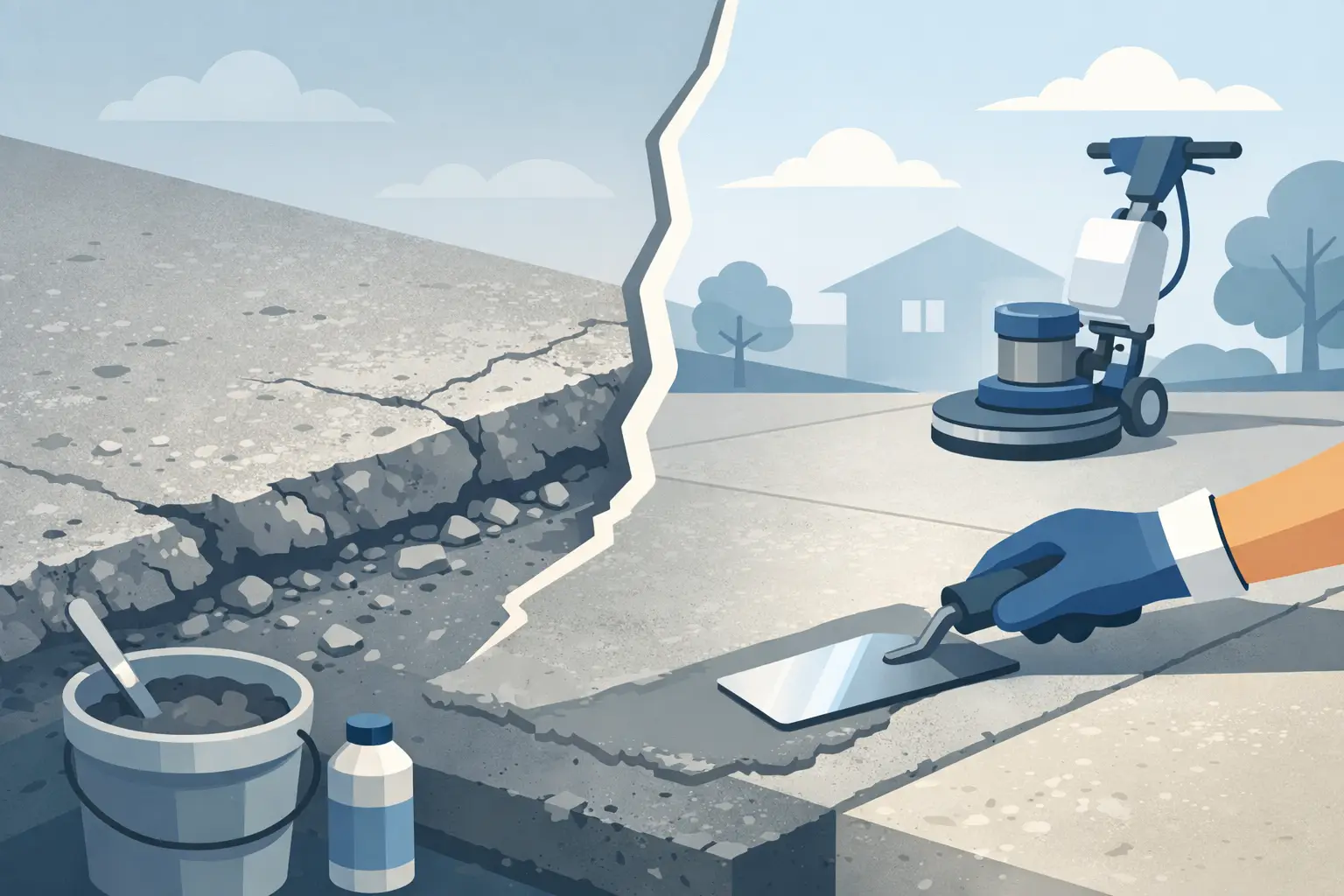
A worn slab does not always need to be removed. In many warehouses, retail spaces, offices, garages, and Los Angeles homes, the most cost-effective answer is to restore a worn concrete surface already in place. The right restoration process can eliminate failing coatings, level rough traffic lanes, reduce dust, improve traction, and create a clean finish built for the way the property actually operates.
The key is not applying a quick cosmetic cover over damaged concrete. A floor that is chipped, stained, dusty, or uneven needs a proper evaluation of the slab, moisture conditions, traffic load, and desired finish before any material goes down. That is how a restored floor performs for years rather than looking good for a few months.
Start With the Cause of the Wear
Concrete wear is rarely random. Forklift tires can polish travel paths while abrading aggregate in loading areas. Repeated impacts can chip slab edges and joints. Chemical spills may etch or discolor the surface. In offices, retail stores, and residential spaces, old adhesive, paint, carpet backing, and failed coatings often hide a concrete surface with uneven absorption and visible repair work.
Before selecting a finish, identify what caused the problem. Surface-only damage has a very different solution than structural movement, active moisture vapor, or deep cracking. Grinding and polishing can transform a mechanically sound slab, but they cannot stop a foundation from moving or make an active leak disappear.
A professional assessment should look at slab hardness, flatness, cracks, joint condition, previous coatings, contamination, and moisture. For commercial facilities, it should also consider cleaning methods, wheeled traffic, point loads, chemical exposure, and the amount of downtime the operation can tolerate. These details determine whether polished concrete, a protective coating, a cementitious topping, or a combination of systems is the strongest investment.
The Best Methods to Restore a Worn Concrete Surface
There is no single restoration product that fits every floor. The correct method depends on the condition of the concrete and the performance target. A distribution center needs a different solution from a loft, showroom, restaurant, or residential garage.
Diamond Grinding Creates a Sound Starting Point
Diamond grinding is the foundation of many concrete restoration projects. Industrial grinding equipment removes failing coatings, adhesive residue, surface contamination, high spots, and weak concrete. It can also level transitions, reduce trip hazards, and expose a fresh, consistent concrete profile for the next stage.
This is not the same as lightly sanding a floor. Professional machines use controlled diamond grits and dust-collection systems to cut the slab evenly while keeping the work area cleaner. The amount of material removed is carefully matched to the problem. Heavy grinding may be needed to remove thick epoxy or correct uneven areas, while a lighter pass may be enough to prepare a floor for a new protective system.
Grinding also reveals the truth about the slab. Hidden cracks, low spots, old patching, and aggregate exposure become visible once coatings and residue are removed. That makes it possible to repair the floor correctly before the final finish is installed.
Repair Cracks, Spalls, and Joints Before Finishing
Cracks and chipped areas are not simply visual defects. In high-traffic facilities, damaged joints and spalls can catch pallet jacks, wear down forklift wheels, and continue breaking apart under impact. Repairs should be completed after initial surface preparation and before polishing or coating.
The repair material must be compatible with the floor system and the expected movement. Rigid repairs may be appropriate for stable spalls and certain cracks, while control joints often need a flexible joint filler that can support traffic without preventing normal slab movement. A visible repair line is sometimes unavoidable, especially on older concrete. The goal is a durable, clean, level floor, not a promise that every repair will vanish.
For decorative polished concrete, color-matched repair materials can reduce contrast, but they will not always blend perfectly with decades-old concrete. Property owners should treat existing slab variation as part of the finish character or choose a topping or coating when a more uniform appearance is required.
Densify and Polish for Long-Term, Low-Maintenance Performance
If the existing slab is in good condition and the goal is a refined, durable floor, polishing is often the best route. After grinding, a liquid densifier is applied to react with the concrete and harden the surface. The floor is then refined through progressively finer diamond grits until it reaches the selected level of clarity and gloss.
Polished concrete works especially well for warehouses, offices, retail environments, showrooms, and modern homes because it is not a thin film waiting to peel. The finished surface is mechanically refined concrete, making it highly resistant to wear from daily traffic when maintained properly. It also reflects more light than a dull slab, which can improve the feel and visibility of large interior spaces.
Gloss is a practical decision, not just a design preference. A low-sheen honed finish can hide dust and traffic marks better in active industrial spaces. A higher-gloss finish creates a stronger visual statement for retail, hospitality, and residential interiors, but it may show scuffs and require more attentive routine cleaning. Slip resistance should be evaluated as part of the full floor system, including contaminants, footwear, drainage, and cleaning practices.
Use Coatings When Chemical Protection or Color Matters Most
A coating system can be the better choice when the floor needs distinct color zones, stronger resistance to specific chemicals, or a uniform appearance over heavily repaired concrete. Epoxy, urethane, polyaspartic, and other resinous systems can provide excellent protection when they are specified for the environment and installed over properly prepared concrete.
The trade-off is that coatings are surface films. They can wear, scratch, or delaminate if moisture pressure, contamination, or preparation is ignored. A coating is only as reliable as its bond to the slab. Moisture testing and mechanical preparation are essential, particularly in Southern California buildings where older slabs, below-grade spaces, or changing site conditions can create unexpected vapor issues.
For food service, manufacturing, auto service, and industrial operations, a system may include a broadcast aggregate for added texture and traction. The right texture improves footing, but aggressive profiles can trap dirt and make cleaning more demanding. That balance should be chosen around the cleaning process and real workplace conditions, not a product brochure.
Consider a Topping for Severely Damaged or Uneven Concrete
When the slab has widespread cosmetic damage, rough patching, or an inconsistent profile that polishing cannot solve attractively, a cementitious topping may be the smarter path. Toppings create a fresh, durable wearing surface that can be polished, sealed, or coated depending on the design and performance goals.
A topping is not a shortcut around preparation. The original slab still needs to be sound, clean, and properly profiled. Moisture and movement conditions must also be addressed. When specified correctly, however, a topping can give a deteriorated floor a more consistent appearance than trying to force an old slab into a high-end polished finish.
Plan the Project Around Operations, Not Just Appearance
For facility managers, the floor restoration schedule matters as much as the finish. A warehouse cannot always stop shipping for a week, and a retail business cannot afford to close during a busy sales period. The strongest contractors build the work sequence around access requirements, cure times, traffic routes, and phased areas.
A practical plan may divide the floor into sections, complete repairs and grinding after hours, and reopen areas as the system allows. Some coating systems return to service faster than others, but faster is not automatically better. Rushing moisture testing, surface preparation, or cure requirements can create a far more expensive failure later.
Ask for clear expectations about dust management, odor, noise, furniture or equipment relocation, protection of adjacent finishes, and return-to-service timing. For active commercial spaces, these details separate a controlled flooring project from an operational disruption.
Protect the Restored Floor With the Right Maintenance
Even the best restored concrete surface needs basic care. Dry debris is abrasive, so routine dust mopping or auto-scrubbing helps protect the finish. Use cleaning products suited to the floor system, especially with polished concrete and specialty coatings. Harsh acids, high-alkaline cleaners, and unapproved degreasers can dull a finish or weaken protection over time.
Address spills quickly, maintain joint fillers, and use entry mats where grit and moisture enter the building. In forklift environments, review wheel condition and traffic patterns because repeated hard turns in the same location can accelerate wear. Maintenance is modest compared with many flooring options, but it is not optional.
When you restore a worn concrete surface with proper preparation and a finish matched to its use, the floor becomes an asset instead of a recurring repair problem. Choose the system that fits the slab, the traffic, and the operational reality, then give it the maintenance discipline it deserves.
Clients We Service
We provide our concrete polishing and related services to a wide variety of clients. Some of the types of clients that we provide service to include:


