
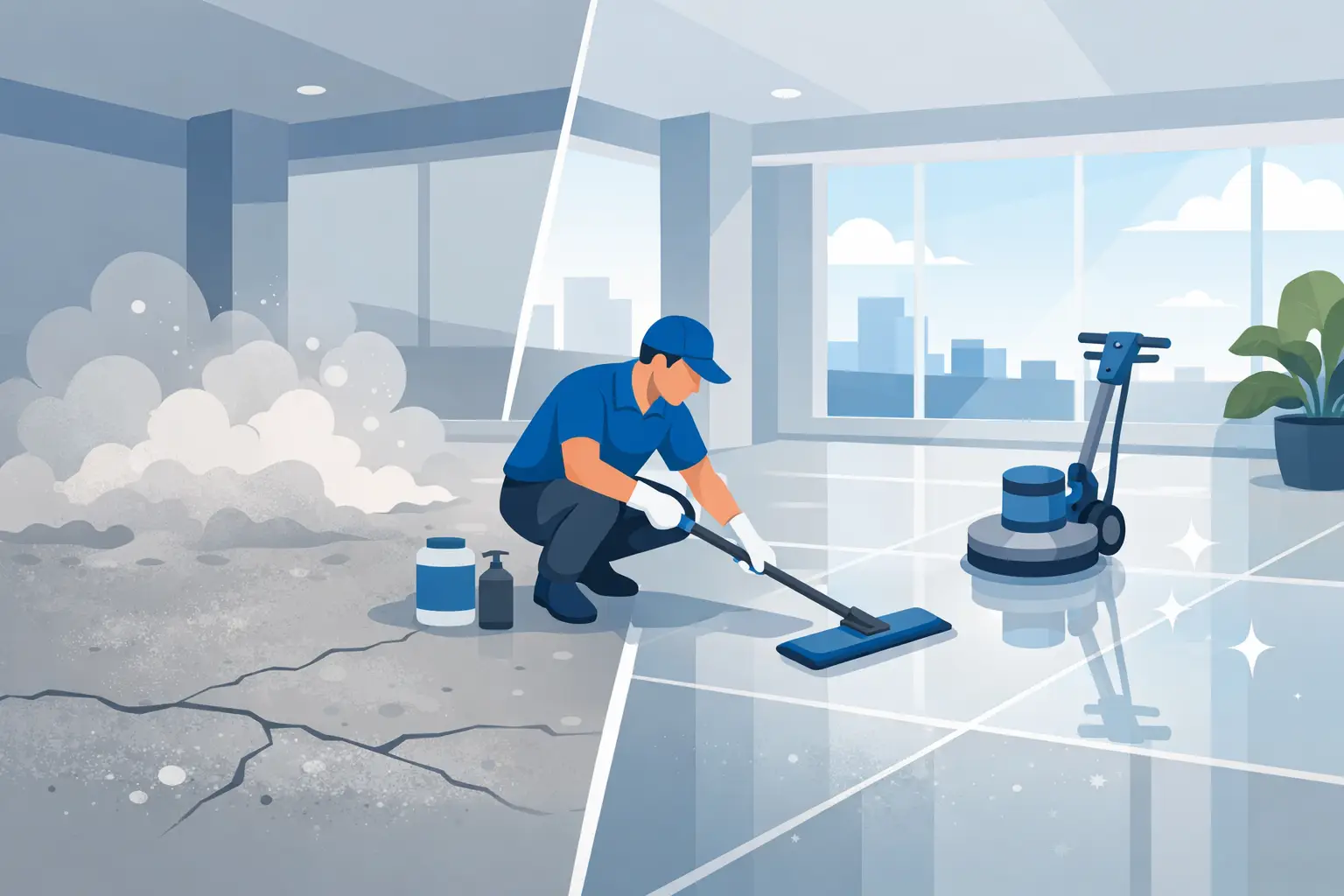
A dusty concrete floor is not just a housekeeping problem. In warehouses, retail spaces, garages, offices, and lofts, it can contaminate inventory, create a worn-down appearance, increase cleaning labor, and signal that the slab surface is breaking down. Knowing how to reduce floor dusting starts with identifying why the concrete is shedding fine particles in the first place. The best fix is rarely more frequent sweeping. It is creating a harder, denser, properly protected surface.
Why Concrete Floors Start Dusting
Concrete dusting occurs when the top layer of a slab is weak enough to wear away under foot traffic, rolling carts, forklifts, cleaning equipment, or even regular air movement. The particles may be nearly invisible at first, but they collect along walls, settle on shelving, and return soon after cleaning.
A poorly finished or under-cured slab is a common cause. When fresh concrete dries too quickly, is overworked during finishing, or lacks adequate cement at the surface, the upper paste can remain soft and porous. Older slabs may dust because years of abrasion have worn through the original surface. In industrial buildings, hard wheels and forklift traffic can accelerate that wear dramatically.
Moisture is another major factor, especially in Southern California buildings with aging slabs, changing site drainage, or moisture vapor moving upward from below. Moisture can weaken coatings, carry salts to the surface, and make a temporary treatment fail early. Before selecting a solution, the concrete needs to be evaluated for surface hardness, contamination, cracking, moisture conditions, and the level of traffic it must handle.
How to Reduce Floor Dusting With Surface Densification
For sound, uncoated concrete, a penetrating densifier is often the most effective first line of defense. Densifiers react within the concrete to help harden the surface and reduce its ability to release fine dust. Unlike a topical coating, the material is designed to become part of the slab rather than sit on top of it as a film.
Lithium-based densifiers are frequently selected for commercial and high-traffic applications because they penetrate effectively and are less likely to leave a residue. The exact product and application method depend on the slab’s condition. A severely soft or damaged surface may require grinding and preparation before densification can perform as intended.
Densification is a practical choice when a facility wants to control dust without changing the floor’s appearance substantially. It can preserve the natural concrete look and improve cleaning performance. However, it is not a cure for deep spalling, widespread delamination, oil-saturated concrete, or active moisture problems. Those conditions should be corrected first, not covered up.
Proper Preparation Makes the Difference
A densifier cannot penetrate through dirt, old wax, adhesive residue, paint, curing compounds, or failing sealer. Professional surface preparation may include diamond grinding, mechanical scrubbing, residue removal, and crack repair. This work exposes stable concrete and gives the treatment a real opportunity to do its job.
Preparation also reveals whether the floor is structurally suitable for a simple dustproofing treatment. If grinding exposes weak concrete well below the surface, a topping, repair mortar, or coating system may be the smarter investment. The goal is not to sell the most elaborate system. It is to specify a floor that can hold up to actual use.
Polish the Concrete for Long-Term Dust Control
Concrete polishing is one of the strongest long-term answers for facilities that need a durable, low-maintenance floor with a cleaner finished appearance. The process uses progressively finer diamond abrasives to refine the surface, typically combined with densifier application at the appropriate stage. The result is tighter, harder concrete that sheds far less dust and is easier to maintain.
Polished concrete is especially effective in warehouses, showrooms, retail stores, offices, restaurants, and modern residential spaces. It holds up well under heavy traffic, improves light reflectivity, and removes the recurring expense of waxes and frequent recoating associated with some traditional floor finishes.
Gloss level should match the environment. A lower-sheen honed finish may be ideal for a working warehouse or industrial corridor where traction, durability, and subtle appearance matter most. A higher-gloss polish can make a retail floor, lobby, loft, or showroom look dramatically more refined. Higher gloss may show tire marks and debris more readily, so maintenance expectations should be part of the decision.
Polishing is not always the right choice for every slab. Floors with extensive patching, heavy surface contamination, or a need for bold color may be better served by a resurfacing system or resinous coating. But when the existing concrete is in reasonably good condition, professional diamond polishing is one of the most cost-efficient ways to stop dusting while upgrading the entire space.
Use Coatings When the Floor Needs a Protective Barrier
Epoxy, urethane, polyaspartic, and other coating systems can eliminate concrete dusting by sealing the surface behind a protective layer. They are often a strong fit for facilities exposed to chemicals, oils, stains, frequent washdowns, or demanding industrial activity.
The trade-off is that coatings depend heavily on surface preparation and moisture management. If vapor pressure is high or the slab is not properly profiled, even a premium coating can blister, peel, or delaminate. A moisture test and a review of the building’s use are essential before committing to a coating system.
Coatings also need periodic maintenance and eventual renewal, particularly in forklift lanes and high-impact areas. That does not make them a lesser option. It simply means they should be selected for the right operational reason: chemical resistance, color coding, sanitary cleaning, visual branding, or a specific protective requirement. For a facility seeking the natural look of concrete with minimal film maintenance, densified polished concrete is often the better fit.
Control Moisture Before It Undermines the Floor
Dusting and moisture often show up together, but they require different remedies. If water is entering through doors, wall joints, plumbing leaks, or poor exterior drainage, correct those sources before treating the floor. If moisture vapor is moving through the slab from below, the project may require a moisture-mitigation system before installing a coating or topping.
Watch for white powdery deposits, dark damp areas, recurring coating failures, or dust that returns heavily in the same locations. These signs do not automatically mean the slab has failed, but they justify a professional assessment. Applying a sealer over an active moisture issue may only delay the problem and add replacement costs later.
Change Cleaning Practices That Create More Dust
Even a well-treated concrete floor can look dusty when cleaning methods are working against it. Dry sweeping with worn bristles often pushes fine particles into the air instead of removing them. For larger commercial spaces, a dust-control mop, microfiber system, or properly maintained auto scrubber is typically more effective.
Use a neutral cleaner designed for concrete or the installed floor system. Harsh acidic cleaners can damage polished concrete, while greasy soaps can leave a film that attracts soil. For warehouse floors, keep walk-behind scrubbers in good condition and use clean pads or brushes. Dirty equipment can redistribute residue across the slab.
Entrance mats also matter. Grit tracked in from parking areas acts like sandpaper under shoes and cart wheels. In high-traffic facilities, matting at exterior entries and service doors can reduce abrasion before it reaches the finished floor.
When a Dusting Floor Needs More Than a Quick Fix
A basic densifier may be enough for a lightly used garage or storage area with a stable surface. A distribution center with forklift traffic, a retail showroom, and a residential loft have very different performance requirements. The right solution depends on slab condition, traffic load, moisture, downtime limits, cleaning practices, and the finish the owner expects.
Los Angeles Concrete Polishing evaluates these factors before recommending grinding, densification, polished concrete, toppings, or protective coatings. That project-specific approach helps property owners avoid spending money on a cosmetic treatment that will not survive the environment.
A floor that stops shedding dust becomes easier to clean, safer to operate, and more professional to look at. Address the concrete surface before the dust becomes part of the daily routine, and choose a system built for the work your space actually demands.
Clients We Service
We provide our concrete polishing and related services to a wide variety of clients. Some of the types of clients that we provide service to include:


