
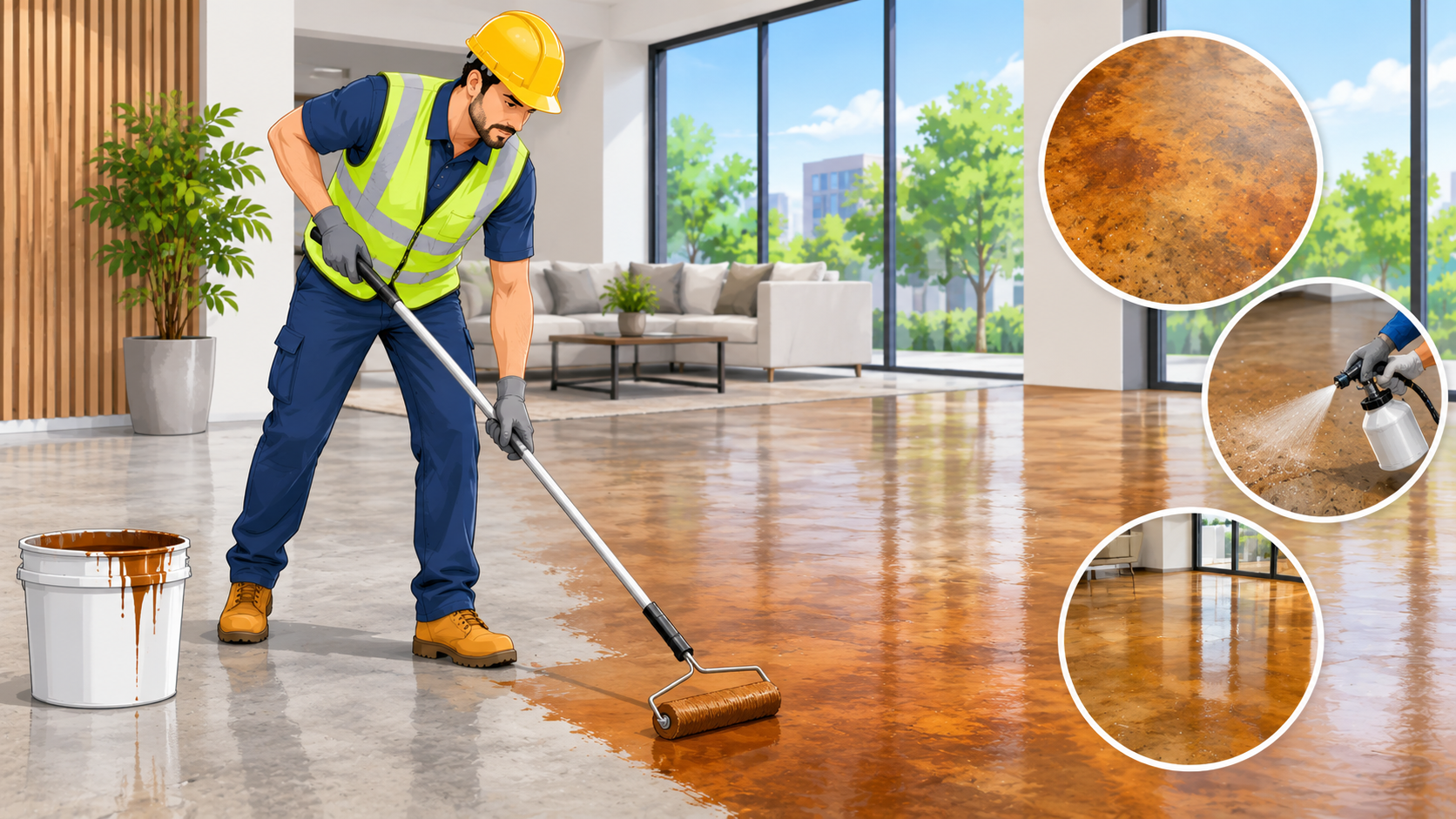
Concrete floors do not have to remain plain gray or look purely industrial. With the right staining technique, an ordinary concrete slab can become a decorative flooring feature that complements modern homes, retail stores, restaurants, offices, and other commercial spaces.
Stained concrete floors offer a way to introduce color, texture, and visual character while keeping the original concrete surface as part of the design. Depending on the stain and application method, the finished floor can feature natural earth tones, subtle color variations, bold shades, or layered decorative effects.
For property owners in Los Angeles and Torrance, concrete staining can be worth considering when updating an existing floor or planning the appearance of a new concrete surface. However, the best design depends on the condition of the slab, the intended use of the space, and the desired level of color consistency.
This guide explores different stained concrete floor designs, color choices, residential and commercial applications, and important considerations before starting a project.
What Are Stained Concrete Floors?
Stained concrete floors are existing or fully cured concrete surfaces treated with a decorative stain to introduce color and enhance the natural appearance of the material.
Unlike ordinary floor paint, concrete stain is designed to interact with or penetrate the prepared concrete surface. The result depends on the stain formulation, concrete composition, surface porosity, and preparation.
There are two commonly used approaches:
- Acid-based concrete stains: These chemically react with components of the concrete to create translucent, naturally varied color patterns.
- Water-based concrete stains: These use pigments to provide a wider range of colors and more controlled decorative effects.
Staining does not automatically hide cracks, patches, or other surface imperfections. Instead, it can highlight the existing character of the concrete. That is why inspecting and preparing the slab before choosing a design is important.
Popular Design Options for Stained Concrete Floors
Stained concrete can complement different architectural styles, from contemporary residential interiors to busy commercial environments. The right design should balance appearance with the practical requirements of the space.
1. Natural Brown and Earth-Tone Finishes
Brown, tan, and reddish-brown shades are popular choices for property owners who want a warm, natural appearance.
These colors can complement wooden furniture, neutral walls, stone features, and traditional interior materials. Acid-based stains are often selected for this look because they create natural variations rather than a completely uniform surface.
Where this design works well:
- Living rooms and open-plan interiors
- Restaurants and cafés
- Residential entryways
- Retail stores
- Covered patios
Earth-tone stained concrete can create an inviting appearance without making the floor look overly decorative.
2. Modern Gray and Charcoal Finishes
Gray and charcoal tones suit contemporary spaces where a clean, understated flooring design is preferred.
Depending on the stain product and preparation method, these shades can create anything from a soft gray appearance to a darker, more dramatic surface.
Gray stained concrete can work particularly well with minimalist furniture, metal fixtures, neutral walls, and modern lighting.
Suitable applications include:
- Modern homes and lofts
- Office interiors
- Showrooms
- Creative studios
- Contemporary retail environments
For projects that require a consistent shade across a large floor, discuss water-based stain options and sample testing with the flooring contractor.
3. Reddish-Brown and Terracotta Designs
Terracotta and reddish-brown finishes bring warmth and a more traditional decorative appearance to concrete floors.
These shades can complement Mediterranean-inspired interiors, rustic designs, natural stone, and warm architectural details.
They are worth considering for residential living areas, restaurants, boutique stores, and selected outdoor concrete surfaces.
The final appearance will depend on the existing slab and the stain selected. A sample application is useful before committing to the entire floor.
4. Dark and Dramatic Stained Concrete
Dark brown, black, and charcoal-inspired finishes can create a strong visual contrast in larger interiors.
These designs may suit modern retail spaces, showrooms, entertainment areas, and selected commercial interiors.
However, darker floors can make dust, certain marks, and surface imperfections more noticeable under some lighting conditions. Consider the room’s natural light, cleaning routine, and expected foot traffic before selecting a very dark finish.
5. Multi-Color and Decorative Effects
Stained concrete does not have to use only one color. Multiple compatible stain shades can be layered or applied in decorative patterns to create more customized flooring.
Possible design approaches include:
- Subtle variations between light and dark tones
- Contrasting borders around selected areas
- Decorative sections that separate functional spaces
- Multi-tone patterns for retail or hospitality interiors
Water-based stains generally offer more color flexibility than traditional acid stains. The design should be planned around the concrete’s condition and the capabilities of the selected stain system.
For more inspiration, explore these decorative concrete floor finishes.
Residential Stained Concrete Floors: Design Ideas for Homes
Homeowners often choose stained concrete because it can enhance an existing slab without covering it with a separate flooring material.
The right stain can complement the overall interior design while allowing the natural character of the concrete to remain visible.
Living Rooms and Open-Plan Spaces
A warm brown, subtle gray, or natural earth-tone floor can complement open-plan living areas. Stained concrete can also work with modern furniture, wooden accents, and neutral interior colors.
Kitchens and Dining Areas
Stained concrete offers a continuous flooring appearance that can suit contemporary kitchens and dining spaces. However, the protective sealer and cleaning requirements should be considered because these areas may experience food spills, grease, and frequent cleaning.
Basements and Entryways
Basements and entryways can benefit from decorative staining when the existing slab is suitable. Before installation, check for moisture issues, previous coatings, and surface contamination that could affect the result.
Patios and Outdoor Living Areas
Stained concrete can also be considered for suitable exterior surfaces. Outdoor projects require careful selection of stain and sealer products designed for the exposure conditions. Sunlight, moisture, weather, and surface traction all matter.
Commercial Stained Concrete Floors: Design Ideas for Businesses
Commercial flooring must do more than look attractive. It also needs to suit the property’s traffic, cleaning schedule, operational requirements, and maintenance expectations.
Stained concrete can be a design option for selected commercial spaces when the slab and protective system are appropriate.
Retail Stores and Showrooms
Retail businesses can use stained concrete to create a distinctive floor that complements product displays, lighting, and interior branding.
Neutral gray and earth-tone finishes may suit minimalist stores, while carefully selected decorative colors can help create a more distinctive customer experience.
Restaurants and Cafés
Warm brown and terracotta-inspired finishes can complement restaurant interiors, wooden furniture, and natural design elements.
The floor protection system should be selected with spills, cleaning products, moisture, and foot traffic in mind. A decorative stain alone does not provide all the protection a commercial floor may need.
Offices and Commercial Interiors
Stained concrete can provide a continuous decorative surface for office interiors, reception areas, and selected shared spaces.
The design should work with the business’s overall appearance while accounting for furniture movement, foot traffic, and routine cleaning.
Hospitality and Entertainment Spaces
Hotels, event spaces, and entertainment venues may use stained concrete to create customized interior designs. Multiple colors or decorative sections can help distinguish different areas without introducing several flooring materials.
For every commercial project, the intended traffic level and maintenance routine should guide the selection of stain and sealer.
Acid-Based vs. Water-Based Concrete Stains
Choosing the right stain is one of the most important decisions in a concrete staining project. Acid-based and water-based stains create different visual results.
| Feature | Acid-Based Stain | Water-Based Stain |
| Coloring method | Chemical reaction with concrete | Pigment-based coloring |
| Appearance | Natural, translucent variations | More controlled color effects |
| Color selection | Generally earth tones | Wider range of colors |
| Pattern | Naturally varied and mottled | Can be layered for decorative designs |
| Best suited for | Organic, stone-like appearances | More specific color requirements |
Neither option is automatically better for every project. The choice depends on the desired appearance, slab condition, product requirements, and installation environment.
For additional information, explore our guide to decorative concrete floor finishes.
How the Concrete Staining Process Works
A successful stained concrete floor begins with proper surface preparation. Applying stain without checking the condition of the slab can lead to uneven color or disappointing results.
A typical project involves the following stages.
1. Inspect the Existing Concrete
The contractor examines the slab for cracks, previous coatings, adhesive residue, oil contamination, repairs, and other conditions that could affect stain absorption.
Moisture conditions should also be considered, particularly for interior floors and surfaces that will receive a protective sealer.
2. Clean and Prepare the Surface
The floor must be cleaned to remove dirt, grease, residue, and contaminants. Depending on its condition, mechanical grinding or other preparation methods may be necessary.
Previous sealers and coatings may need to be removed so the selected stain can interact with the concrete appropriately.
3. Test the Stain Color
A sample application helps show how the selected stain will appear on the actual concrete.
This step is especially important with acid-based stains because the final color can vary depending on the slab’s composition and porosity.
4. Apply the Selected Stain
The stain is applied according to the manufacturer’s instructions and the planned design.
Application technique, coverage, and the condition of the surface all influence the finished appearance.
5. Complete Required Cleanup
Some stain systems require additional cleanup or residue removal before the protective finish is applied. Acid-based stains, in particular, require the appropriate post-application treatment.
6. Apply a Suitable Sealer
The final protective system helps preserve the appearance of the stained surface and supports its intended use.
The correct sealer depends on whether the floor is indoors or outdoors, the expected traffic, exposure conditions, and maintenance requirements.
Maintenance Tips for Stained Concrete Floors
Stained concrete floors still need regular care to maintain their appearance. The exact routine depends on the stain, sealer, traffic level, and environment.
Consider these maintenance practices:
- Sweep or dust-mop regularly to remove loose dirt and abrasive particles.
- Use a compatible pH-neutral cleaner for routine cleaning when recommended by the sealer manufacturer.
- Clean spills promptly, especially oils, acidic liquids, and strongly colored substances.
- Avoid harsh cleaning chemicals unless the flooring system specifically permits them.
- Use suitable furniture pads to reduce scratching from moving chairs and other items.
- Inspect high-traffic areas periodically for signs of sealer wear.
- Follow the recommended maintenance and resealing schedule for the installed system.
Remember that stain and sealer serve different purposes. The stain creates the decorative color, while the sealer provides the protective surface layer.
Is Stained Concrete the Right Choice for Your Property?
Stained concrete can be an attractive option when the existing slab is suitable and the desired design works with the natural characteristics of concrete.
Before choosing it, consider the following:
Concrete condition: Cracks, repairs, contamination, and uneven porosity can affect the final appearance.
Color expectations: Acid stains create natural variation, while water-based products can offer more controlled color choices.
Traffic requirements: Commercial spaces may need a protective system designed for frequent foot traffic, cleaning, and other operational demands.
Moisture and exposure: Interior and exterior floors may require different products and preparation methods.
Maintenance: The sealer and cleaning routine are important parts of long-term floor care.
If the slab is heavily damaged or the project requires a highly uniform appearance, a different decorative flooring system may be more appropriate. For damaged or worn surfaces, learn more about concrete floor restoration services.
Professional Concrete Staining and Sealing in Los Angeles
Choosing a stained concrete design involves more than selecting a color from a product chart. The existing slab, surface preparation, stain type, and protective finish all influence the final result.
Los Angeles Concrete Polishing offers concrete staining and sealing for new and existing concrete surfaces, alongside concrete polishing and other flooring services. The team serves the Los Angeles area, Orange County, Inland Empire, and Southern California.
Property owners in Torrance and the surrounding Los Angeles area can discuss their flooring goals, existing concrete conditions, and suitable staining options before beginning a project.
Whether you are updating a residential interior, refreshing a retail space, or considering a decorative finish for a commercial property, a professional assessment can help determine whether concrete staining is the right solution.
Contact Los Angeles Concrete Polishing to discuss your stained concrete flooring project and explore suitable design and sealing options.
Frequently Asked Questions
1. Are stained concrete floors suitable for homes?
Yes. Stained concrete can be used in suitable residential areas such as living rooms, kitchens, basements, entryways, and patios. The appropriate stain and sealer should be selected based on the slab condition and exposure.
2. What colors are available for stained concrete floors?
Acid-based stains generally produce natural earth tones, including browns, tans, and certain green or blue-green shades. Water-based stains offer a broader color selection, including more vibrant options.
3. What is the difference between acid-based and water-based concrete stains?
Acid-based stains chemically react with components of the concrete to create natural color variations. Water-based stains use pigments to provide a wider range of colors and more controlled decorative effects.
4. Do stained concrete floors need to be sealed?
A suitable sealer is generally used to protect stained concrete and help maintain its appearance. The correct product depends on the flooring system, location, traffic, and exposure conditions.
5. Can existing concrete floors be stained?
Yes, existing concrete can often be stained if it is suitable for the selected system. Previous coatings, sealers, grease, repairs, and other contaminants may require additional preparation.
6. Are stained concrete floors good for commercial spaces?
They can be suitable for selected offices, retail stores, restaurants, and hospitality interiors. The stain and protective system should be matched to the expected traffic, cleaning routine, and operational requirements.
7. Will stained concrete hide cracks and imperfections?
No. Stain is not designed to cover cracks, patches, or surface damage like opaque paint. Existing imperfections may remain visible or influence the final color, so repairs and sample testing should be considered before staining.
8. How do I choose the right stained concrete design?
Start with the property’s style, lighting, concrete condition, and intended use. Then compare stain types and colors, and request a sample application on the actual slab before making the final selection.
Clients We Service
We provide our concrete polishing and related services to a wide variety of clients. Some of the types of clients that we provide service to include:


