
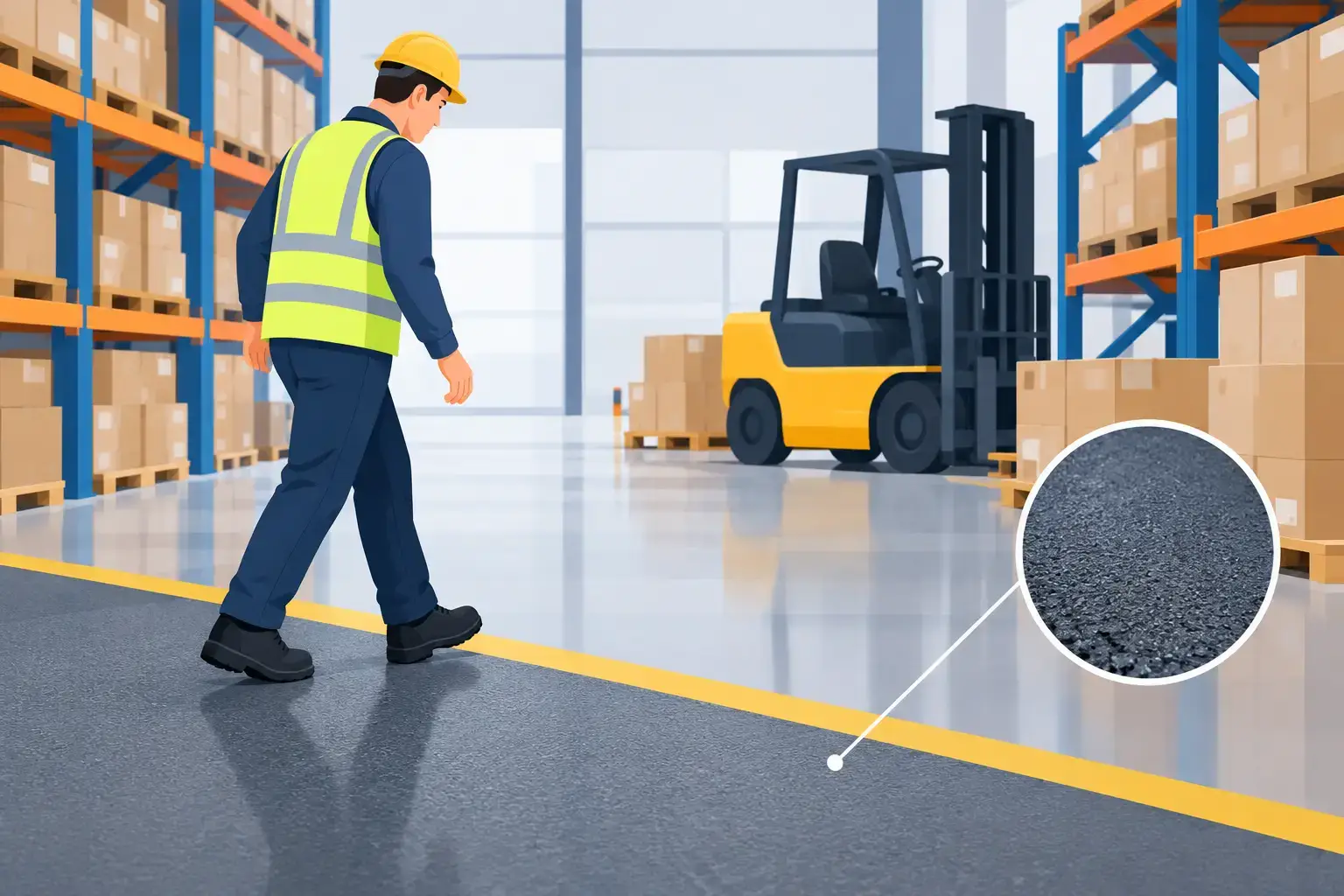
A warehouse floor can look clean, level, and structurally sound while still creating a serious slip risk. Fine dust, leaking batteries, tire residue, pallet-wrap film, moisture at loading doors, and overly smooth concrete can change footing fast. Knowing how to improve warehouse traction starts with identifying what is making the surface slippery under actual operating conditions, not simply choosing the roughest finish available.
For busy facilities, the right answer must support forklift travel, pedestrian routes, sanitation requirements, and production schedules. A traction upgrade should reduce slip exposure without creating a floor that is difficult to clean, hard on equipment, or prone to premature wear.
How to Improve Warehouse Traction Without Disrupting Operations
The first step is to separate a floor problem from a housekeeping problem. If slips occur near dock doors after rain, around washdown areas, or beside machinery, water management and cleaning procedures may be the primary issue. If incidents happen throughout a dry warehouse, worn coatings, polished traffic lanes, concrete dusting, floor contamination, or inadequate surface texture may be involved.
Walk the facility at the times when conditions are worst. Inspect high-traffic aisles, turning zones, ramps, entrances, staging areas, break rooms, battery-charging locations, and emergency exits. Tire marks, glossy worn paths, standing water, peeling coating edges, and uneven repairs are all useful clues. Facility managers should also review near-miss reports. Employees often know exactly where footing changes, even when an incident has not yet been formally documented.
A qualified flooring contractor can assess the concrete, check for moisture concerns, and determine whether the existing surface needs cleaning, mechanical profiling, localized repair, or a full protective system. This avoids spending money on a coating when drainage, joint damage, or contaminated concrete is the real cause.
Match the Surface Profile to the Work Being Done
More texture is not automatically better. Heavy aggregate may be appropriate for an exterior ramp, wet processing room, or aggressive incline, but it can make cleaning harder and create a rough ride for carts and wheeled equipment. A distribution center with dry forklift aisles generally needs a different solution than a food facility with frequent washdowns.
For many warehouses, a finely textured, mechanically prepared concrete surface provides a practical balance. Diamond grinding removes weak material, old coating residue, and surface contaminants while creating a consistent profile for a new coating or topping. The level of grinding and the final texture should be selected around the traffic type, cleaning method, and moisture exposure.
Polished concrete can also be a strong warehouse option when it is designed for the environment. A professionally honed or polished floor is dense, durable, and easier to maintain than untreated concrete. However, gloss alone is not a measure of traction. The polishing sequence, guard products, contaminants, and ongoing cleaning all influence slip resistance. In areas exposed to water or oils, a lower-gloss finish, traction treatment, or separate textured coating system may be the smarter specification.
Choose a Flooring System That Solves the Actual Hazard
The best traction solution depends on whether the warehouse is mostly dry, intermittently wet, chemically exposed, or subject to heavy impacts. The floor must also withstand point loads, forklift turns, dropped inventory, and constant abrasion.
Epoxy and urethane coatings can provide a cleanable, chemical-resistant surface when they are installed over properly prepared concrete. For improved grip, contractors can broadcast silica, aluminum oxide, or other aggregate into the coating. Aggregate size matters. Fine grit is often suitable for pedestrian areas and light industrial traffic, while more aggressive profiles may be necessary at ramps, loading zones, and wet work areas.
A full broadcast system delivers a more textured finish and can hide some concrete imperfections, but it is not always the right fit for every aisle. It may require more deliberate cleaning and can be less comfortable for certain rolling equipment. In contrast, a clear or pigmented topcoat with a fine traction additive can preserve a smoother, easier-to-clean finish while improving footing where the risk is moderate.
For damaged slabs, cementitious toppings and resurfacing systems can correct worn, spalled, or uneven concrete before the traction layer is installed. This is especially valuable around dock approaches, door thresholds, and forklift turning areas, where broken concrete and patchwork repairs can create a combined trip and slip hazard.
Do not treat paint as a traction solution by itself. A generic coating applied to dusty, smooth, or moisture-affected concrete may peel quickly. Once the coating fails, loose edges and exposed patches become another maintenance problem. Professional surface preparation, moisture evaluation, and the correct primer are what allow a protective system to perform under warehouse use.
Control Water, Oil, and Fine Dust at the Source
Even the most carefully specified floor loses traction when contaminants are left on the surface. Water reduces friction, while oils and hydraulic fluid can create a nearly invisible hazard. Fine concrete dust and powdery debris can act like ball bearings under shoes or forklift tires.
Start by addressing entry points. Loading doors and exterior transitions need effective drainage, weather protection, and walk-off mat systems that can handle commercial traffic. Mats should lie flat, be cleaned regularly, and be positioned so people take several steps across them before reaching finished concrete. Curled or saturated mats add their own risks.
At battery rooms, maintenance bays, and equipment parking areas, place spill-response supplies close to the hazard and establish a clear reporting process. Fast cleanup matters more than a policy stored in a binder. If leaks are recurring, correct the equipment issue and consider a more chemical-resistant, textured floor finish in that zone.
Cleaning chemistry deserves the same attention. Soap residue, oily mop water, and incorrect dilution can leave a film that makes a floor feel slick even after it has been cleaned. Use a neutral cleaner compatible with the flooring system, remove standing water promptly, and keep automatic scrubber pads in good condition. A clean floor is not necessarily a high-traction floor if the cleaning process leaves residue behind.
Repair Details That Affect Traction
Warehouse traction is often lost at transitions rather than in the middle of an aisle. Expansion joints, cracks, drain surrounds, slab edges, and old patches should be evaluated as part of the flooring plan. Open or broken joints collect debris and liquid, while uneven repairs can catch footwear and wheels.
Joint fillers and repair materials need enough flexibility and hardness for the expected forklift loads. At thresholds and ramps, a gradual transition is usually safer than an abrupt change in elevation. Where a slope is unavoidable, a tailored aggregate finish or anti-slip strip may be more effective than applying a uniform system across the entire floor.
Marking also matters. Clearly defined pedestrian paths help keep people away from high-risk vehicle lanes, but floor striping should not create a slick band. Use compatible traffic coatings and test the finish as part of the complete floor system, not as an afterthought.
Verify Traction Before Full Installation
A sample area is one of the smartest ways to control risk and budget. It allows the facility team to see the texture, test cleaning procedures, and drive representative equipment across the finish before committing to the whole warehouse. This is particularly useful when the facility has mixed conditions, such as dry storage aisles alongside wet loading or maintenance areas.
Traction testing can provide useful performance data, but test conditions must reflect reality. A dry reading alone does not answer how the floor performs when wet, dusty, or exposed to oils. Discuss the applicable safety requirements with your contractor and safety team, then select a system based on the specific hazard rather than a generic rating.
Phased installation is often possible for active warehouses. Experienced concrete flooring crews can sequence work by aisle, bay, or shift window to limit downtime. The exact schedule depends on substrate condition, coating cure times, moisture levels, and access requirements. Rushing cure time to reopen traffic early can compromise the very finish meant to improve safety.
Make Traction Part of Routine Floor Management
Traction is not a one-time upgrade. Inspect high-wear areas regularly, especially forklift turn zones and entrances. Watch for polishing from tire traffic, loss of aggregate, coating wear, moisture intrusion, and changes in cleaning results. Early touch-ups are usually faster and less expensive than allowing a worn area to spread.
The strongest warehouse floors combine correct surface preparation, an appropriate finish, disciplined cleaning, and prompt repairs. For Los Angeles and Orange County facilities, that combination is especially valuable when dust, loading activity, coastal moisture, and heavy logistics traffic all place different demands on the same slab.
A safer floor does not need to be abrasive everywhere. It needs to give employees and equipment dependable footing exactly where the work creates risk, while remaining durable, cleanable, and ready for the next shift.
Clients We Service
We provide our concrete polishing and related services to a wide variety of clients. Some of the types of clients that we provide service to include:


