
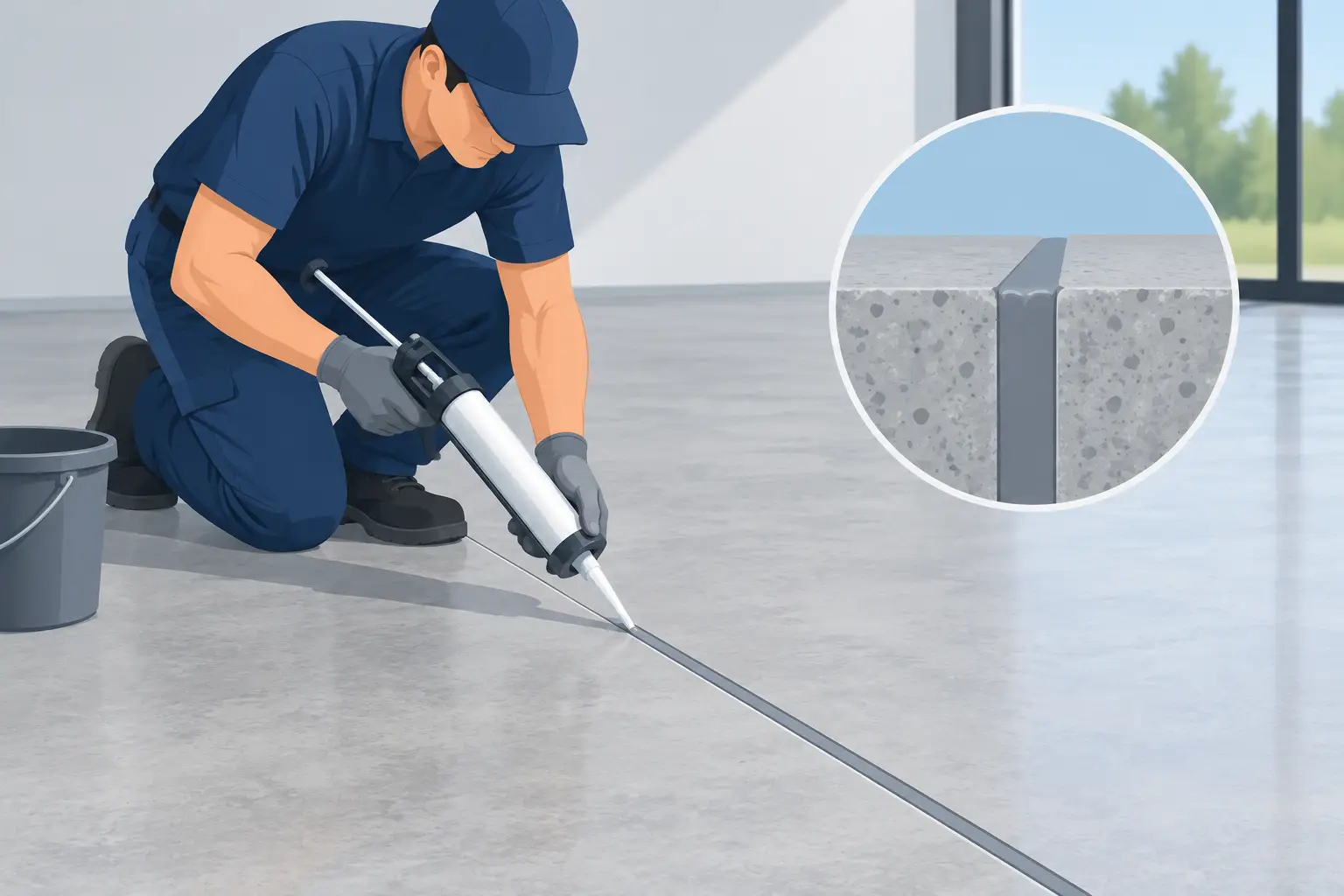
A warehouse floor can look sound at first glance while its joints are quietly taking the hardest hits in the building. Every forklift wheel that crosses an open saw cut can chip the concrete edge a little more. For property owners asking when is joint filler needed, the answer usually comes down to traffic, joint condition, and the finish the floor is expected to deliver.
Joint filler is not a cosmetic afterthought. In the right concrete slab, it is a targeted protection system that supports vulnerable joint edges, improves cleanability, and creates a more finished surface for polishing or coatings. In the wrong joint, or installed at the wrong time, it can crack, debond, or restrict the movement the slab needs.
When Is Joint Filler Needed on a Concrete Floor?
Joint filler is typically needed when a concrete floor has saw-cut control joints or construction joints exposed to hard-wheeled traffic, frequent point loads, or a finish that requires smooth, continuous visual lines. Warehouses, distribution centers, manufacturing plants, retail stockrooms, auto facilities, and polished-concrete offices are common examples.
The critical distinction is between a joint that is meant to control shrinkage and a joint that is meant to accommodate movement. A control joint is intentionally cut into the slab so shrinkage cracks occur in a planned location. Once most slab shrinkage has occurred, a properly selected semi-rigid filler can support the joint edges against wheel impact.
An expansion or isolation joint is different. It is designed to move between the slab and a wall, column, equipment pad, or another structural element. Those joints generally require a flexible sealant or compressible material, not a rigid joint filler. Filling every visible gap with the same product is a fast way to create avoidable failures.
The Strongest Reason to Fill Joints: Protect the Edges
Open control joints are especially vulnerable when forklifts, pallet jacks, carts, and hard plastic wheels pass over them all day. As a wheel drops into a joint and climbs out, it concentrates force on the concrete arris – the sharp upper edge of the joint. Over time, that edge can spall, break away, and widen the opening.
Once spalling begins, the problem tends to accelerate. Broken edges create a rougher ride, rougher rides increase impact, and impact causes more concrete loss. The result can be damaged inventory, higher equipment maintenance, dust-producing concrete deterioration, and a floor that looks neglected long before the rest of the slab reaches the end of its service life.
A semi-rigid epoxy or polyurea joint filler is installed to fill the joint fully and provide edge support. It is firm enough to carry traffic loads across the joint while still being appropriate for the controlled movement expected in a stabilized slab. The material selection depends on joint width, expected movement, cure schedule, temperature conditions, and the demands of the facility.
Polished Concrete Often Calls for Joint Filling
For polished concrete, joint filler is frequently part of a professional finish rather than an optional upgrade. Diamond grinding exposes every joint, crack, and patch in the slab. Leaving open or deteriorated joints can interrupt the appearance of the floor and allow dirt, moisture, and debris to collect in places that are difficult to maintain.
Filled joints create cleaner lines and help the floor read as one intentional surface. This matters in showrooms, lofts, offices, retail spaces, restaurants, and high-end residential interiors where the concrete itself is the finished floor.
There is a trade-off. A filled joint will remain visible, especially if the filler color contrasts with the slab or if the concrete continues to move after installation. It should be viewed as a clean, durable architectural detail – not as a promise that the floor will look like a seamless poured countertop. The best results come from matching the filler and repair approach to the desired gloss level, aggregate exposure, and overall design of the floor.
Signs Your Floor Should Be Evaluated Now
Joint filler becomes more urgent when visible wear is already appearing. Facility managers should schedule an evaluation when they notice any of the following conditions:
- Chipped, broken, or crumbling joint edges
- Forklift wheels or carts producing a noticeable bump at joints
- Open joints collecting dust, debris, wash water, or chemicals
- Hairline cracks branching from joint edges
- An upcoming concrete polishing, coating, or floor restoration project
- Increased traffic from new racking, equipment, or operations
These signs do not always mean every joint needs immediate filling. A professional assessment should identify whether the problem is joint movement, slab settlement, moisture exposure, poor prior repairs, or traffic-related edge failure. Repairing symptoms without identifying the cause can waste time and budget.
Timing Matters More Than Many Owners Expect
Fresh concrete shrinks as it cures. If a semi-rigid filler is installed before the slab has completed much of that shrinkage, the joint can continue to open and leave the filler recessed or separated from one side. That does not necessarily mean the product failed. It may mean it was installed before the slab was ready or the joint was expected to move more than anticipated.
For that reason, joint filling is often deferred until the slab has had time to stabilize. The ideal schedule varies by project conditions, concrete mix, slab thickness, environmental exposure, and whether the building is climate controlled. A qualified contractor evaluates the actual slab rather than applying one timeline to every floor.
Fast-setting polyurea fillers can be a strong option when downtime is limited. They can allow rapid return to service, which is valuable in active warehouses and retail facilities. Epoxy fillers may offer other performance advantages depending on the application, but they can require longer cure windows. The best choice is the one that protects the joint without creating an unnecessary interruption to operations.
When Joint Filler Is Not the Right Solution
Not every crack, gap, or perimeter joint should receive semi-rigid filler. Active expansion joints need flexibility. Joints with significant vertical displacement may indicate slab settlement or underlying subgrade problems that must be addressed first. A filler alone cannot correct a rocking slab, widespread moisture failure, or structural movement.
Exterior concrete also requires a different approach from interior industrial flooring. Sun exposure, temperature swings, rain, and slab movement can demand flexible sealants designed for exterior conditions. Similarly, floors exposed to aggressive chemicals may require a filler chosen specifically for chemical resistance rather than a standard traffic-grade material.
The installation process matters just as much as material choice. Joints must be clean, dry when required by the product, and properly prepared. After curing, excess filler is shaved or ground flush so wheels cross smoothly and the floor can be polished or coated without telegraphing high spots. Poor preparation leaves the floor with weak bond lines, uneven repairs, and a finish that falls short of its potential.
Make Joint Repair Part of the Floor Plan
The most cost-effective time to address joints is before edge damage becomes extensive and before a new finish is installed. If a facility is planning polished concrete, densification, protective coatings, or a traffic upgrade, joint conditions should be reviewed during the scope and budgeting stage. This avoids polishing around damaged joints only to reopen the floor for repairs later.
Los Angeles Concrete Polishing approaches joint filling as part of total floor performance: traffic requirements, moisture conditions, appearance goals, operating hours, and long-term maintenance all influence the recommendation. For a distribution floor, edge support may be the priority. For a polished office or loft, clean joint lines and finish consistency may carry equal weight.
A concrete joint is small compared with the full slab, but it is where daily traffic repeatedly tests the floor. Address it before the edges fail, and the result is a smoother operation, a cleaner finish, and a surface built to keep performing under real use.
Clients We Service
We provide our concrete polishing and related services to a wide variety of clients. Some of the types of clients that we provide service to include:


