
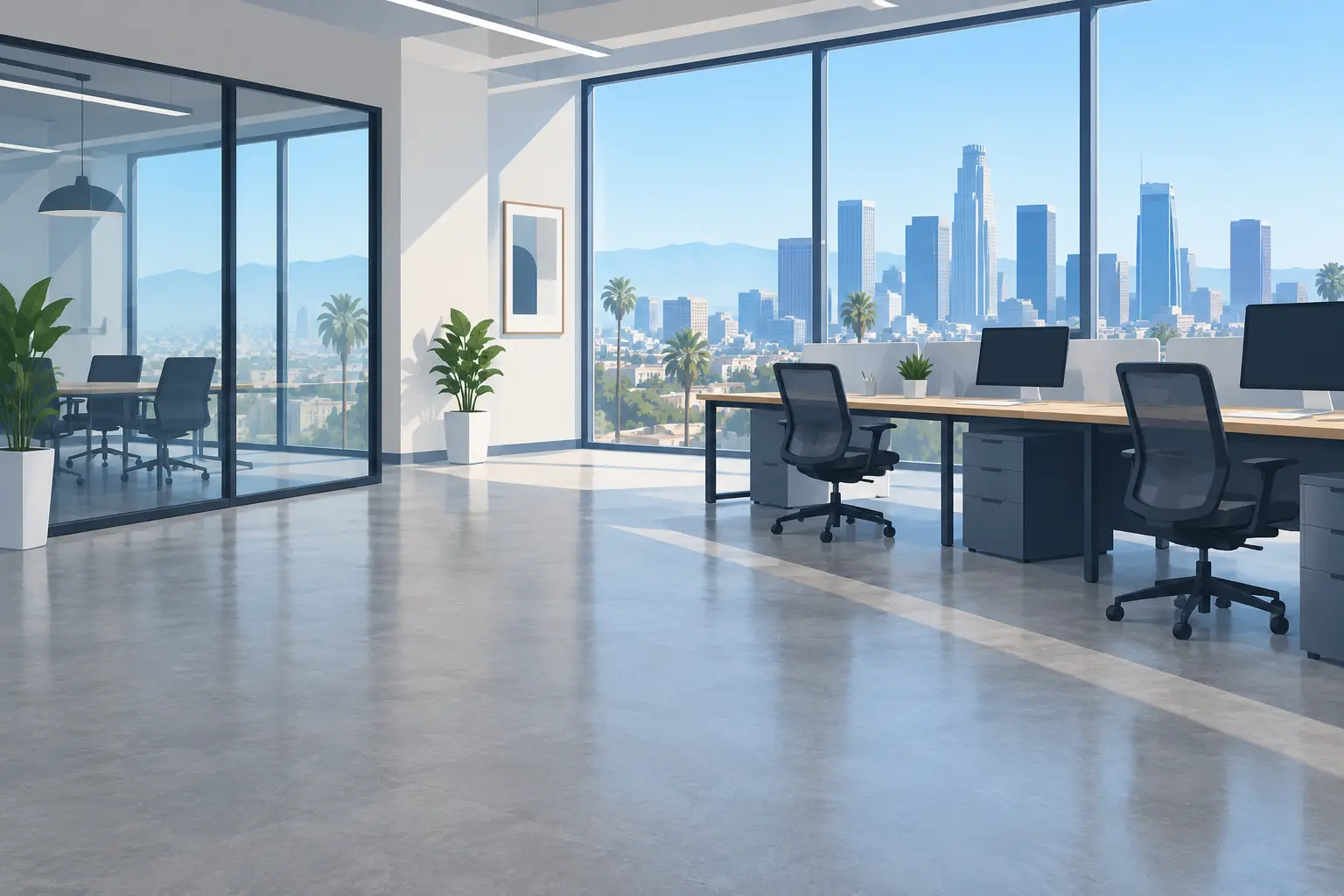
A worn office floor sends a message before the receptionist gets a chance to greet anyone. Scuffed carpet paths, peeling vinyl edges, stained grout, and dusty concrete make a workplace feel neglected, even when the rest of the operation is first-class. The right Los Angeles office flooring does more than improve appearance. It controls maintenance costs, supports safer movement, and stands up to the daily traffic that quickly exposes weak materials.
For office owners, property managers, and tenants planning a build-out, flooring is a long-term operating decision. The lowest installed price is rarely the lowest cost over five or ten years. In a market where offices may shift between traditional workspaces, creative studios, medical-adjacent uses, showrooms, and mixed-use environments, the floor needs to match how the space actually works.
What Los Angeles Office Flooring Must Handle
Office traffic is not always gentle. Entry corridors take grit and moisture from shoes. Break rooms see spills, dropped utensils, and rolling carts. Conference rooms get chair-caster wear. Copy rooms and supply areas can carry concentrated loads, while lobbies must look sharp under constant foot traffic.
Southern California conditions add another consideration: concrete moisture. A slab can look dry on the surface while still transmitting moisture vapor that damages adhesives, causes resilient flooring to release, or creates issues beneath carpet and wood products. Any serious flooring plan begins with an honest assessment of the existing slab, including its condition, flatness, cracks, contamination, and moisture profile.
The best choice depends on the building, budget, visual goal, and tolerance for future maintenance. There is no single material that wins every project. But for many offices built on concrete slabs, polishing or a high-performance concrete enhancement system deserves close attention before new flooring is installed over the top.
Why Polished Concrete Performs in Busy Offices
Polished concrete transforms the structural slab into the finished floor. Using progressively finer diamond grits, contractors grind, refine, densify, and polish the concrete to a selected sheen. The result can range from a low-sheen, modern matte finish to a highly reflective surface with visible aggregate exposure.
For offices, the practical advantage is straightforward: there are fewer layers to replace. Polished concrete does not have carpet fibers to trap dust, grout lines to scrub, or joints that can curl and lift. Routine care generally involves dry dust mopping and wet cleaning with the right equipment and neutral cleaner. That simplicity matters when a facility team is responsible for thousands of square feet.
A professionally polished slab can also improve light reflectivity. In offices with large windows, open ceilings, or LED lighting, that brighter floor plane can make the space feel cleaner and more expansive without relying on a glossy, artificial-looking coating.
Durability is another major benefit. Properly densified and polished concrete resists abrasion far better than many decorative floor coverings. It is well suited to corridors, open office areas, lobbies, creative workspaces, and office-warehouse environments where rolling loads or equipment occasionally cross into administrative areas.
The right finish is not always the shiniest finish
High gloss has visual impact, but it is not automatically the best specification. A matte or satin polish can be more forgiving of dust, footprints, and minor surface variation. It may also better suit a modern industrial office, a design studio, or a space with heavy daily traffic.
Slip resistance should be evaluated based on real conditions, especially at entrances, near break rooms, and in areas exposed to rain. A polished floor is not inherently unsafe, but the finish, cleaning products, drainage, walk-off mats, and maintenance practices all affect traction. An experienced contractor can recommend a finish that balances appearance with practical safety requirements.
When a Coating or Topping Makes More Sense
Not every concrete slab is a good polishing candidate. Older slabs can have extensive patching, severe damage, contamination, uneven repairs, or surface defects that do not fit the desired look. In those cases, a coating or cementitious topping may offer a more controlled appearance.
Epoxy and urethane systems can provide strong chemical resistance and broad color options. They are useful in office back-of-house areas, laboratories, service corridors, kitchens, and spaces where spills or cleaning chemicals are a major concern. Some systems also allow decorative flakes, solid colors, or safety striping.
The trade-off is maintenance and eventual renewal. Coatings are protective systems with a wear layer. They can scratch, fade, or require recoating over time, particularly in high-traffic paths. Surface preparation is also critical. If the slab has moisture problems and the system is not designed to manage them, failure can show up as bubbling, peeling, or delamination.
Cement-based toppings provide another option when the goal is a refined, continuous surface but the original slab is too rough or visually inconsistent to polish. They can create a clean architectural finish while correcting minor imperfections. However, toppings require sound substrate preparation and should be selected with realistic expectations about movement joints, cracking risk, and intended traffic.
Start With the Existing Concrete, Not the Finish Board
A finish sample can help define color and sheen, but it cannot reveal what is happening below the surface. The strongest office flooring projects start with slab evaluation before a material is selected or a move-in date is promised.
A qualified contractor should inspect for cracks, old adhesives, paint, oil, curing compounds, weak concrete, moisture concerns, and floor-flatness issues. These conditions affect both pricing and performance. For example, glue removal may be necessary before polishing, but aggressive adhesives can leave ghosting or exposed repairs that remain visible in the final floor. That may be acceptable in a warehouse-inspired office, yet unsuitable for a client-facing financial office seeking a uniform look.
This is where clear expectations protect the budget. Concrete is a natural, variable material. A polished floor can be exceptionally attractive without looking identical to a manufactured tile. Color variation, aggregate exposure, patched areas, and hairline cracks may become part of its character. If total visual uniformity is non-negotiable, a topping or coating may be the smarter choice.
Plan Installation Around Office Operations
The best flooring system can still become a bad project if installation disrupts business unnecessarily. Dust control, access planning, work phasing, noise, cure times, and furniture relocation should be addressed before mobilization.
Concrete grinding and polishing use specialized equipment with industrial vacuum systems to control dust. Even so, occupied offices need a practical containment and scheduling plan. A project may be completed after hours, in sections, or during a planned renovation window. Coating systems may require additional attention to cure time before furniture, foot traffic, or rolling loads return to the floor.
A reliable scope also identifies details that are easy to overlook: baseboard removal and replacement, transitions at doors, elevator access, protection of adjacent finishes, furniture moving, and final cleaning. These are not minor details. They often determine whether the project feels controlled or chaotic for employees and visitors.
Compare Cost by Lifecycle, Not Just Installation
Carpet tile, luxury vinyl plank, hardwood, tile, polished concrete, and coatings all have different price ranges. Installation cost matters, but replacement cycles and maintenance labor matter more than many buyers expect.
Carpet can soften acoustics and offer design flexibility, but it requires regular deep cleaning and may need replacement sooner in high-traffic areas. Luxury vinyl can create a wood or stone look at a manageable initial cost, but seams, scratches, and moisture-related adhesive issues can become concerns. Tile is durable but introduces grout cleaning and repair considerations.
Polished concrete often has a higher upfront cost than a basic covering, particularly when substantial preparation is required. Its value appears over time through low maintenance, long service life, and the absence of recurring replacement for a separate floor covering. For owner-occupied offices and long-term commercial assets, that calculation can be compelling.
Choose a Flooring Partner That Understands Concrete
Office flooring is not only a design purchase. It is a substrate, moisture, traffic, safety, and scheduling decision. Los Angeles Concrete Polishing approaches each project from that performance-first perspective, using proven diamond-polishing methods, practical moisture awareness, and finish recommendations tied to the demands of the space.
Before selecting colors or requesting bids, walk the office at its busiest hour. Watch where people enter, where chairs roll, where spills occur, and where the current floor shows wear. Those patterns will point you toward a flooring system that still looks professional long after the grand opening.
Clients We Service
We provide our concrete polishing and related services to a wide variety of clients. Some of the types of clients that we provide service to include:


