
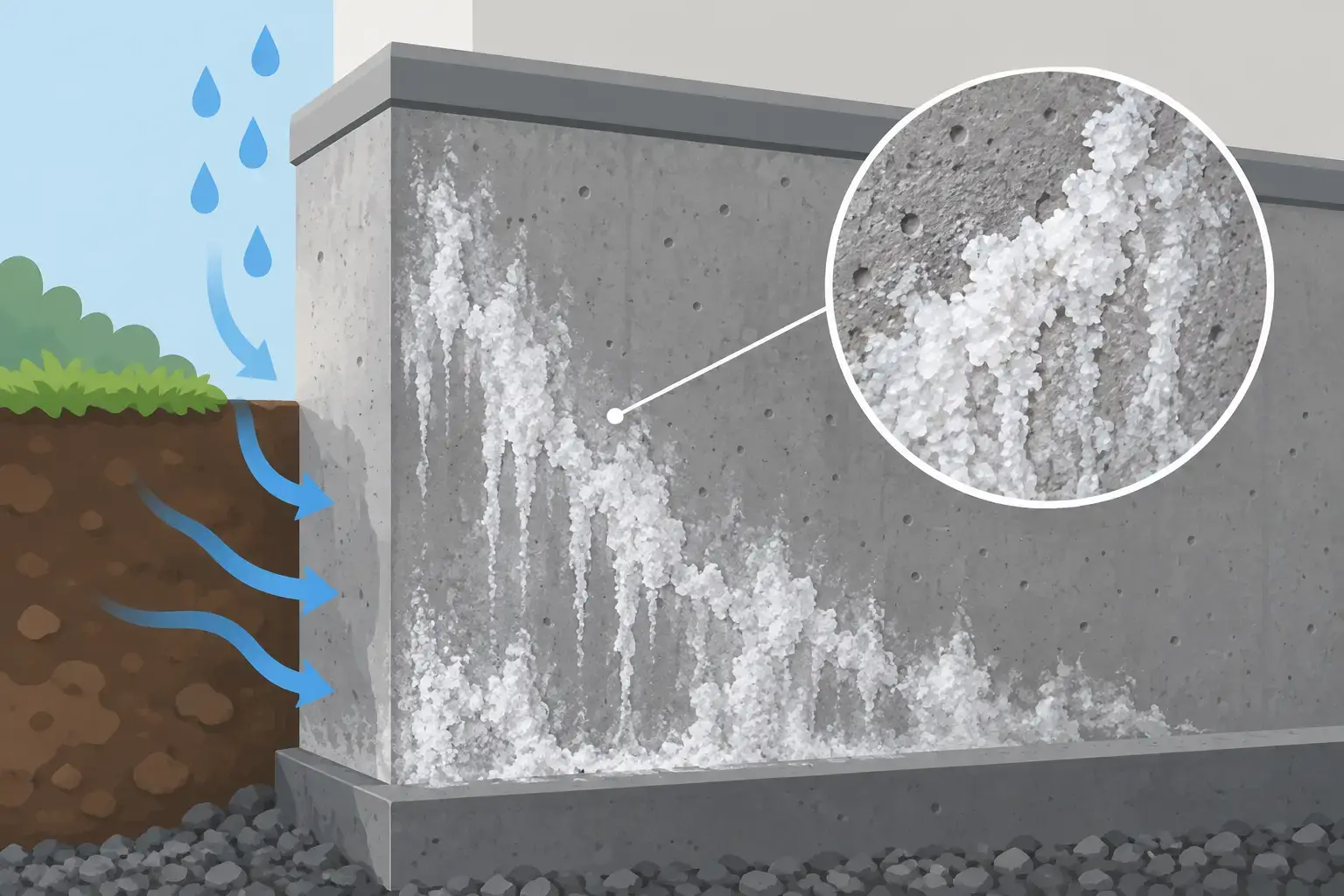
A white, powdery film on a warehouse slab, retail entry, garage, or polished concrete floor can look like a cleaning problem. Often, it is evidence that moisture has moved through the concrete. If you are asking why does concrete efflorescence appear, the short answer is simple: water dissolves naturally occurring salts within or beneath concrete, carries them to the surface, and leaves the salts behind as the water evaporates.
That simple process can have very different implications depending on the slab, the age of the building, the floor system, and the amount of moisture involved. A light, isolated deposit may be cosmetic. Persistent or heavy efflorescence can signal a moisture condition that needs to be addressed before polishing, coating, installing a topping, or committing to a costly finish.
Why Does Concrete Efflorescence Appear on a Floor?
Concrete contains cement compounds, aggregates, and minute pores. It is durable, but it is not naturally waterproof. Water vapor and liquid moisture can move through those pores from below the slab, through cracks, along joints, or from repeated exposure at the surface.
As moisture travels, it picks up soluble salts. These salts may come from the concrete mix itself, the soil below, groundwater, curing materials, deicing products, cleaning chemicals, or adjacent masonry. When the moisture reaches the surface and evaporates, the salts crystallize into the familiar white residue called efflorescence.
Three conditions must exist for efflorescence to form: soluble salts, moisture, and a pathway for that moisture to move. Remove any one of those variables, and the problem slows or stops. In practice, moisture is usually the most realistic variable to control.
What Efflorescence Looks Like and Why It Matters
Efflorescence is typically white, off-white, or pale gray. It may look chalky and wipe away easily, or it may form harder crystalline deposits around cracks, control joints, wall edges, drains, and areas with uneven slab color. It can return after cleaning if the source of moisture remains active.
On plain concrete, mild efflorescence may be largely aesthetic. On a polished floor, it can dull clarity and interrupt a uniform sheen. On a coated surface, it is more serious because moisture vapor and salt pressure can contribute to cloudy areas, blisters, peeling, or coating bond failure.
Facility managers should also avoid confusing efflorescence with dusting, laitance, adhesive residue, mold, or mineral deposits from a plumbing leak. The distinction matters because each condition calls for a different repair strategy. Removing white residue without identifying its source can create a temporary visual improvement while the underlying condition continues.
Common Sources of Moisture Below and Above the Slab
Moisture can enter a concrete floor from more than one direction. In older Southern California properties, slabs may have limited or compromised vapor protection below the concrete. Soil moisture and vapor pressure can then migrate upward, particularly after irrigation changes, heavy rain, plumbing leaks, or shifts in site drainage.
Above-slab moisture matters too. Water from washdowns, leaking doors, failed window seals, wet equipment, condensate lines, or routine mopping can enter cracks and joints. In food service, manufacturing, automotive, and loading areas, repeated wet exposure often concentrates the problem in predictable traffic zones.
New concrete can also produce efflorescence as it cures. Fresh slabs hold substantial internal moisture, and the hydration process creates materials that can migrate toward the surface. This does not automatically mean the slab is defective. It does mean the floor needs adequate drying time and proper moisture evaluation before a coating or other moisture-sensitive finish is installed.
When Efflorescence Signals a Larger Flooring Risk
A single light bloom is not always an emergency. The concern rises when deposits are widespread, thick, recurring, or paired with floor distress. Dark damp patches, curling edges, spalling, rusting at exposed metal, a musty odor, loose coatings, or repeated discoloration near joints all justify a closer look.
For an industrial or commercial facility, recurring efflorescence can become an operations issue. Powder can be tracked into clean work areas, interfere with appearance standards, and create an uneven surface condition beneath coatings. It may also reveal conditions that shorten the service life of a flooring investment.
The right response depends on the intended finish. A densified and mechanically polished concrete floor handles vapor differently than a film-forming epoxy or urethane coating. Polished concrete is not a cure for active moisture intrusion, but its breathable nature can make it a more suitable long-term option than a coating in certain slabs. That decision should follow testing and a realistic assessment of traffic, chemicals, required gloss, and maintenance expectations.
How Professionals Diagnose the Cause
The first step is to inspect the pattern. Efflorescence around a perimeter wall may point to exterior drainage or wall moisture. Deposits concentrated around a drain, plumbing chase, or one isolated area may indicate a leak. Broad, evenly distributed residue is more likely related to slab moisture or vapor movement from below.
A professional assessment may include moisture testing, relative humidity testing within the slab, surface pH checks, and a review of the building’s drainage, vapor barrier history, joints, cracks, and previous floor coverings. No single test answers every question. Concrete moisture behavior changes with temperature, HVAC operation, weather, and the condition of the slab.
This is where preparation separates a floor that performs from one that becomes a recurring maintenance expense. At Los Angeles Concrete Polishing, surface preparation and moisture conditions are evaluated before recommending polishing, coatings, or a protective enhancement system. The goal is not to sell a finish that looks good for a few months. It is to specify a floor that fits the slab and the way the property operates.
Cleaning Efflorescence Without Making It Worse
Dry removal is usually the safest starting point for light deposits. Vacuuming, soft brushing, or controlled mechanical cleaning can remove loose residue without adding more water to the slab. For stubborn deposits, a suitable cleaner may be necessary, followed by thorough rinsing and drying.
Acid washing is not a default answer. Acid can react with concrete, alter its surface profile, expose more aggregate than intended, and create color inconsistency. On decorative or polished concrete, an aggressive acid treatment can permanently affect the finish. It can also leave residues that complicate later coating adhesion if the floor is not properly neutralized and cleaned.
Before applying any sealer, densifier, stain, coating, or polish, the surface must be clean and the moisture condition must be understood. Sealing over active efflorescence may trap symptoms temporarily, but it does not stop moisture from trying to move. Pressure can then build beneath the finish and cause a more expensive failure.
Preventing Efflorescence in Existing and New Concrete
Prevention begins outside the building as often as it begins on the floor. Confirm that gutters, downspouts, landscaping, irrigation, and exterior grades direct water away from the slab. Repair leaks promptly, keep drains functional, and address standing water around loading doors and foundation edges.
Inside, maintain consistent climate conditions where possible and avoid leaving wet mats, pallets, or equipment in one location for extended periods. Clean spills promptly, especially where chemicals or salts may be involved. If a floor will receive a coating, topping, or high-gloss polish, schedule moisture evaluation early enough to adjust the scope before crews arrive for installation.
For new construction, proper mix design, curing practices, vapor retarders, drainage planning, and sufficient drying time all reduce risk. There is a trade-off: rushing a flooring finish can help a construction schedule in the short term, but it can create adhesion failures and avoidable downtime later.
Choosing the Right Finish After Efflorescence
Once the moisture source is controlled and the slab is properly prepared, the best finish depends on performance needs. Mechanically polished concrete can provide a durable, low-maintenance surface for offices, retail spaces, lofts, warehouses, and many high-traffic facilities. Densification strengthens the surface and can reduce dusting while producing a refined appearance without relying on a thick film.
Where chemical resistance, color, or a specific safety texture is required, a properly specified coating or topping may be the better solution. The key is matching the system to verified slab conditions. A beautiful floor is only a successful floor when it stays bonded, cleanable, and safe under real use.
Treat recurring white deposits as useful evidence rather than a surface blemish to hide. Finding the moisture path early gives property owners the best chance to protect the slab, control maintenance costs, and choose a finish that will perform for years.
Clients We Service
We provide our concrete polishing and related services to a wide variety of clients. Some of the types of clients that we provide service to include:


