
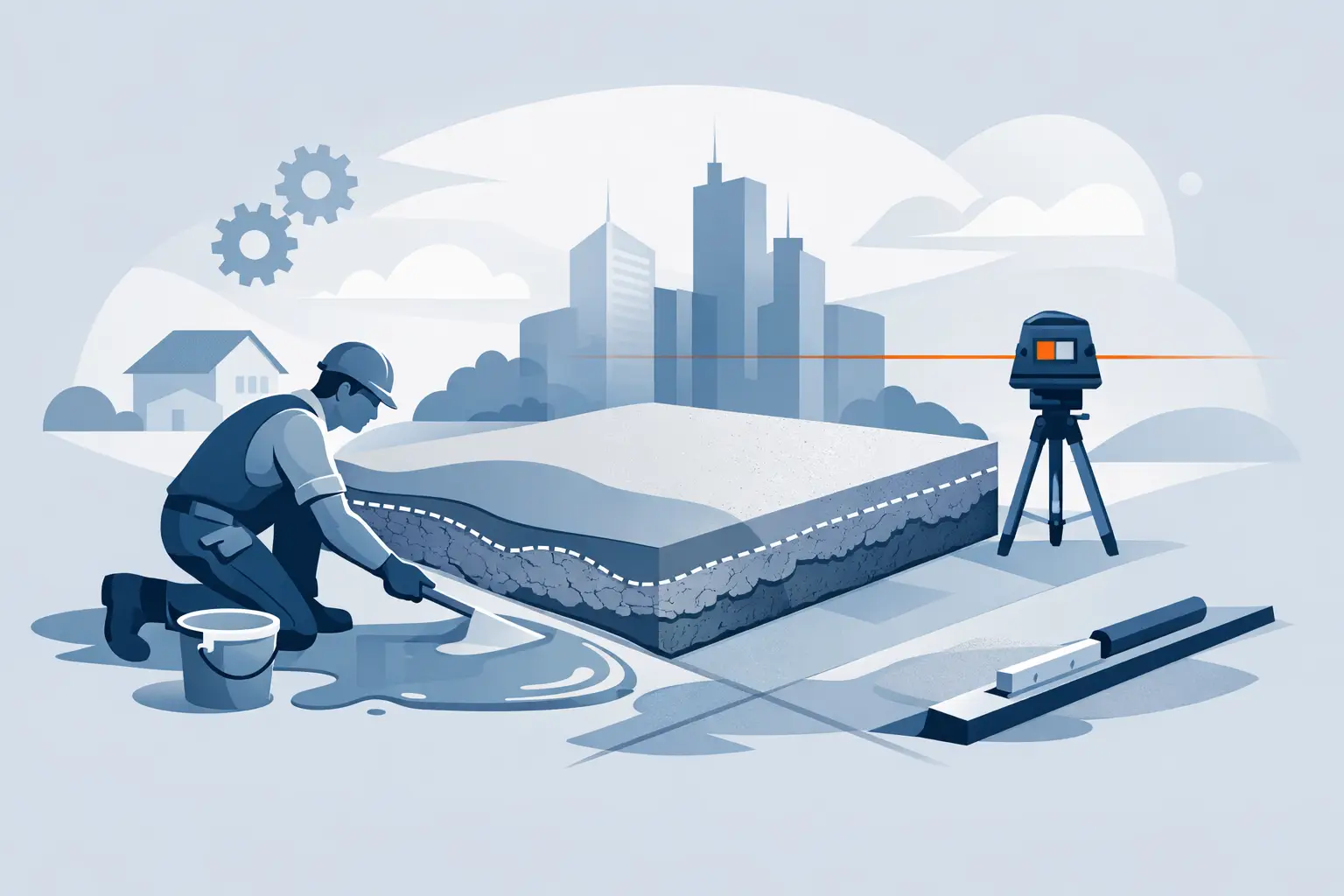
A warehouse aisle that rocks beneath a forklift, a retail floor with visible dips, or an office slab that leaves gaps beneath new flooring are not cosmetic inconveniences. They are signs that the surface may need floor leveling before the next finish, coating, or renovation moves forward. A level concrete floor supports safer traffic, cleaner installation work, and a finished surface that performs the way it was designed to perform.
For commercial properties across Los Angeles and Orange County, the stakes are higher than appearance. Uneven concrete can accelerate wear on wheels and equipment, create trip hazards, complicate racking installations, and make polished concrete or protective coatings look inconsistent. The right correction starts with an honest assessment of the slab, not a one-size-fits-all material application.
What Floor Leveling Actually Solves
Floor leveling is the process of correcting a concrete surface so it meets the flatness and elevation requirements of its intended use. That does not always mean making an entire slab perfectly level from wall to wall. Many industrial slabs are intentionally pitched toward drains, loading areas, or exterior exits. In those situations, preserving drainage can matter more than creating a dead-flat surface.
The goal is to remove problematic highs, fill damaging lows, and create a consistent plane where equipment, people, coatings, or finished flooring require it. A polished concrete floor, for example, may tolerate slight planned slope but will reveal abrupt high spots, patchy repairs, and uncontrolled undulations. Vinyl, tile, epoxy, and other thin finishes are even less forgiving because they can telegraph imperfections from below.
It is also important to distinguish leveling from slab lifting. If a slab has settled because of soil movement, voids, major cracking, or structural failure, surface-leveling products alone may not solve the root issue. Those conditions call for a broader evaluation before cosmetic repairs begin.
Why Uneven Concrete Costs More Than You Expect
A floor can look acceptable during a quick walkthrough and still create expensive operational problems. Forklifts, pallet jacks, carts, and scissor lifts repeatedly strike transitions that foot traffic barely notices. That impact can damage wheels, loosen loads, reduce operator comfort, and wear down weak patches far sooner than expected.
In customer-facing spaces, the effects are more immediate. A floor covering can crack along a dip, furniture may wobble, and lighting can expose a wavy reflection across a glossy finish. In a residential loft or modern office, those details can undermine the clean, refined appearance that concrete was meant to provide.
Moisture is another concern. Low areas can collect wash water, spills, and condensation. On an unprotected slab, repeated ponding may leave stains or contribute to surface deterioration. Under a coating system, trapped moisture and poor preparation can contribute to adhesion failures. Leveling work should therefore be planned with moisture conditions, intended drainage, and the final flooring system in mind.
Start With Surface Mapping, Not Guesswork
The strongest floor leveling projects begin with measurement. A qualified concrete contractor maps the slab to identify high points, low areas, slope direction, cracks, joint conditions, and changes in elevation. This establishes whether the problem is isolated or widespread and helps determine how much material removal or build-up is actually required.
For a warehouse, the measurement plan should account for traffic lanes, rack aisles, dock approaches, and equipment paths. In retail and office environments, attention often shifts to entryways, transitions between rooms, display areas, and the visual appearance of the finished floor. Homes may require close inspection around kitchens, bathrooms, large-format tile, and areas where a polished concrete finish is planned.
The final floor system determines the tolerance. A floor that will receive carpet tile may not need the same preparation as one receiving thin epoxy, luxury vinyl plank, or a high-gloss polished finish. Spending for precision where it does not add value is wasteful. Cutting corners where precision is essential is more expensive later.
The Right Floor Leveling Method Depends on the Slab
There is no universal repair method for uneven concrete. The best approach may involve mechanical grinding, localized patching, a cementitious topping, or a combination of these techniques.
Grinding High Spots
Diamond grinding is often the most efficient solution when raised areas are causing the problem. Professional grinding removes concrete in controlled passes, reducing abrupt lips and creating a smoother plane without adding thickness to the floor. It is especially useful at joints, old patch edges, door thresholds, and transitions that interfere with carts or equipment.
Grinding is also a critical part of polished concrete preparation. It opens the surface, removes contamination, and begins refining the slab. However, grinding alone cannot fix every low area. Excessive removal can expose weak aggregate, alter planned drainage, or create a new issue elsewhere on the floor.
Filling Low Areas and Surface Defects
Low spots may be corrected with compatible repair mortars or cement-based underlayments designed for concrete. Material selection matters. The product must bond reliably, withstand the expected traffic, and be appropriate for the final finish. A patch that works beneath carpet may not be the right choice beneath a clear sealer or decorative polish.
Proper preparation is non-negotiable. Weak concrete, dust, curing compounds, adhesives, oils, and failed coatings must be removed before patching. The repair area may need mechanical profiling, edge treatment, and moisture testing to establish a sound bond. Fast-setting products can help reduce downtime, but they must still be installed at the right thickness and cured according to their requirements.
Using a Topping or Overlay
When a larger area has widespread irregularities, a bonded topping or overlay can create a new working surface. This approach can be effective for retail spaces, offices, showrooms, and residential interiors where appearance and consistent elevation are priorities. It can also provide a fresh canvas for stains, decorative treatments, coatings, or polishing, depending on the system selected.
The trade-off is that toppings add thickness. That can affect door clearances, drains, transitions, base details, and equipment access. The existing slab must also be stable enough to support the new layer. An overlay can improve a worn surface dramatically, but it should not be used to hide active cracking, moisture pressure, or slab movement without addressing those issues first.
Preparing for Polished Concrete or Coatings
Leveling should never be treated as an isolated step when the floor will receive a premium finish. The repair strategy must align with the final result.
For polished concrete, repairs can remain visible depending on aggregate exposure, color variation, and desired gloss level. Some clients prefer the authentic character of a repaired slab. Others need a more uniform visual field, which may point toward a topping system rather than polishing the original concrete. A clear conversation about appearance before work begins prevents surprise patch marks after the final polishing passes.
For epoxy and other protective coatings, profile and moisture conditions are central to performance. A level slab with poor surface preparation is still a coating failure waiting to happen. Mechanical diamond grinding is one of the most reliable ways to remove contaminants and create the surface texture needed for adhesion. Joint treatment, crack repair, and moisture mitigation may also be necessary based on the slab and the environment.
Keeping Operations Moving During the Work
Facility managers often delay floor correction because they expect a full shutdown. In many cases, that is unnecessary. Work can be phased by aisle, room, bay, or traffic zone so portions of the property remain active. Dust-controlled equipment, clear containment boundaries, and scheduled cure windows help limit disruption in occupied spaces.
The schedule should be built around the business, not just the crew. Warehouses may benefit from evening or weekend work. Retail locations may need a staged plan that protects customers and inventory. Offices and residences require attention to noise, access, and cleanup. The fastest-looking approach is not always the best one if it compromises surface prep, curing, or safety.
When a Level Floor Is Worth the Investment
Floor leveling delivers the most value when it solves a specific operational or finish-related problem. It is a smart investment before installing polished concrete, coatings, tile, resilient flooring, racking, or heavy equipment. It can also extend the service life of an existing floor by removing the high-impact transitions that cause repeated damage.
Los Angeles Concrete Polishing approaches each slab as a performance surface, not just a construction detail. That means evaluating traffic, moisture, finish expectations, downtime constraints, and long-term maintenance before recommending grinding, repairs, a topping, or a protective system.
The best time to correct an uneven floor is before it is covered, coated, or forced to carry more traffic than it can handle. A measured plan now creates a cleaner, safer surface and gives every finish installed above it a better chance to last.
Clients We Service
We provide our concrete polishing and related services to a wide variety of clients. Some of the types of clients that we provide service to include:


