
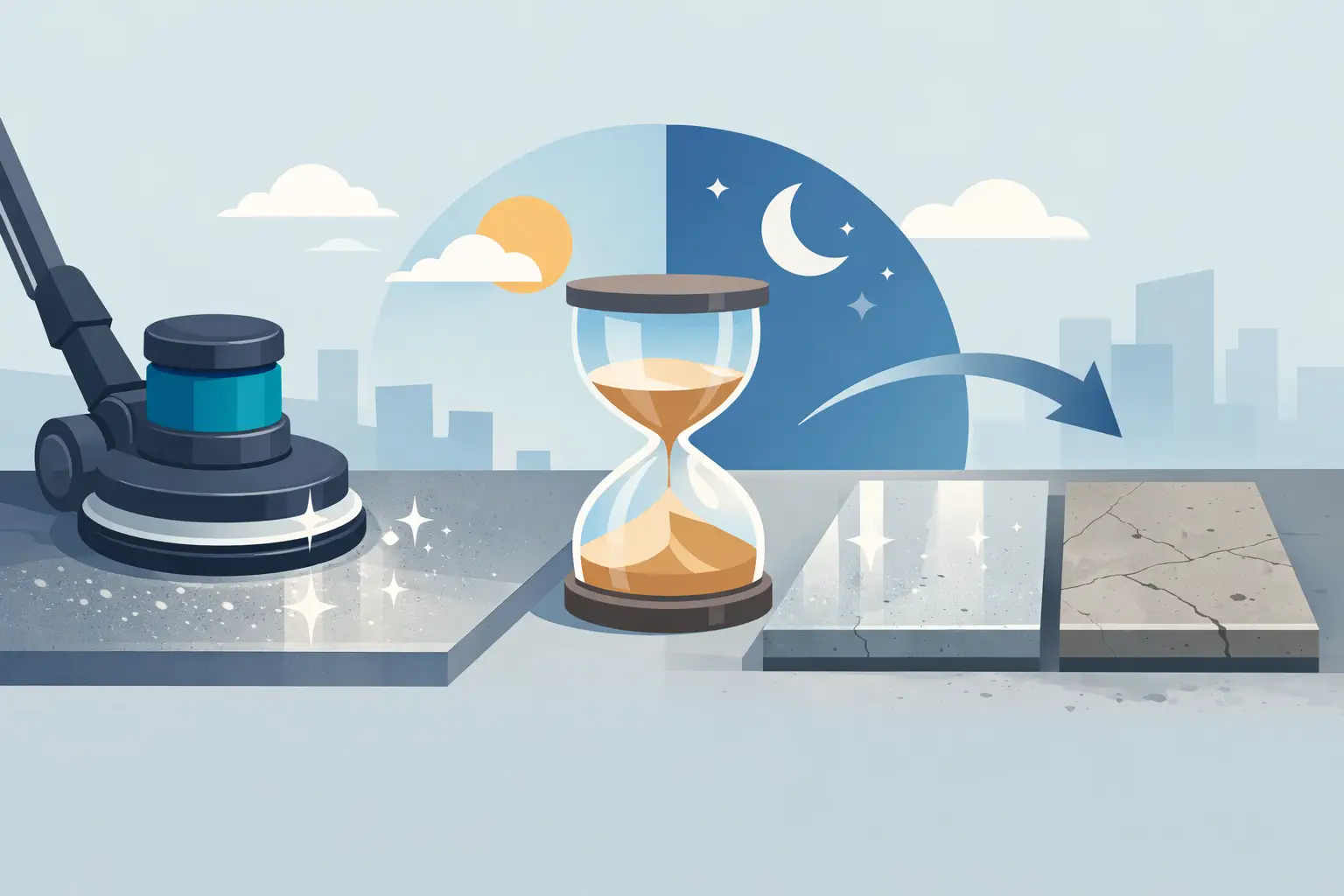
A polished concrete floor can look sharp on day one, but the real question is how it performs after forklifts, shopping carts, office chairs, foot traffic, spills, and daily cleaning all take their turn. If you’re asking how long does concrete polishing last, the honest answer is this: a professionally polished concrete floor can last decades, but its appearance and performance depend on traffic, slab condition, maintenance, and how the floor was polished in the first place.
That distinction matters. Polished concrete is not a topical coating that sits on top and peels away. True concrete polishing mechanically refines the existing slab using industrial diamond tooling, hardeners, and progressively finer grits. When it is done correctly, you are improving the concrete itself. That is a big reason polished concrete has become the go-to choice for warehouses, retail spaces, offices, and modern homes that need long-term durability without constant replacement costs.
How long does concrete polishing last in real-world settings?
In low- to moderate-traffic spaces, polished concrete can maintain its performance for 10 to 20 years or more before major restoration is needed. In some residential settings, it can last even longer with very little intervention beyond routine cleaning and occasional burnishing.
In high-traffic commercial and industrial spaces, the floor structure itself can still last for decades, but the gloss and clarity of reflection may start to dull sooner. That does not mean the floor has failed. It usually means the surface needs maintenance polishing or re-burnishing to restore appearance. A warehouse with constant forklift traffic will age differently than a boutique showroom or office lobby, even if both started with the same finish.
This is where many property owners get mixed answers. Some people are really asking how long the shine lasts. Others are asking how long the whole floor system lasts before replacement. Those are not the same thing. The polished slab can remain serviceable for decades, while the sheen level may need periodic attention depending on use.
What actually affects polished concrete lifespan?
The biggest factor is traffic. A residential loft with socks, soft shoes, and light furniture creates very little wear compared with a distribution center moving pallets every day. Even among commercial spaces, traffic type matters as much as traffic volume. Hard plastic wheels, grit tracked in from outdoors, and turning forklift tires are much tougher on a surface than standard foot traffic.
The starting condition of the concrete also plays a major role. If the slab is weak, overly porous, cracked, contaminated, or poorly finished before polishing begins, the final result will have limits. A strong slab with proper densification and expert grinding gives far better long-term performance than a floor that was rushed through the process or polished on top of unresolved substrate issues.
Gloss level matters too. Higher-gloss finishes tend to show wear faster because they reflect more light and reveal scratches, scuffs, and traffic patterns more easily. A matte or satin finish may appear consistent longer in demanding environments, even if both floors are technically performing well. For many industrial and retail clients, the smartest decision is not always the highest shine. It is the finish that matches the way the space actually operates.
Maintenance habits can either protect your investment or shorten its visual life. Polished concrete is low maintenance, not no maintenance. Dust mopping, using a neutral cleaner, and removing abrasive debris regularly can make a major difference. Harsh chemicals, dirty mop water, and neglect allow surface abrasion to build up faster than most owners expect.
Moisture and contamination are another issue. In Southern California, polished concrete often performs extremely well, but moisture vapor transmission, chemical spills, oils, and acidic substances can still affect the slab if they are not addressed properly. A qualified contractor should evaluate moisture conditions and use the right hardeners, guards, or stain protection when needed.
Why professional polishing lasts longer
There is a major gap between a floor that was truly polished and one that was simply cleaned up to look better for a short period. Professional concrete polishing follows a controlled mechanical process. That includes grinding to remove imperfections, applying a densifier to strengthen the concrete surface, and refining the floor through multiple diamond grit stages until the target gloss and clarity are achieved.
If any of those steps are skipped, the floor may look acceptable at turnover but wear unevenly. A surface that was not properly densified can dust or soften faster. A floor that was not refined through the right grit progression may lose its appearance sooner. A slab with unresolved joint damage or moisture problems can create maintenance headaches long before the owner expected.
That is why experienced specification and installation matter so much. Los Angeles Concrete Polishing works with property owners who need floors that hold up under real use, not just floors that photograph well right after completion. Longevity starts with proper preparation and a polishing system matched to the building’s actual demands.
How long will the shine last?
This is usually the follow-up question, and the answer is more nuanced. In a residence, the shine can remain attractive for many years with basic care. In an office, retail store, or restaurant, you may see gradual dulling in main walk paths sooner, especially near entrances, checkout areas, and service counters.
In a warehouse or industrial plant, the reflectivity may change significantly faster than in a low-traffic environment, but that does not mean the floor needs to be replaced. It may simply need scheduled maintenance to restore gloss. Think of polished concrete like a high-performance surface that benefits from upkeep, not a disposable finish that fails all at once.
For many facilities, a practical maintenance plan includes regular cleaning and periodic high-speed burnishing. In heavier-use settings, a more involved maintenance polish may be recommended on a set schedule. That lighter restoration work is far less disruptive and more cost-effective than tearing out and replacing another flooring system.
Signs a polished concrete floor needs attention
Most polished concrete does not suddenly stop working. It gives clear signs. The first is usually a visible drop in shine in traffic lanes while the rest of the floor still looks good. You may also notice increased scuff visibility, minor etching from spills, or areas that seem harder to clean because surface soil is no longer releasing as easily.
In some facilities, traction concerns can also point to maintenance issues, especially if the floor has accumulated residues from improper cleaners. Polished concrete is often chosen because it is slip-conscious when clean and properly maintained, but buildup can change surface behavior. That is one more reason maintenance procedures need to match the floor type.
If the floor begins to look tired, the right solution is usually restoration, not replacement. A trained polishing contractor can assess whether the floor needs burnishing, deep cleaning, stain treatment, or a repolish of specific zones.
Is polished concrete worth it for the long term?
For most commercial and industrial owners, yes. The long-term value comes from durability, low maintenance demands, and the fact that the finish is built into the slab rather than relying on a coating layer that can chip, peel, or require frequent reapplication. Over time, that can mean lower lifecycle costs, less downtime, and fewer flooring disruptions.
That said, polished concrete is not a magic surface for every building. If a facility has extreme chemical exposure, constant heavy impact, or a slab that is not suitable for polishing, another system or a hybrid approach may make more sense. The best contractors will tell you when polished concrete is the right fit and when another solution will perform better.
For everyone else, the lifespan is one of its strongest advantages. A properly installed and properly maintained polished concrete floor is built to stay in service for years, often far longer than many alternative finishes in the same environment.
The best question is not just how long polished concrete lasts. It is how well it will hold up in your specific building, under your traffic, with your maintenance routine. Get that part right, and polished concrete stops being a short-term finish decision and becomes a long-term asset.
Clients We Service
We provide our concrete polishing and related services to a wide variety of clients. Some of the types of clients that we provide service to include:


