
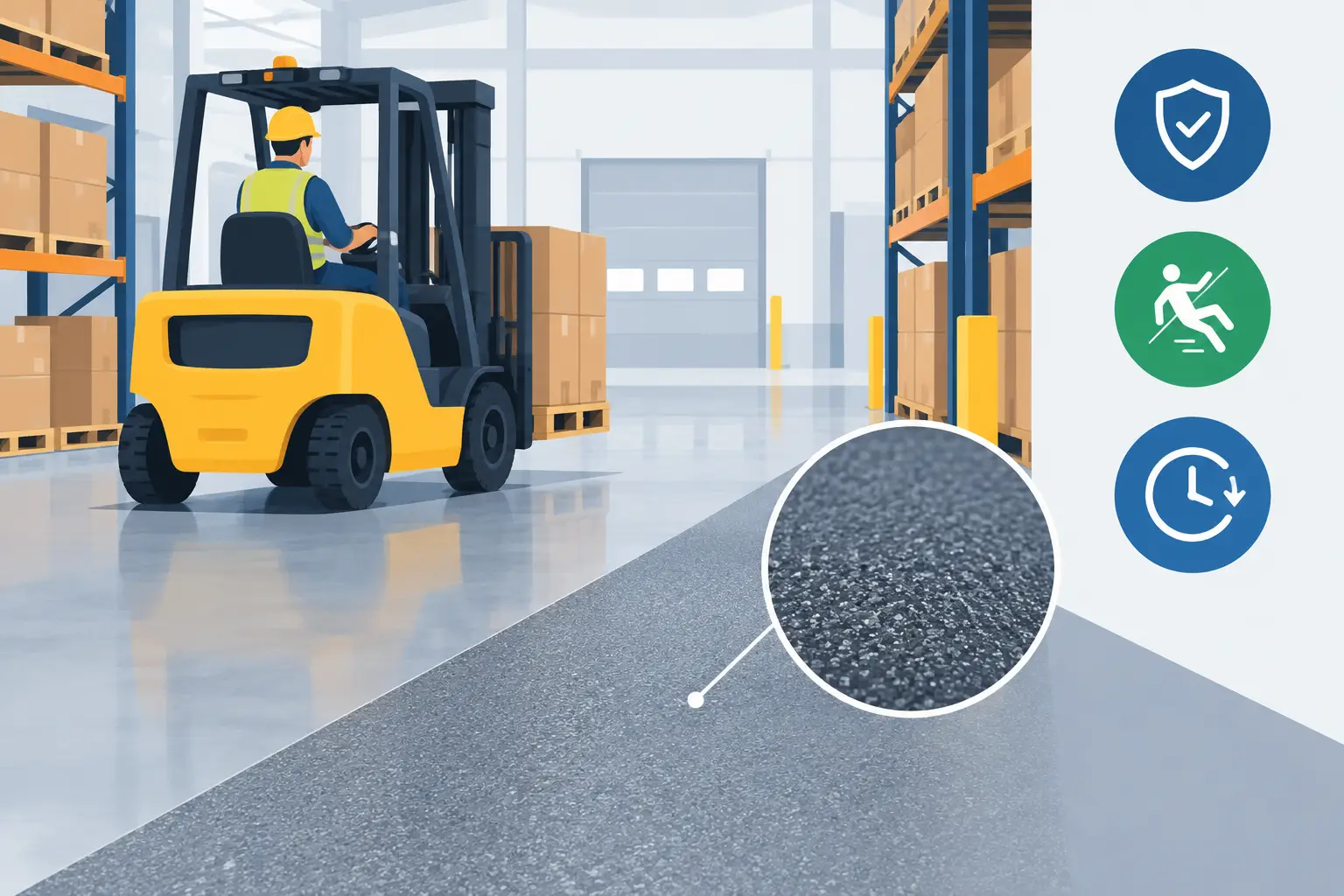
A warehouse floor can look clean, dry, and structurally sound while still creating a serious safety problem. Fine dust, tire residue, shrink wrap, pallet debris, condensation, and routine spills can reduce grip where employees walk and forklifts turn. Effective warehouse traction improvement addresses those real operating conditions, not just the appearance of the slab on installation day.
For facility managers, the goal is not to make concrete rough at all costs. The right surface must provide dependable slip resistance while allowing pallet jacks, forklifts, carts, and cleaning equipment to move efficiently. It also has to stand up to traffic, moisture, chemicals, and constant maintenance. That balance is where professional floor preparation and finish selection matter.
What Causes Poor Traction on Warehouse Concrete?
Most traction issues start with the condition of the concrete and the materials that collect on it. A smooth, dense floor can become slick when dust or moisture sits on the surface. Oil leaks near loading areas, rain tracked in through dock doors, and tire residue in travel lanes create additional risk. In Southern California warehouses, fine dry dust can be just as problematic as water because it acts like a layer of loose material between shoes or tires and the concrete.
Existing coatings can also contribute to poor footing. A glossy coating may look impressive but may not be appropriate for ramps, entryways, washdown areas, or busy forklift intersections unless it includes the correct traction system. Conversely, an excessively aggressive texture can increase rolling resistance, make cleaning harder, and wear down forklift tires. There is no one-size-fits-all finish.
Concrete defects deserve attention too. Spalling, curled slab edges, open joints, uneven repairs, and failed coatings create trip hazards and interfere with wheeled equipment. Improving traction without correcting these underlying conditions is a short-term patch, not a reliable flooring solution.
Warehouse Traction Improvement Starts With Surface Evaluation
The strongest results begin with an on-site evaluation of how the facility actually operates. A floor near a shipping dock faces different conditions than a climate-controlled storage aisle. A food distribution warehouse, automotive facility, and light-manufacturing building may all use concrete, yet each has different exposure to water, oils, cleaning chemicals, and vehicle traffic.
A professional evaluation should identify traffic patterns, turning zones, grades, drains, wet areas, coating failures, concrete hardness, moisture conditions, and cleaning practices. The right question is not simply, “How can we make this floor less slippery?” It is, “Where does risk occur, what causes it, and what finish will perform without slowing operations?”
Moisture testing is especially important before coatings or toppings are installed. Moisture vapor moving through the slab can weaken adhesion, blister a coating, or cause premature failure. Diamond grinding and proper surface preparation create the mechanical profile needed for a floor system to bond, but the selected materials must also be compatible with the slab’s moisture condition.
Focus on the Highest-Risk Areas First
Not every square foot needs the same traction level. Forklift turning zones, dock approaches, entrances, break areas, ramps, restrooms, battery charging locations, and spill-prone production areas typically deserve the most attention. Targeting these areas can control budget and minimize downtime while making a meaningful difference in daily safety.
A facility-wide floor upgrade may still be the best choice when the concrete is broadly worn or an existing coating has failed across large areas. However, strategic treatment of high-risk zones is often an effective first phase for active operations.
Choosing the Right Floor Finish for Grip and Performance
Several concrete flooring options can support safer warehouse conditions. The best choice depends on the level of traction needed, the exposure conditions, the desired appearance, and the type of traffic moving across the floor.
Mechanically Prepared Concrete
Diamond grinding removes weak surface material, old coatings, contaminants, and irregularities. It can also create a more consistent texture than a deteriorated or poorly patched slab. For some warehouses, a professionally ground and densified concrete floor offers a practical balance of durability, dust reduction, and maintainability.
Densifiers harden and strengthen the concrete surface, helping reduce dusting and abrasion. They do not automatically make every floor slip resistant, but they can be part of a traction-conscious system when paired with the correct finish and cleaning program. The final texture must be selected carefully because a highly polished finish is not always appropriate in operational zones exposed to water or oils.
Traction Additives in Protective Coatings
Epoxy, urethane, and other protective coating systems can deliver chemical resistance, color consistency, and easier cleanup. When traction is a priority, installers can incorporate selected aggregate into the broadcast layer or topcoat. Depending on the application, this may include fine polymer grit, silica, aluminum oxide, or other materials designed to create texture.
The aggregate size matters. Fine grit may improve pedestrian traction while retaining relatively easy cleaning. A heavier broadcast can provide more aggressive grip for wet or demanding areas, but it may collect dirt, challenge mop-and-bucket cleaning, and create a rougher ride for rolling loads. Areas with frequent forklift movement often need a controlled, uniform texture rather than the coarsest possible finish.
Cementitious Toppings and Repairs
When the existing slab has significant damage, a cementitious topping or repair system may be the better long-term answer. These materials can restore worn surfaces, correct localized deterioration, and establish a more suitable base for a protective finish. They are particularly valuable where repeated patching has left the floor uneven and difficult to clean.
A topping is not automatically the right solution for every warehouse. It adds cost and requires preparation, curing, and scheduling considerations. But when the concrete itself is failing, placing a new coating over weak material rarely delivers the dependable performance facility managers expect.
Why Cleaning Practices Affect Traction
Even the best flooring system can become slippery if cleaning leaves residue behind. Degreasers, soaps, and cleaners must be matched to the floor finish and rinsed properly. Overuse of certain chemicals can leave a film that reduces traction, while inadequate cleaning allows dust, oils, and fine debris to build up in travel paths.
A practical warehouse maintenance plan separates dry debris removal from wet cleaning. Sweeping or auto-scrubbing should remove dust and contaminants without flooding the floor. Wet areas need prompt response, clear procedures, and, where appropriate, designated mats or drainage improvements. Those operational details often determine whether a floor remains safe between professional service visits.
Tire selection and traffic behavior also matter. Worn forklift tires, sharp turns, and aggressive braking can deposit rubber and wear away certain floor finishes. Facility teams should inspect high-traffic lanes routinely and address early signs of coating wear before bare concrete, loose edges, or slick contamination become larger problems.
Avoid the Common Traction Mistakes
One common mistake is applying a glossy sealer or coating without accounting for the building’s actual exposure to spills and moisture. Another is selecting a rough texture everywhere, only to discover that cleaning time, tire wear, and equipment vibration have increased. Safety and productivity should work together.
Skipping preparation is another costly error. A traction additive cannot compensate for contamination, weak concrete, moisture pressure, or a failing prior coating. Surface preparation through professional diamond grinding is what gives a new system the profile and bond required for long-term performance.
Finally, avoid treating traction as a one-time installation decision. Floors change under forklift traffic, chemical exposure, and cleaning cycles. Regular inspections help identify worn topcoats, damaged joints, and contamination patterns before they lead to accidents, downtime, or expensive emergency repairs.
A Safer Warehouse Floor Should Still Be Easy to Run
The best warehouse floor is not merely rougher. It is engineered for the facility’s traffic, moisture exposure, maintenance routine, and business schedule. A well-planned system improves footing where it is needed, protects the concrete from wear, and supports efficient movement throughout the building.
Los Angeles Concrete Polishing helps warehouse operators evaluate concrete condition, moisture concerns, surface texture, and protective finish options before work begins. With the right preparation and a finish tailored to the operation, traction improvement becomes a practical investment in safer workdays and a floor that continues performing long after the project is complete.
Clients We Service
We provide our concrete polishing and related services to a wide variety of clients. Some of the types of clients that we provide service to include:


