
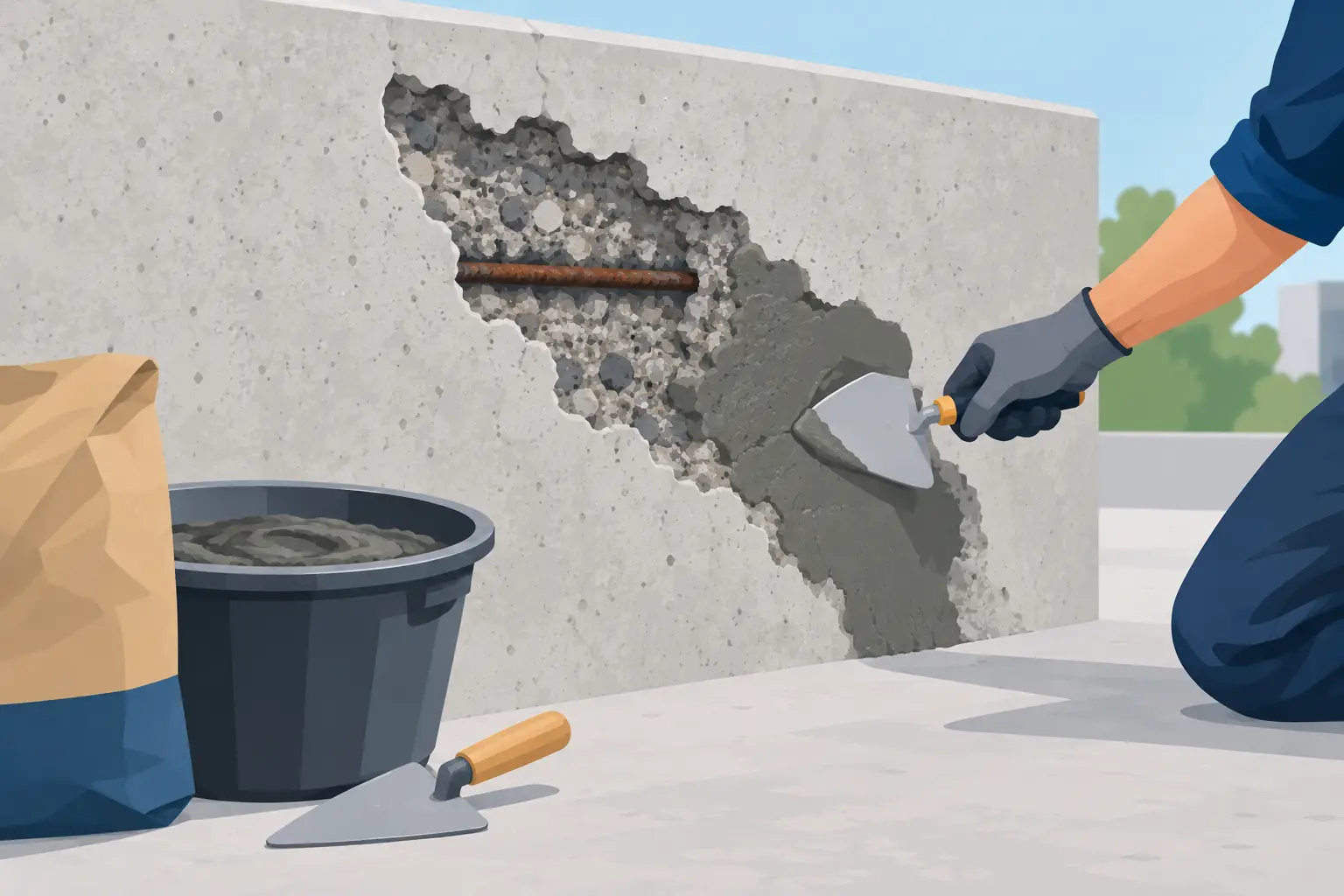
A spalled concrete floor is more than a cosmetic problem. When you repair spalled concrete surfaces correctly, you stop loose material, reduce trip and forklift hazards, protect the slab from deeper damage, and create the sound base required for coatings or polished concrete. When the repair is rushed, the patch often fails first – then the surrounding concrete follows.
For warehouses, retail spaces, offices, production areas, garages, and modern residential interiors, the right repair begins with a clear answer to one question: why did the concrete break away? A durable result depends on solving that cause before selecting a repair material.
What Spalled Concrete Tells You About the Slab
Spalling occurs when the concrete surface flakes, chips, pits, or breaks away in shallow to significant sections. It may look like isolated rough spots, but it can also expose coarse aggregate, leave sharp edges, create depressions, and produce a steady stream of dust under traffic.
In Southern California facilities, spalling commonly develops where hard wheels, pallet jacks, forklifts, rolling racks, dropped materials, or repeated point loads strike an already weakened slab. Moisture vapor moving through concrete can also undermine coatings and repair mortars. Chemical exposure, poor original finishing, weak surface paste, and previous patch failures are frequent contributors.
The visible damage is not always the full extent of the issue. A hollow sound when the surrounding floor is tapped, dark moisture-related discoloration, peeling coatings, or multiple repairs in the same travel lane can indicate that the slab needs a broader evaluation. Patching only the obvious hole may look efficient, but it can create repeated downtime if adjacent concrete is unsound.
How to Repair Spalled Concrete Surfaces for Lasting Results
A professional repair process is deliberate. The goal is not simply to fill a low spot. It is to create a repair area with sound edges, proper bond, compatible materials, and a finish that performs at the same level as the surrounding floor.
Start with the source of failure
Before any grinding or patching begins, identify the forces working against the slab. Is a leaking door threshold allowing water beneath the surface? Are forklifts turning in one concentrated location? Did a coating trap moisture? Is the damage limited to weak surface concrete, or has impact damaged the slab more deeply?
This diagnosis determines the scope. Light surface scaling may be corrected through mechanical preparation and a thin repair or topping system. Deep spalls, active cracks, or areas affected by moisture may require removal to a greater depth, joint repair, moisture mitigation, or changes to operations. The best repair system depends on the floor’s actual condition, not a one-size-fits-all product choice.
Remove all weak concrete
Sound preparation separates durable repairs from short-lived patches. The damaged area must be mechanically removed until the repair reaches clean, solid concrete. This often means saw-cutting or routing the perimeter to create firm edges, then using grinding, scarifying, or controlled demolition to remove unsound material.
Feathering a repair into weak or dusty concrete creates a thin edge that can chip under traffic. Clean, well-defined edges give repair mortar enough depth and support to resist rolling loads. Any exposed reinforcement should be inspected and treated where necessary, especially if corrosion has contributed to the damage.
Dust, oil, old adhesive, curing compounds, and failed coating residue must also be removed. Concrete repair materials bond to prepared concrete, not contamination. Diamond grinding is especially effective when the final floor will receive polishing, a protective coating, or a decorative topping because it leaves a consistent mechanical profile.
Control moisture before the patch goes in
Moisture is one of the most overlooked reasons concrete repairs fail. A slab can appear dry at the surface while still transmitting moisture vapor from below. In Los Angeles and Orange County, slabs on grade, older buildings, coastal environments, and spaces with changing HVAC conditions can all present moisture-related challenges.
Testing and evaluating moisture conditions helps determine whether the area needs a vapor-control system, a moisture-tolerant repair material, or a breathable floor finish. If water intrusion is active, the source must be corrected first. A premium patch cannot overcome a drainage failure, plumbing leak, or slab moisture condition that has been ignored.
Select a repair material for the traffic and finish
The repair compound must match the job. Cementitious repair mortars work well for many larger repairs and can be shaped to restore a flat surface. Rapid-setting materials can reduce downtime in active facilities, although they require disciplined installation because working time is short. Epoxy mortars provide excellent strength and chemical resistance in certain industrial settings, but their moisture tolerance and compatibility with the planned finish must be confirmed.
For a floor intended for polished concrete, material selection matters even more. A patch may be structurally strong but show a different color or aggregate pattern after grinding and polishing. That is not necessarily a defect – it is a natural limitation of repairing an existing slab. In high-visibility retail, office, loft, or residential spaces, a full overlay, decorative topping, or design strategy may produce a more uniform final appearance than isolated patches.
Place, consolidate, and finish the repair properly
Once the substrate is clean and prepared, the repair material should be installed according to its specified depth, primer requirements, mixing ratio, and cure schedule. Improper water addition, poor mixing, and rushed finishing can weaken even a quality product.
The patch should be brought to the required elevation while accounting for the next step. A floor that will be diamond-ground can be placed slightly proud and ground flush after curing. A coated floor must be flat enough to avoid puddling, telegraphing, or premature wear at high points. In forklift lanes, transitions need to be smooth enough to prevent wheel impact at the edge of the repair.
Grind and protect the finished surface
After curing, the repair is ground flush and blended into the surrounding concrete. This step removes high spots, opens the surface for coatings where needed, and creates a cleaner, safer walking and rolling surface.
The final protection should reflect how the space operates. Densified and polished concrete is an excellent option for many high-traffic interiors because it improves surface hardness, reduces dusting, and supports a refined, low-maintenance appearance. A chemical-resistant coating system may be a stronger choice where oils, cleaners, or process chemicals are common. In areas with wet conditions or required traction, the finish should be designed around slip resistance rather than gloss alone.
When a Patch Is Not the Best Answer
Spot repairs are cost-effective when spalling is isolated and the remaining slab is sound. They are not always the right long-term value. If damage appears across broad areas, if the surface is consistently weak, or if dozens of old patches create an uneven appearance, a larger restoration plan may be more economical than continuous maintenance.
A concrete topping can restore a worn surface and provide a consistent canvas for polishing or coatings. Full-slab grinding may remove weak surface paste and improve flatness before a protective system is installed. In severe cases, structural evaluation may be required before cosmetic work begins.
Facility managers should also consider operational disruption. A fast patch may reopen a small traffic area quickly, but a phased restoration can prevent repeat closures and preserve a more uniform floor finish. The right choice balances immediate access, lifecycle cost, safety requirements, and the expected use of the space.
Avoid the Repair Mistakes That Cause Repeat Failures
The most common mistake is applying a patch over loose concrete. The second is treating moisture, oil, or coating residue as an afterthought. Other frequent failures include using a thin feather edge in a forklift route, choosing a material that is incompatible with a polished finish, and reopening the area before the repair has cured sufficiently.
Color expectations also deserve an upfront conversation. A repaired area may remain visible after polishing because the original slab, aggregate, and patch material do not age the same way. For clients who need visual consistency, experienced concrete professionals can recommend a broader grinding, dye, topping, or coating approach before work begins.
Los Angeles Concrete Polishing evaluates repair work as part of the entire floor system – substrate condition, moisture behavior, traffic patterns, finish requirements, and business schedule. That approach helps commercial and residential clients avoid spending twice on a repair that was never designed for the floor’s real demands.
A sound concrete floor should support daily operations without creating dust, hazards, or constant maintenance calls. Address spalling while it is still localized, and give the repair the preparation and protection it needs to perform for years.
Clients We Service
We provide our concrete polishing and related services to a wide variety of clients. Some of the types of clients that we provide service to include:


