
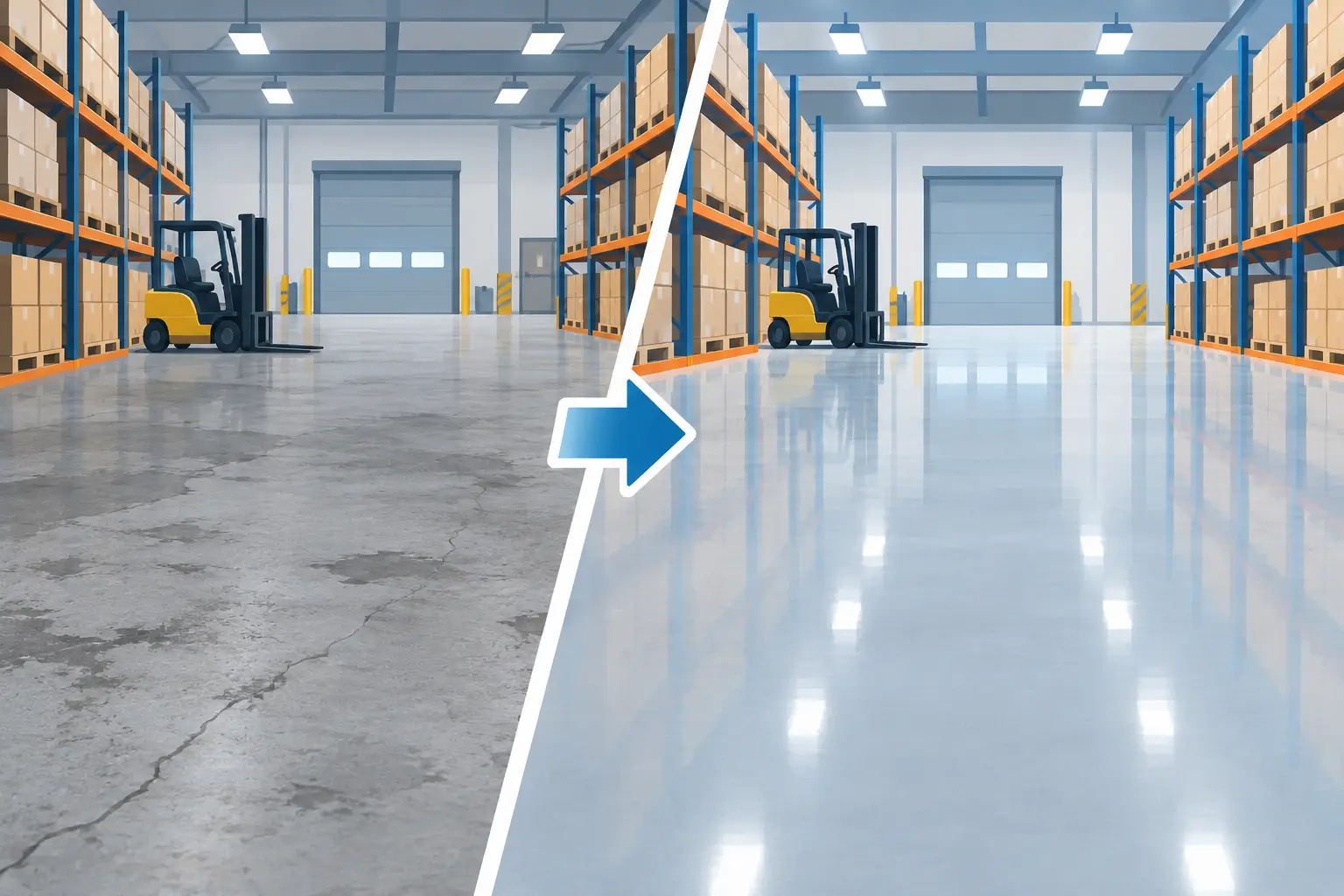
A worn warehouse floor rarely fails all at once. It shows up as forklift vibration at broken joints, dust tracked into inventory areas, dark oil-stained travel lanes, and concrete patches that keep coming loose. This distribution center floor restoration example shows how a high-traffic facility can turn a damaged slab into a cleaner, harder-working surface without treating the project like a cosmetic quick fix.
The scenario is representative of the work needed in many Los Angeles and Orange County logistics buildings: an operating 95,000-square-foot distribution center with heavy pallet-jack use, daily forklift traffic, loading-area moisture, and years of uncoordinated repairs. The owner needed a floor that looked professional for staff and visiting customers, but the real priorities were reduced dust, safer travel lanes, easier cleaning, and a plan that limited disruption to shipping.
Distribution Center Floor Restoration Example: The Starting Point
The existing slab had good structural potential, but it was far from ready for polishing. Its surface had worn unevenly in the main forklift aisles. Several control joints had cracked edges, old epoxy patches sat proud of the slab, and a thin, failing coating remained in spots near the loading doors. Repeated cleaning had also exposed soft, porous concrete in isolated areas.
A common mistake is to choose a finish before evaluating the slab. Polished concrete, a coating system, or a cementitious topping can all be strong choices, but each requires different preparation. A floor with widespread surface delamination may need a topping. A space exposed to frequent chemical spills may benefit from a protective coating or a polished surface with the right guard. A structurally sound slab with cosmetic wear and dusting is often an excellent candidate for restoration and polishing.
The first step was a detailed floor assessment. The team mapped cracks, failed joints, low spots, old patch material, moisture-prone zones, and traffic patterns. They also identified areas where forklift tires were likely to catch on raised repairs. This evaluation established the scope and helped the facility manager separate necessary repairs from optional appearance upgrades.
Building the Restoration Plan Around Operations
For a distribution facility, the best floor system is not automatically the shiniest one. It has to support the building’s actual workflow. In this example, the owner did not need a decorative high-gloss showroom finish throughout the warehouse. They needed a medium-reflective, hard-wearing surface that would improve lighting, make markings easier to see, and stand up to constant wheeled traffic.
The work was divided into manageable zones. Receiving, shipping, bulk storage, and primary travel lanes were scheduled in phases so inventory could be relocated internally rather than forcing a full shutdown. The exact phasing depends on the size of the building, available staging space, cure times, and whether work can be performed overnight or on weekends. A busy facility with no swing space may need smaller work areas and a longer schedule. A warehouse with flexible staging can complete larger sections faster.
Moisture testing was also part of the plan. Moisture does not always prevent concrete polishing, but it can affect repair materials, coatings, and topical protective products. Addressing moisture conditions before installation is far less expensive than repairing peeling coatings or failed patches later.
Repairing the Slab Before Refining It
The restoration started with mechanical removal of old coatings, failed patch material, adhesives, and contaminated surface concrete. Diamond grinding opened the slab and created a consistent profile for repairs. This is where experienced preparation makes the difference. Grinding only the visibly damaged spots can leave transitions that remain noticeable under warehouse lighting and felt under forklift tires.
Damaged joint edges were saw-cut or cleaned to sound concrete, then rebuilt with a rigid or semi-rigid joint filler selected for the traffic conditions. In forklift lanes, joint repair is not merely an appearance issue. Properly restored joints reduce edge spalling and help limit the sharp impacts that accelerate wear on tires, wheels, racks, and equipment.
Cracks were evaluated individually. Some were static and could be filled as part of the surface repair process. Others showed movement or reflected building conditions that required a more flexible approach. No contractor should promise that every existing crack will disappear permanently. Concrete moves, and a restoration plan should be honest about where a repaired crack may remain faintly visible or require future maintenance.
Low areas near loading doors were corrected where practical, particularly where wash water or rain intrusion created recurring puddles. Not every low spot needs full correction. If drainage does not affect operations or safety, grinding and polishing may be the more cost-effective option. Where standing water was contributing to deterioration, targeted leveling and moisture management were justified.
From Grind Marks to a Dense, Serviceable Finish
Once repairs were complete, the floor moved through progressive diamond-grinding stages. Coarser diamonds removed remaining imperfections and blended repaired areas into the surrounding slab. Finer grits refined the surface, while a lithium densifier hardened the concrete and reduced dusting.
For this facility, the final finish was a practical satin-to-medium gloss rather than a mirror polish. It improved light reflectivity and gave the warehouse a clean, organized appearance without demanding the extra labor associated with a high-gloss architectural finish. The result was a surface that made tire marks, spills, and debris easier to spot during routine cleaning.
A stain guard was applied in areas exposed to occasional oil, hydraulic-fluid, and packaging-related spills. This is an important distinction: polished concrete improves density and abrasion resistance, but it is not automatically impervious to every chemical. Facilities with aggressive acids, solvents, battery-charging exposure, or frequent chemical washdowns may need a specialized coating system instead. The correct answer depends on the substances involved, spill frequency, cleanup practices, and expected traffic.
The restored floor was also evaluated for slip-conscious performance. Gloss alone does not determine slip resistance. Surface condition, contaminants, footwear, cleaning methods, and drainage all matter. A polished concrete contractor should help the facility choose a finish level that supports visibility and maintainability without overlooking real operating risks.
What Changed for the Facility
The visible improvement was immediate. The patched, uneven warehouse floor became consistent in color and texture, with cleaner travel lanes and better light reflection. More importantly, the operational benefits began after the project team left.
Dust from deteriorating concrete was reduced, which helped protect inventory and simplified daily cleaning. Repaired joints created smoother forklift travel. Maintenance staff no longer had to chase failing surface patches across the busiest parts of the warehouse. The floor also presented a more professional image for employees, vendors, inspectors, and prospective clients.
That does not mean the restored floor became maintenance-free. It still required dry debris removal, prompt spill cleanup, and use of neutral cleaners instead of harsh products that can leave residue or dull the protective treatment. Periodic inspections of joints and high-impact loading zones remained part of responsible facility maintenance.
Choosing Restoration Instead of Replacement
Full slab replacement is sometimes necessary, especially when structural failure, severe heaving, or widespread settlement affects the building. But many distribution center floors do not need demolition to perform better. If the slab is fundamentally sound, restoration can preserve the existing asset while avoiding the cost, debris, and operational interruption of replacement.
Los Angeles Concrete Polishing approaches these projects with the preparation-first discipline industrial floors demand. The right solution may be diamond-polished concrete, a durable coating, a topping, or a combination of systems in different zones. The strongest recommendation comes from the slab condition and how the facility operates, not from forcing every floor into one finish.
A distribution center floor should make work easier, not create another maintenance problem. Start with an honest assessment of the slab, map the operational pressures it faces, and choose a restoration plan built to keep traffic moving long after the equipment is packed up.
Clients We Service
We provide our concrete polishing and related services to a wide variety of clients. Some of the types of clients that we provide service to include:


