
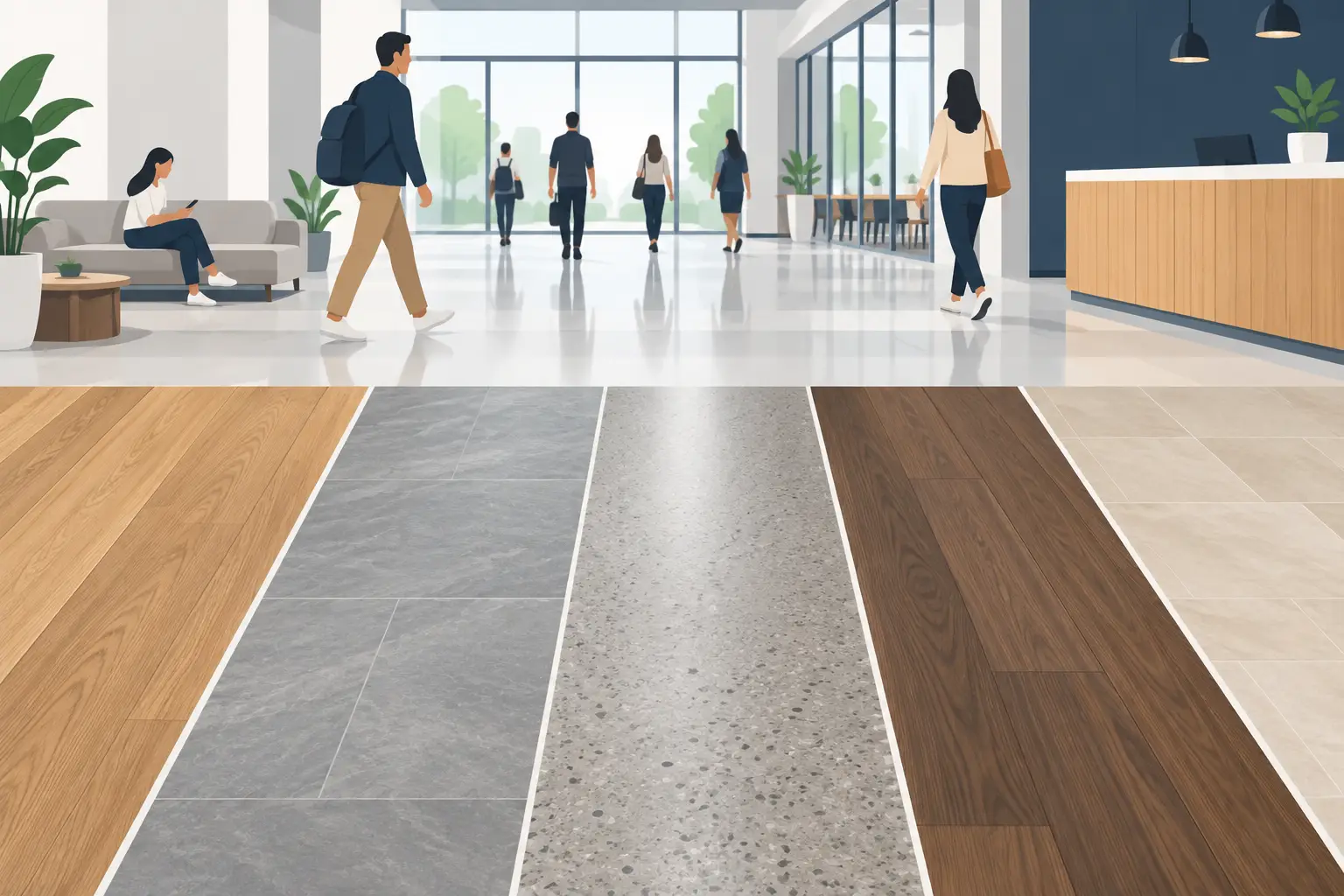
A floor can look acceptable on opening day and become a maintenance problem six months later. The difference is usually traffic: rolling carts, forklifts, pallet jacks, foot traffic, dropped inventory, spills, cleaning chemicals, and constant abrasion. The best high traffic flooring options are chosen for the work happening on top of them, not simply for a showroom sample.
For Southern California property owners and facility managers, the strongest choice often begins with the concrete already underfoot. A professionally prepared and protected concrete slab can deliver exceptional service life, a clean modern appearance, and lower lifetime maintenance than many surface coverings. But polished concrete is not the only answer. The right system depends on load weight, moisture conditions, safety requirements, downtime limits, and the image the space needs to project.
What High Traffic Flooring Must Handle
Heavy traffic does not mean the same thing in every building. A retail store may need a floor that resists scuffs while maintaining an inviting finish. A warehouse needs to withstand forklifts, impact, point loads, and tire traffic. An office lobby needs visual consistency, slip-conscious performance, and simple daily cleaning. A residential loft may prioritize a refined finish that handles pets, guests, and furniture without demanding constant care.
Before comparing materials, assess the actual conditions. Look at the type and volume of traffic, the likelihood of oils or chemicals, slab moisture, exposure to sunlight, cleaning practices, and any requirement for overnight or phased installation. A floor that performs well under shoes may fail quickly under hard forklift wheels. Likewise, a glossy surface that looks sharp in a lobby may need a different traction strategy near entryways or wet-service areas.
The most cost-effective flooring decision is rarely the one with the lowest installation price. It is the one that limits repairs, replacement cycles, cleaning labor, and operational interruptions over the years ahead.
Polished Concrete for High Traffic Flooring
Polished concrete is one of the most capable high traffic flooring options for warehouses, retail spaces, offices, showrooms, restaurants, and modern homes. Instead of covering the slab with a material that can peel, tear, or delaminate, diamond grinding and polishing refine the concrete itself. Densifiers harden the surface, while progressive diamond grits create the selected level of clarity and gloss.
The result is a dense, durable surface with fewer joints, no grout lines, and no wax requirement. Dust, debris, and tire marks are easier to manage than on many textured or porous materials. In large facilities, that reduced maintenance burden can make a meaningful difference in operating costs.
Polished concrete also gives owners control over appearance. A low-sheen matte finish can suit industrial operations and understated offices, while a higher-gloss finish brings light reflectivity to retail environments, galleries, and lofts. Aggregate exposure, color staining, and decorative saw cuts can add visual distinction without relying on a fragile top layer.
There are trade-offs. Existing concrete determines much of the final look, especially where cracks, patches, old adhesive, or slab variations are present. Polished concrete also requires proper moisture evaluation and surface preparation. A qualified contractor should inspect the slab before making promises about uniformity, gloss, or stain acceptance. In areas exposed to frequent water, oil, or food service spills, the finish and cleaning plan must be selected with traction in mind.
Protective Coatings When Chemical Resistance Is the Priority
Epoxy, urethane, polyaspartic, and other resinous coatings are strong candidates when a facility needs a protective barrier over concrete. They are common in manufacturing areas, commercial kitchens, garages, laboratories, healthcare support spaces, and operations where chemical exposure is routine.
A coating system can provide a uniform color, designated safety zones, decorative flakes, or a highly visible clean-room appearance. Broadcast aggregate can improve traction, while specialized topcoats can increase resistance to abrasion, hot tire pickup, UV exposure, and chemicals. These systems are especially useful when the concrete underneath is damaged or when the owner needs a controlled, consistent visual finish.
The limitation is that coatings are only as dependable as their adhesion to the slab. Moisture vapor, inadequate grinding, contamination, and rushed installation can lead to peeling or blistering. Heavy-duty areas may also require periodic recoating, particularly at traffic lanes, loading points, and turning zones. The strongest coating specification starts with moisture control, mechanical surface profiling, and a clear understanding of the chemicals and loads involved.
Tile, Vinyl, and Rubber: Where They Fit
Porcelain tile remains a practical option for high-traffic public interiors, including restrooms, corridors, hospitality spaces, and certain retail areas. Quality porcelain handles wear well and offers broad design flexibility. Its main vulnerability is the grout, which can stain, crack, and create a more demanding cleaning routine. Impact damage can also chip individual tiles, and replacement may be difficult if matching stock is unavailable.
Luxury vinyl tile and sheet vinyl can work in offices, medical settings, classrooms, and retail spaces where underfoot comfort and design variety matter. These products can be quieter and warmer than concrete or tile. However, they are not the first choice for aggressive forklift traffic, major point loads, or areas with frequent moisture intrusion. Seams, edges, and adhesive failures deserve careful consideration in demanding conditions.
Rubber flooring is well suited to gyms, fitness areas, play spaces, and locations where sound reduction and cushioning are priorities. It offers good traction and impact absorption, but it may show staining, retain odors in some environments, or be less appropriate for spaces requiring a highly polished commercial aesthetic.
These materials can be the right solution in the right zone. The mistake is treating an entire property as though it has one traffic profile. A warehouse office, locker room, loading dock, and customer-facing showroom may each require a different finish strategy.
Match the Floor to the Facility
Warehouses and distribution centers
Warehouses demand abrasion resistance, impact tolerance, and easy cleanup. Polished concrete is often a leading choice for dry warehouses with heavy wheeled traffic because it strengthens and refines the existing slab without adding a coating that may wear at tire paths. For chemical handling areas, battery charging zones, or locations with spill risk, a properly specified resinous coating may offer better protection.
Pay close attention to joints and cracks. They are part of the slab system, not cosmetic details to ignore. Joint repair, routing, filling, and ongoing maintenance help protect wheels, reduce trip concerns, and preserve the floor’s appearance.
Retail stores and showrooms
Retail flooring has to work hard without looking industrial. Polished concrete creates a clean, premium backdrop that supports merchandise, improves light reflectivity, and handles daily foot traffic with modest upkeep. It is also a strong fit for businesses that need a durable finish but cannot repeatedly close for replacement work.
Tile and vinyl can suit specific design concepts, though owners should weigh their replacement and cleaning needs against the expected traffic volume. Entry mats and practical cleaning procedures matter regardless of material, particularly during wet weather.
Offices, lobbies, and mixed-use spaces
For offices and lobbies, appearance and acoustics matter alongside durability. Polished concrete works particularly well in contemporary spaces and can be paired with rugs, acoustic ceilings, and furnishings to soften sound. Vinyl may be a better fit where quiet underfoot comfort is the primary concern. The decision should reflect the building’s design, cleaning capacity, and expected use, not a trend.
Homes and lofts
High-use residential floors benefit from surfaces that do not demand delicate treatment. Polished concrete offers a modern finish for open-plan homes, lofts, kitchens, and indoor-outdoor living areas. It handles pets, furniture movement, and everyday foot traffic well, while its thermal mass can be an advantage in Southern California homes. A lower-gloss finish is often the practical choice for households that want an understated look with less visible dust and minor wear.
Installation Details That Decide Performance
Material selection matters, but installation quality decides whether a floor earns its service life. A concrete polishing or coating project should begin with slab evaluation, moisture testing where appropriate, and a realistic review of repairs. Grinding removes weak surface material and contaminants, while the correct diamond sequence, densifier, joint treatment, and protective products determine the finish.
For occupied facilities, schedule planning is equally critical. Work can often be phased by section, performed during off-hours, or coordinated around active operations to reduce disruption. That requires experienced crews, dust-control equipment, and a contractor that understands how commercial sites function. Los Angeles Concrete Polishing approaches these details as performance requirements, not afterthoughts.
Do not select a high-gloss finish, aggressive texture, or coating system based on appearance alone. Ask how it will perform after repeated cleaning, heavy rolling loads, sunlight, spills, and real daily use. Request a clear explanation of preparation, cure time, maintenance, and realistic repair expectations.
Choose for the Next Ten Years, Not the Next Ten Weeks
A high-traffic floor should support the way your property operates instead of creating another recurring expense. When the slab is sound, polished concrete can be one of the most durable, economical, and visually adaptable long-term choices available. When chemicals, moisture, safety texture, or specialized performance demands require more protection, a properly engineered coating system may be the better investment.
The productive next step is a site-specific assessment. Measure the traffic, inspect the concrete, identify operational risks, and choose a floor system built to keep working long after the grand opening is over.
Clients We Service
We provide our concrete polishing and related services to a wide variety of clients. Some of the types of clients that we provide service to include:


