
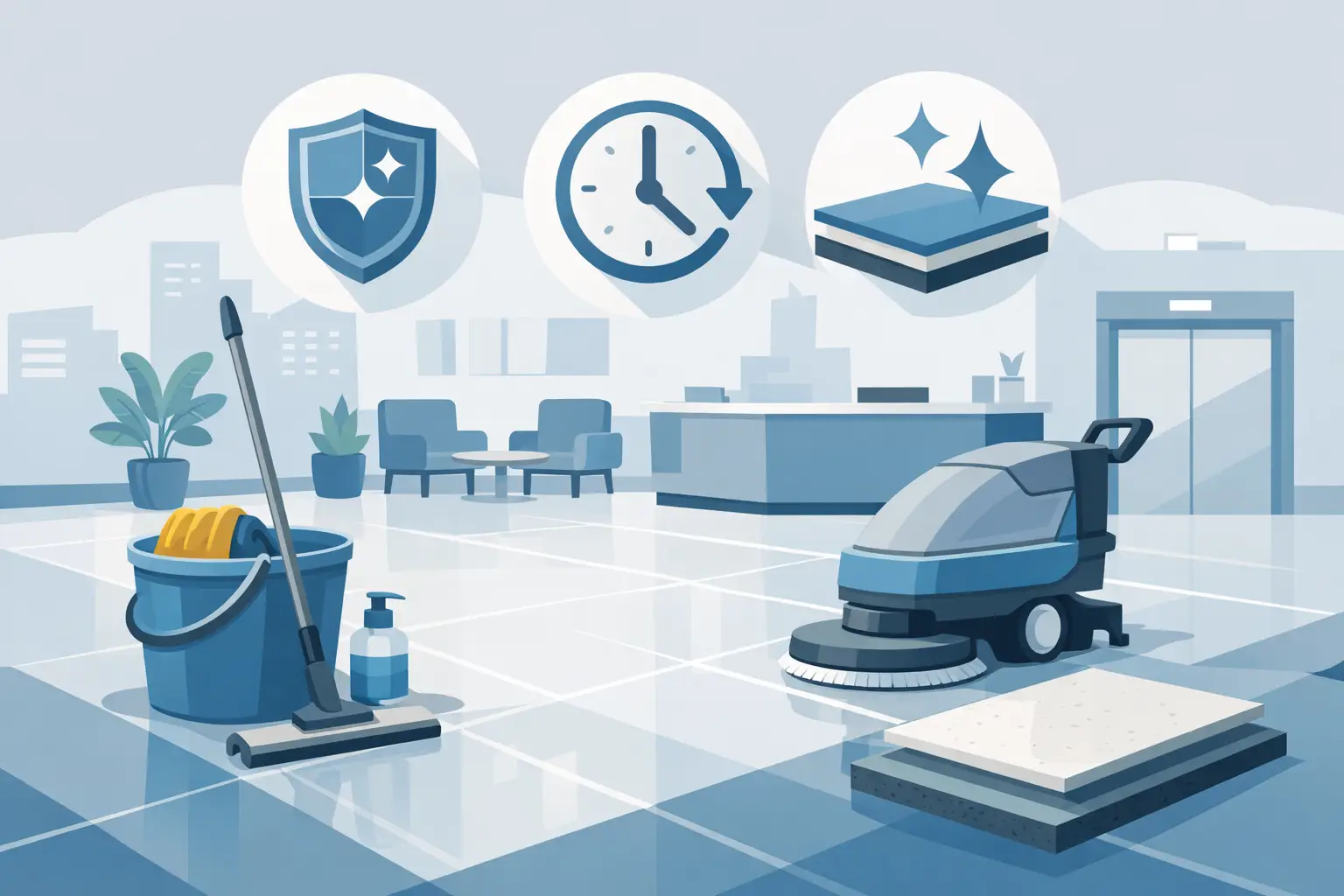
A floor can look fine on opening day and still become a daily expense by month six. Scrubbing, waxing, stained grout, peeling coatings, and constant repairs eat into labor, disrupt operations, and wear down the people managing the building. That is why low maintenance commercial flooring is not just a design choice. It is an operations decision.
For commercial properties, the right floor has to do more than survive foot traffic. It needs to handle carts, spills, rolling loads, cleaning chemicals, and the reality of busy tenants or customers. In warehouses, retail stores, office buildings, and mixed-use spaces, the best flooring choice is usually the one that lowers upkeep without giving up appearance or durability.
What low maintenance commercial flooring really means
A low-maintenance floor is not a floor that never needs care. It is a floor that does not demand constant specialty treatment to stay presentable and serviceable. That means fewer deep clean cycles, less frequent repair, no recurring wax programs, and a surface that resists staining, abrasion, and moisture-related problems better than the alternatives.
This is where many buyers get tripped up. Some flooring products look affordable at installation, but their ongoing care is expensive. Others seem durable on paper, but they show wear quickly in high-traffic zones or fail when exposed to moisture, impacts, or aggressive cleaning routines. The smart comparison is not only installation cost. It is total cost of ownership over years of use.
The best low maintenance commercial flooring options
There is no single flooring system that wins in every environment. The right answer depends on traffic, moisture exposure, appearance goals, cleaning protocols, and budget. Still, some materials consistently outperform others when maintenance is a priority.
Polished concrete
Polished concrete is one of the strongest choices for commercial settings that already have a sound concrete slab. It is not a topical finish that sits on top and peels away. Through mechanical grinding and polishing, the concrete itself is refined, densified, and finished to the desired gloss level.
That matters because maintenance stays simple. There is no wax to strip and reapply. Dust is reduced. The surface is easier to clean with routine dry mopping and damp mopping, and it holds up exceptionally well under foot traffic and rolling equipment. In retail stores, offices, warehouses, showrooms, and industrial spaces, polished concrete has become a leading answer for owners who want long-term performance without a heavy maintenance program.
It also gives you flexibility. A high-gloss finish can create a sharp, modern look for customer-facing space, while a lower-sheen finish can support a more understated industrial style. When done correctly, it can also improve light reflectivity, which helps brighten interiors and may reduce lighting demands.
The trade-off is that polished concrete depends on the condition of the slab. Cracks, moisture issues, previous coatings, and surface damage all need to be evaluated before work begins. A polished floor is only as good as the substrate under it.
Epoxy and resinous coatings
Epoxy systems and other resinous coatings can be a practical option where chemical resistance, sanitation, or color coding matter. In certain commercial and light industrial spaces, they provide a uniform surface that is easier to clean than porous or uneven flooring.
That said, not all resin floors are equally low maintenance over time. A properly specified and installed system can perform well, but lower-grade coatings or poor prep work often lead to peeling, hot-tire pickup, scratching, or premature wear in heavy-use areas. These systems may also need recoating sooner than owners expect, especially in facilities with forklift traffic or constant abrasion.
For the right environment, epoxy works. For the wrong one, it turns into a maintenance cycle. That is why surface preparation, moisture control, and use-case matching matter more than the product label alone.
Luxury vinyl tile and sheet vinyl
LVT and sheet vinyl are common in offices, healthcare spaces, and retail settings because they offer design flexibility and relatively easy day-to-day cleaning. They can mimic wood, stone, or other finishes while softening the visual feel of a commercial interior.
The issue is long-term wear. Seams, scratches, gouges, and edge failure can become a problem in high-traffic zones or under heavy rolling loads. Some environments also require more frequent replacement of damaged sections than owners initially budget for. For moderate traffic and style-driven interiors, vinyl can make sense. For demanding spaces, it is often not the strongest long-term value.
Tile
Porcelain and ceramic tile can be durable and attractive, especially in public-facing commercial interiors. The biggest maintenance issue is usually not the tile itself. It is the grout. Grout lines trap dirt, stain easily, and require more aggressive cleaning than many owners want to deal with.
A tiled floor can last, but it rarely qualifies as the easiest floor to maintain in busy commercial use. Once grout becomes the weak point, upkeep becomes more labor-intensive and the floor starts looking worn before the tile itself has failed.
Why polished concrete stands out in demanding spaces
When clients ask us what performs best under real commercial pressure, polished concrete stays near the top of the list for good reason. It addresses the daily issues that drive maintenance costs.
It resists wear from constant traffic better than many finish materials. It does not rely on waxes or fragile surface films to look finished. It simplifies cleaning. It can be customized for gloss, traction considerations, aggregate exposure, and appearance. And when the existing slab is suitable, it allows owners to improve what they already have instead of covering it with a material that may need earlier replacement.
For Southern California properties, that practical value is hard to ignore. In Los Angeles and Orange County, many commercial buildings already sit on concrete slabs that can be transformed into a higher-performance finish with far less disruption than a full flooring tear-out and replacement.
Choosing low maintenance commercial flooring by facility type
The right floor for a warehouse is not necessarily the right floor for a boutique retail space. Facility demands should drive the decision.
In warehouses and industrial buildings, abrasion resistance, dust reduction, and forklift durability usually matter more than decorative patterning. Polished concrete and certain heavy-duty resin systems tend to perform best here, depending on chemical exposure and safety requirements.
In office environments, owners often want a clean, modern look with simple upkeep and minimal interruption during installation. Polished concrete works well in contemporary offices, especially where durability and appearance need to coexist without ongoing waxing or specialty maintenance.
Retail spaces need visual appeal, stain resistance, and the ability to handle constant customer traffic. A polished concrete floor offers a strong mix of appearance and durability, particularly for stores that want a refined but hard-wearing surface.
Restaurants, service areas, and specialty commercial environments require more caution. Slip resistance, grease exposure, sanitation, and cleaning methods all affect the right specification. Low maintenance matters, but safety and code-related performance come first.
What actually drives maintenance costs
Flooring maintenance costs come from more than mops and cleaning solution. Labor is a major factor. So is downtime. If a floor requires regular buffing, waxing, stripping, recoating, grout restoration, or frequent patching, you are paying in staff time, outsourced service, and business disruption.
Repairs also tend to snowball. Once a floor starts failing in one section, it often becomes harder to keep the rest of the space looking consistent. That matters in customer-facing environments where appearance affects perception, and in operational settings where damaged flooring can create safety concerns.
This is why experienced contractors focus on performance under use, not just product specs in a brochure. A floor that looks economical up front can cost far more when maintenance, repair frequency, and shortened lifespan are added back in.
How to make the right decision the first time
Start with honest use conditions. How much traffic does the space actually get? Will forklifts or pallet jacks be used? Are spills common? Is moisture a concern? Does the floor need to support a premium visual standard, or is durability the primary goal?
Then look at the slab or substrate itself. This is especially important for concrete polishing and coatings. Moisture vapor issues, surface contamination, old adhesives, cracks, and levelness all affect the final result. Skipping that evaluation is where many flooring problems begin.
Finally, choose a contractor who understands both installation and long-term performance. That means proper surface prep, realistic recommendations, and no overselling. A serious flooring professional should be able to explain where a system works, where it does not, and what maintenance will actually look like after turnover.
The best floor is not the one with the loudest sales pitch. It is the one that keeps doing its job long after the project is complete. If your goal is lower upkeep, cleaner operation, and stronger long-term value, low maintenance commercial flooring starts with choosing a surface built for the way your property really runs.
Clients We Service
We provide our concrete polishing and related services to a wide variety of clients. Some of the types of clients that we provide service to include:


