
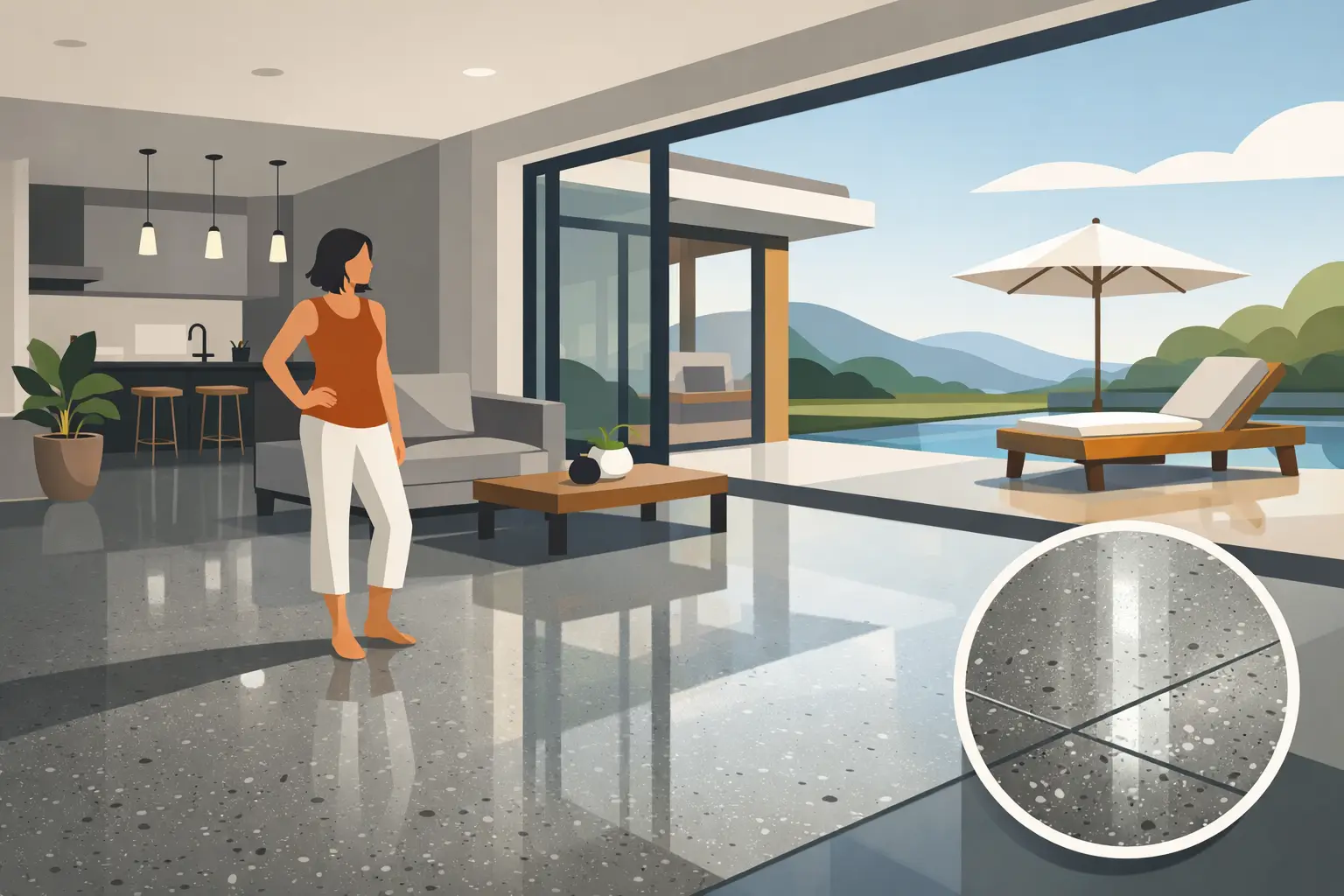
Some floors look great on day one and start asking for attention by year two. Others keep working, keep their finish, and stay easy to live with. That is why polished concrete for homes has become a serious option for homeowners who want modern design without signing up for constant upkeep.
It is not just a style choice. A properly polished concrete floor can deliver long-term durability, low maintenance, excellent light reflectivity, and a clean, refined finish that fits everything from minimalist interiors to industrial lofts and high-end remodels. But like any flooring system, it is not right for every room, every slab, or every homeowner. The real value comes from knowing where it performs best and how the process is done.
Why polished concrete for homes keeps gaining ground
Residential flooring decisions usually come down to four things – appearance, maintenance, lifespan, and cost over time. Polished concrete performs well in all four categories when the existing slab is in workable condition.
Unlike flooring that gets installed over a substrate, polished concrete uses the slab itself as the finished surface. Through grinding, honing, densifying, and polishing, the concrete is transformed into a harder, smoother, more visually refined floor. That means fewer layers, fewer materials that can fail, and fewer maintenance headaches later.
For homeowners, that matters. Wood can scratch, tile grout can stain, vinyl can wear, and carpet holds dust and allergens. A polished concrete floor does not have grout joints, does not trap dirt easily, and stands up well to foot traffic, pets, and daily use. In busy households, that practical advantage is often what makes the decision easier.
There is also the design side. Polished concrete can range from a satin sheen to a higher-gloss finish. Aggregate exposure can be kept minimal for a cleaner, more uniform appearance, or ground deeper for a more decorative, terrazzo-like effect. The final look depends on the slab, the grinding depth, and the level of polish selected.
What polished concrete actually feels and looks like
A lot of homeowners hear “concrete” and picture a cold garage slab. That is not what a professionally polished interior floor looks like.
The surface can be sleek and contemporary, but it does not have to feel harsh. Finish level, reflectivity, and color variation all play a role. Some floors have a soft, natural look with subtle movement. Others are bright, glossy, and highly architectural. In modern homes, polished concrete often works because it feels honest – it does not try to imitate stone or wood.
That said, appearance depends heavily on the slab you start with. Existing cracks, patching, saw cuts, and variation in the concrete mix can remain visible after polishing. For many homeowners, that character is part of the appeal. For others, especially those expecting a perfectly uniform surface, it can be a surprise. This is one of the most important trade-offs to discuss before any work begins.
Best places to use polished concrete in a home
Not every room has the same demands, and polished concrete shines most where durability and low maintenance matter most.
Main living areas
Open-concept living rooms, kitchens, dining spaces, and hallways are ideal candidates. These areas see heavy daily traffic, furniture movement, spills, and sunlight. Polished concrete handles that wear well and creates a clean, continuous look that can make the space feel larger.
Basements and lower levels
Basements can be excellent candidates, especially where moisture is a concern. Carpet and wood products often struggle in below-grade conditions. A properly prepared and polished slab is a more stable option, though moisture testing still matters before any work starts.
Modern lofts and remodels
In loft-style homes and contemporary renovations, polished concrete often fits the architecture better than layered flooring systems. It complements steel, glass, exposed wood, and open-plan design without competing with them.
Bedrooms are more subjective. Some homeowners love the clean, minimal look. Others prefer a softer underfoot feel and use area rugs to add warmth. Bathrooms can work as well, but slip resistance, finish level, and drainage conditions need careful attention.
The biggest advantages homeowners should know
Durability is the headline benefit, but it is not the only reason polished concrete performs so well in residential settings.
First, maintenance is simple. There is no waxing, no stripping, and no specialized routine if the floor is properly finished. Dust mopping and occasional damp mopping with the right cleaner are usually enough. That is a major advantage over surfaces that need frequent sealing, deep cleaning, or replacement.
Second, polished concrete can improve light reflectivity. In homes with good natural light, that can make interiors feel brighter and more open. In large spaces, the effect is especially noticeable.
Third, it is a strong long-term value play. While upfront cost varies based on slab condition, square footage, and finish level, polished concrete often reduces lifecycle costs because there is less maintenance and less need for replacement.
There is also no question about performance under pets, kids, and routine traffic. A professionally polished floor is built to take use. For homeowners who are tired of babying their floors, that is a serious advantage.
The trade-offs no one should ignore
A good contractor should be direct about where polished concrete has limits. It is a premium surface when executed correctly, but it is not magic.
Concrete is hard underfoot. Some people love that solid feel. Others notice fatigue if they stand for long periods, especially in kitchens. Rugs and anti-fatigue mats can solve part of that, but the floor itself does not have much give.
It can also feel cooler than other flooring materials, which may be a plus in warm Southern California homes but less appealing to homeowners who want a warmer feel year-round. Radiant heating can address that in some projects, though it is obviously a larger investment.
Then there is the slab itself. Not every existing slab is ready for polishing. Some have moisture issues, extensive cracking, contamination, adhesive residue, or poor finishing that affects the final result. In those cases, the right solution may still be polished concrete, but the prep work becomes more important and more expensive.
Slip resistance is another area where nuance matters. Polished concrete is often described as slippery, but that depends on finish, contamination, and maintenance. A clean, professionally polished floor can be slip-conscious and safe in normal residential use. Add water, oil, or the wrong cleaning products, and any hard-surface floor becomes riskier.
What affects the cost of polished concrete for homes
There is no honest one-size-fits-all price because residential slabs vary too much. The final cost usually depends on the condition of the concrete, how much repair is needed, the level of aggregate exposure, desired gloss, square footage, and site access.
A newer slab in good condition is usually more straightforward. An older slab with coatings, mastic, uneven patches, or moisture problems takes more grinding and more correction. Decorative elements like staining, scoring, custom finishes, or extensive crack repair also affect the number.
Homeowners should be careful when comparing bids. Low pricing often means corners are being cut on preparation, densification, or the polishing steps themselves. The difference may not show immediately, but it shows later in clarity, wear performance, and maintenance demands. Experienced contractors know that the equipment, grit sequence, and slab evaluation are what separate a floor that merely looks shiny from one that actually performs.
Why installation quality matters more than most people think
Polished concrete is not a coating you roll on. It is a mechanical process that depends on skill, tooling, and judgment. Diamond selection, grinding sequence, densifier use, and stain protection all have to match the slab and the project goals.
That is where specialist experience matters. In residential work, homeowners care about finish quality. They notice swirl marks, uneven gloss, poor edge work, and patching that does not blend. They also care about cleanliness, scheduling, and disruption inside an occupied home.
A contractor with real polishing expertise should be able to explain what your slab can realistically achieve, what level of variation to expect, and whether a full polish, a topical system, or an overlay makes more sense. At Los Angeles Concrete Polishing, that technical evaluation is a big part of getting the right result rather than selling a finish that does not fit the surface.
Is polished concrete right for your home?
If you want a floor that is quiet in appearance, strong in performance, and easy to maintain, polished concrete is one of the smartest residential flooring options available. It works especially well in kitchens, living areas, lofts, and homes built around clean lines and practical materials.
But the best results come from matching the floor to the way you actually live. If softness underfoot is your top priority, another material may suit you better. If you want durability, low maintenance, modern style, and a floor that can handle real life without constant upkeep, polished concrete deserves a serious look.
The right floor should not just impress guests for a weekend. It should keep delivering year after year, with less fuss and better performance than the alternatives.
Clients We Service
We provide our concrete polishing and related services to a wide variety of clients. Some of the types of clients that we provide service to include:


